
Every electrician knows the referral hustle. A neighbor mentions your name, a past customer passes along your number, and you get a call for a small repair job — maybe $150 to replace an outlet or fix a tripping breaker.
Referrals are great. But they have a ceiling. You can only grow as fast as your network passes your name around. And they rarely bring in the $2,000–$10,000 jobs that actually move your business forward.
Google is different. When a homeowner searches “electrical panel upgrade near me” or “EV charger installation cost,” they’re not asking a neighbor for a recommendation. They’re actively looking to hire — right now — and they have no existing loyalty to any electrician. Whoever shows up on page one gets the call.
This article breaks down how electricians use content strategy to capture those high-value Google searches — and why it produces a fundamentally different (and better) quality of lead than referrals.
The Referral Ceiling: Why Word-of-Mouth Alone Keeps You Stuck
Referral-dependent electricians share a common pattern: busy seasons are chaotic, slow seasons are scary, and the jobs that come in are whatever the referring person needed — not necessarily what you want to specialize in.
The core problem with referrals is that they’re reactive. You have no control over:
- When the referral happens
- What type of job it is
- The budget of the referred customer
- Whether the customer is ready to hire now or just “getting quotes”
Google, by contrast, is proactive lead generation that runs 24 hours a day. A well-ranked page brings in qualified inquiries while you’re on a job, sleeping, or on vacation. The customer finds you — already knowing what they want — and your content has pre-sold them on your expertise before they even pick up the phone.
What High-Value Electrical Jobs Actually Look Like on Google
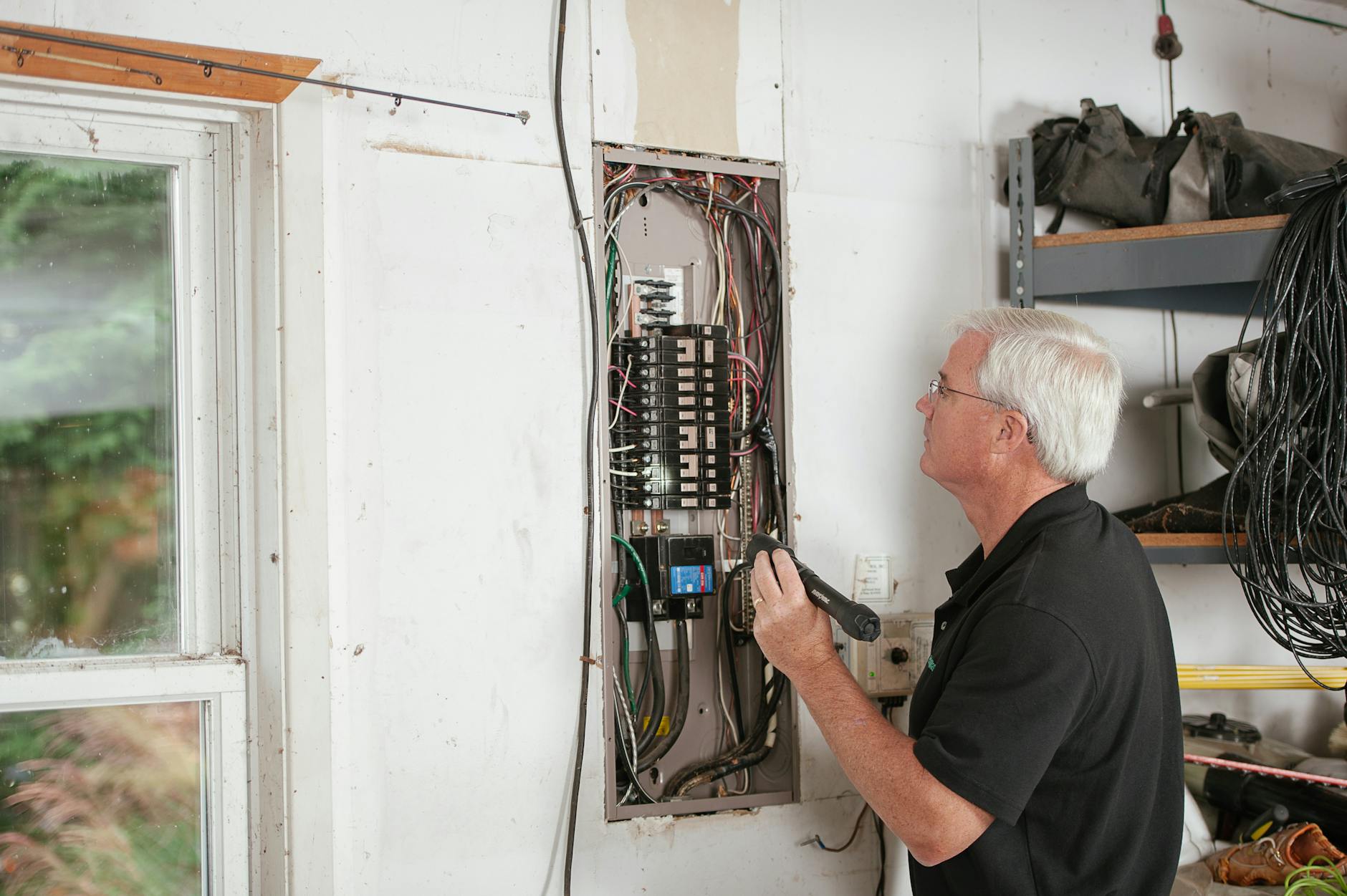
Not all Google searches are equal. The searches that lead to your best-paying jobs share a common characteristic: the person has already made a decision and is now looking for someone to do the work.
Here are the job types and the searches that drive them:
Electrical Panel Upgrades ($1,800–$4,000+)
- “200 amp panel upgrade cost [city]”
- “do I need to upgrade my electrical panel”
- “how much does it cost to upgrade electrical panel”
- “electrical panel replacement near me”
Panel upgrades are triggered by home renovations, new appliances drawing more power, home sales requiring updated service, or aging panels causing safety issues. Every one of these is a committed buyer with a clear need.
EV Charger Installation ($800–$2,500+)
- “level 2 EV charger installation cost”
- “electrician for Tesla wall charger installation”
- “home EV charger installation [city]”
- “how much does it cost to install an EV charger at home”
EV charger searches have grown consistently year over year. These homeowners just bought a new vehicle — they’re motivated and ready to spend. Many also need panel work done first, which means an EV charger call can turn into a $3,000–$5,000 project.
Whole-Home Rewires ($8,000–$30,000+)
- “whole house rewire cost”
- “how much to rewire a house”
- “old knob and tube wiring replacement”
- “aluminum wiring replacement electrician”
Rewires are often discovered during home inspections or insurance renewals. These homeowners don’t have a choice — they need the work done. A well-ranked article explaining the process and cost makes you the obvious first call.
Generator Installation ($5,000–$15,000+)
- “whole home generator installation near me”
- “standby generator installation cost”
- “backup generator electrician [city]”
Generator searches spike after every major storm or power outage. The homeowners searching in these moments are emotionally motivated to buy — they just experienced the problem they’re trying to solve.
Why Referrals Bring Small Jobs and Google Brings Big Ones
This isn’t a coincidence. It’s a structural difference in how the two lead sources work.
When a neighbor refers you, they typically say something like: “My electrician is great, you should call him.” The person on the other end thinks of you for whatever electrical problem comes up next — usually a small one, because small problems come up more often.
When someone finds you on Google, they’re searching for a specific job. They typed “EV charger installation” into Google because they need an EV charger installed. They typed “electrical panel upgrade” because they need a panel upgrade. The search query self-selects for the job type.
This is why electricians who rank for high-ticket keywords don’t just get more leads — they get better leads. The caller already knows what they want and is prepared to pay for it.
According to Search Engine Land, more than 76% of people who conduct a local search on their smartphone visit a business within 24 hours. For electricians, that “visit” is a phone call — and the caller is often ready to schedule on the spot.
The Content Formula That Attracts High-Ticket Electrical Clients
Not all content attracts the same type of customer. The electricians capturing the best Google leads follow a specific content formula:
1. Target the Job, Not Just the Trade
A post titled “Electrician Tips for Homeowners” could attract anyone. A post titled “How Much Does a 200-Amp Panel Upgrade Cost in Phoenix?” attracts exactly one type of person: a homeowner in Phoenix who needs a panel upgrade.
Specificity is what converts. The more precisely your content matches a buyer’s search, the higher it ranks and the better it converts.
2. Answer the Money Questions Directly
High-ticket buyers research before they call. They want to know cost ranges, timelines, what to expect on the day of service, and whether permits are required. If your content answers all of those questions better than any other result on Google, you rank — and you get the call.
Electricians who worry that publishing prices will scare off clients have it backwards. Transparency builds trust. A homeowner who reads your detailed cost breakdown and decides to call is far more likely to convert than one who called three companies “just to get quotes.”
3. Write for the Job Trigger, Not the Job Type
Every high-value electrical job has a trigger — the event that made the homeowner start searching. Understanding that trigger and writing content that meets them at that moment is what separates mediocre SEO content from content that actually books jobs.
- Panel upgrade trigger: home renovation, new EV, failing breakers, home sale inspection
- EV charger trigger: just bought a new electric vehicle
- Generator trigger: recent power outage, hurricane season approaching
- Rewire trigger: home inspection flagged old wiring, insurance premium increase
When your content speaks directly to that trigger, it resonates — and a resonating article converts dramatically better than one that just describes the service you offer.
Local SEO: The Multiplier That Makes Content Work in Your Service Area
Great content alone isn’t enough. It needs to be tied to your service area to rank in local search results. The electrical industry is fundamentally local — homeowners won’t call an electrician three states away no matter how good your content is.
Local SEO signals that matter for electricians:
- City-specific content: Include your primary service cities in headlines, subheadings, and naturally within the post body
- Google Business Profile: Keep it updated and actively collect reviews — it feeds directly into local pack rankings
- NAP consistency: Your business name, address, and phone number should be identical everywhere online
- Local schema markup: Tells Google what type of business you are, your service area, and your hours
- Internal linking: Link your blog posts to your service pages and vice versa to strengthen topical authority
Combine targeted content with solid local SEO fundamentals, and you create a system where Google sends you pre-qualified, high-intent buyers on a consistent basis — independent of whether your referral network is active or not.
What a Realistic Content Roadmap Looks Like

You don’t need 50 blog posts to start seeing results. The electricians who build the strongest Google presence typically start with a focused set of content targeting their highest-value job types, then expand from there.
A practical six-month roadmap:
- Month 1–2: Cost guides for your top three services (panel upgrade, EV charger, generator) — these have the highest commercial intent
- Month 3: Safety and warning sign posts — capture urgent, immediate-need searches
- Month 4: Permit and inspection guides — target decision-stage searches from homeowners who are planning work
- Month 5: Seasonal content — generator posts before storm season, AC-load panel content before summer
- Month 6: FAQ and comparison posts — “licensed vs. unlicensed electrician,” “how to pick an electrician” — capture top-of-funnel trust builders
Within six months, an electrician publishing two to three targeted posts per month will typically see Google traffic beginning to compound — with early-ranked posts continuing to drive leads indefinitely.
A practical overview of how local SEO content compounds over time for service businesses:
Frequently Asked Questions
Can Google really replace referrals for an electrician?
Not replace — supplement and outpace. The goal isn’t to stop valuing referrals. It’s to stop depending on them as your primary source of new business. Electricians with strong Google visibility typically still get referrals, but they’ve added a second lead channel that’s larger, more consistent, and skews toward higher-value jobs.
What’s the difference between Google Ads and blog content for electricians?
Google Ads give you immediate visibility but stop the moment you stop paying. Blog content takes longer to rank but creates permanent assets — posts that drive traffic and leads for years without ongoing cost. Most electricians benefit from using both: ads for immediate lead flow, content for long-term compounding returns.
How many blog posts does an electrician need to rank?
There’s no magic number, but focused beats volume. Six highly targeted posts — each aimed at a specific high-value keyword in your service area — will outperform thirty generic posts every time. Quality and relevance are what rank. Publishing two to three well-researched posts per month is enough to build real Google traction within six months.
I’m too busy to write blog posts. What are my options?
This is the most common obstacle for electricians — and the reason done-for-you content services exist. You provide basic information about your services and service area; a specialist handles the research, writing, SEO optimization, and publishing. The result is a consistent content pipeline that builds Google visibility without requiring your time.
Moving From Referral-Dependent to Google-Driven
The electricians who build the most sustainable businesses don’t just do good work and hope word spreads. They build systems — and a Google content strategy is one of the most powerful systems available to a local service business.
Every targeted post you publish is a 24/7 salesperson that answers customer questions, pre-qualifies buyers, and routes them directly to your contact form or phone. Unlike a referral, it works whether or not someone happens to mention your name this week.
If you’re ready to start building that system without doing the writing yourself, RankOnRepeat handles the entire content process — research, writing, SEO, and publishing — every month. See how it works or view current pricing.
[1] Search Engine Land — Local search behavior statistics and conversion data
[2] HomeAdvisor — Electrical service cost data and consumer research trends
[3] International Brotherhood of Electrical Workers (IBEW) — Licensing and industry standards for electrical contractors
Want content like this working for your business? RankOnRepeat writes, publishes, and manages your entire blog — keyword-targeted articles that attract clients and rank on Google, hands-free. Get started today → · Browse content samples