
HVAC SEO is one of the most time-sensitive investments a heating and cooling company can make. The U.S. heating and air-conditioning contractors market is worth $158.4 billion (IBISWorld, 2025), and the companies capturing the most service calls aren’t necessarily the best technicians — they’re the ones showing up on Google at exactly the right moment.
That moment is seasonal. HVAC demand doesn’t flow evenly through the year. It spikes hard in June when the first heat wave hits, then again in October when the first cold snap arrives. If your company’s content isn’t ready before those spikes, you’re handing jobs to your competitors. This guide breaks down exactly when to publish, what to publish, and how to build a content calendar that turns Google search traffic into booked service calls year-round.
Why Seasonal Timing Is Everything for HVAC Search Traffic
Most service businesses think about SEO as a one-time project — build a website, add a few keywords, and wait. HVAC companies can’t afford that approach because Google search volume for heating and cooling terms follows the weather, not the calendar.
Consider what happens in a typical year:
- March–April: Homeowners start searching “AC tune-up near me” and “spring AC maintenance.” Volume is building but competition is light — most HVAC companies haven’t published their spring content yet.
- May–June: Search volume peaks for air conditioning terms. First heat waves drive emergency searches. Companies with content already indexed and ranking get the calls; everyone else is invisible.
- September–October: Searches shift to “furnace tune-up,” “fall HVAC maintenance,” and “heating system check.” The same seasonal window opens for heating content.
- November–February: Emergency heating searches dominate — “furnace not turning on,” “no heat in house,” “emergency furnace repair near me.” These are high-urgency, high-value calls.
The catch: Google needs 3 to 6 months to fully index and rank a new page. If you publish your “AC tune-up checklist” article in May, you might see initial rankings by July — but the peak of AC season has already passed. Publish it in January or February, and you’re showing up right when spring searches begin and before your competitors have their content ready.
The HVAC Content Calendar: What to Publish and When
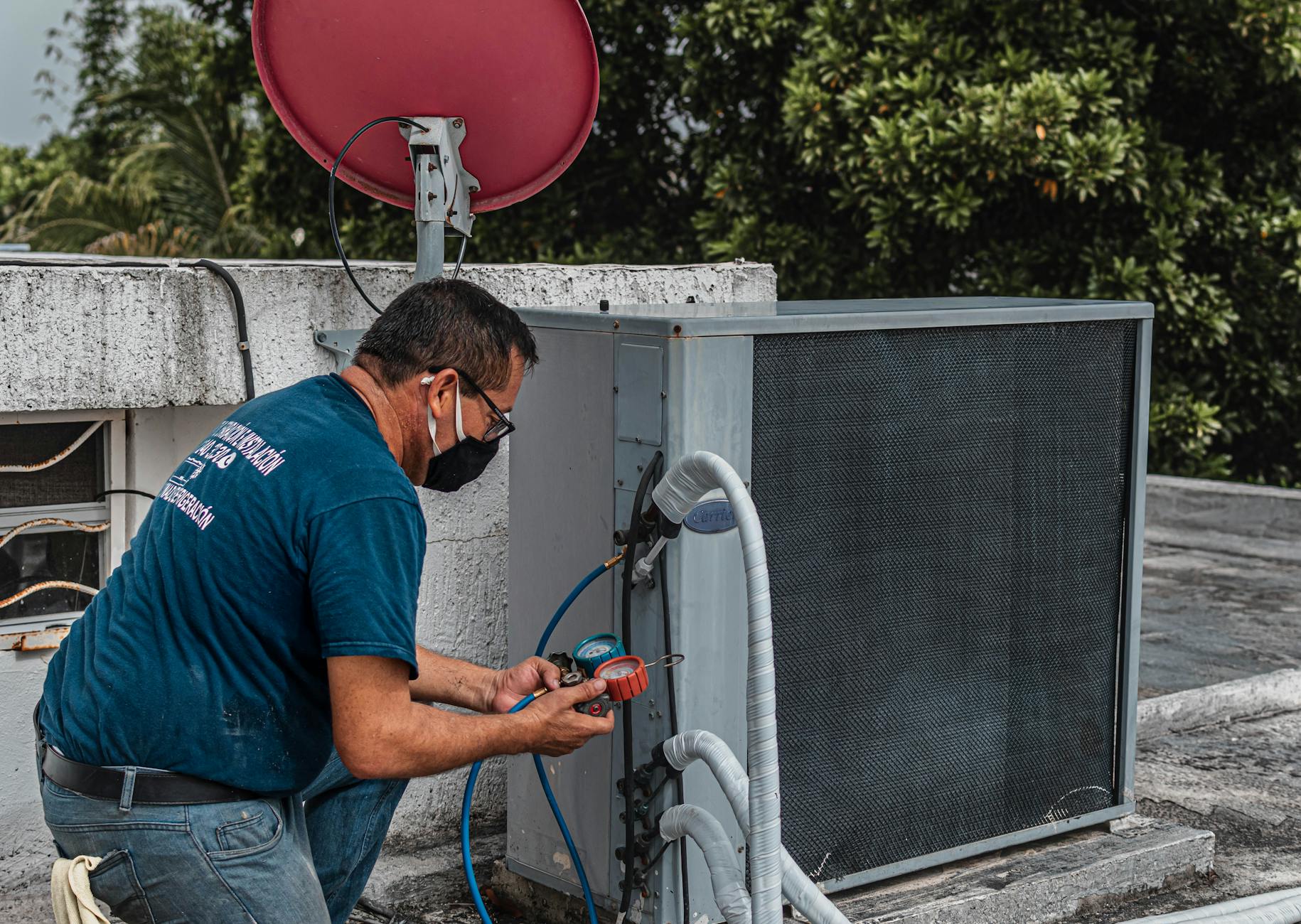
A strategic HVAC content calendar isn’t complicated, but it requires planning ahead. Think of it as scheduling your service calls — you don’t wait until the customer calls in a panic; you set appointments in advance. Here’s how to structure your publishing schedule around the seasons that actually drive revenue.
January–February: Plant Your Summer Seeds
January is your quiet period — and your biggest SEO opportunity of the year. Almost no HVAC company is publishing content in winter, which means lower competition for the keywords you’re targeting. Topics to publish now:
- “How to Prepare Your AC for Spring” — targets early planners and maintenance-minded homeowners
- “What Does an AC Tune-Up Include?” — educational content that drives tune-up booking calls before the rush
- “Signs Your Air Conditioner Won’t Make It Through Summer” — targets replacement leads who need a new system
- “How Much Does a New AC Unit Cost in [City]?” — high buyer intent; these searchers have already decided they need a replacement
March–April: Spring AC Content Push
If you published in winter, these pages should already be indexed and climbing the rankings. Spring is the time to:
- Update and republish any older AC tune-up content with fresh dates and current pricing data
- Publish “How Long Does an AC Tune-Up Take?” — a direct answer format that targets featured snippets
- Cover indoor air quality topics — “Best Air Filters for Spring Allergies” — which bring in homeowners who may not have scheduled an HVAC visit in years
- Publish comparison content: “Central AC vs. Ductless Mini-Split — Which Is Better for My Home?”
July–August: Fall Heating Content Prep
Counterintuitive but critical: in the middle of summer, start publishing furnace and heating content. By the time homeowners are searching in October, your pages will have 3 months of indexing behind them — enough to appear on page one for competitive local terms.
- “How to Get Your Furnace Ready for Winter” — a perennial top performer for fall searches
- “Furnace Tune-Up Cost: What to Expect This Year” — price-shopping content that drives calls
- “Signs Your Furnace Needs Replacement Before Winter” — high-value replacement lead content
- “Heat Pump vs. Furnace: Which Is Better for [Region]?” — comparison content that pre-qualifies buyers
Year-Round: Emergency and Trust Content
Some searches happen every month regardless of season. Emergency repair content — “AC won’t turn on,” “furnace making loud noise,” “heat pump blowing cold air” — drives calls on the hottest day in July and the coldest night in January. These evergreen pages work 365 days a year and often convert at a higher rate than any other content type because the searcher is in urgent need right now.
The 5 HVAC Keyword Types That Drive the Most Service Calls
Not all HVAC keywords are equal. Some attract curious homeowners who read your article and move on. Others attract buyers who are ready to call within minutes. Focus your seasonal content on these five high-intent keyword patterns, and you’ll generate leads — not just traffic.
- “[Service] near me” — “HVAC repair near me,” “furnace repair near me,” “AC installation near me.” These carry the strongest local and commercial intent of any search pattern.
- “[Service] cost” or “[Service] price” — “AC installation cost,” “furnace replacement cost,” “HVAC tune-up price.” Searchers using cost keywords have already decided they need the service; they’re shopping for a company to call.
- “Emergency [problem]” — “emergency AC repair,” “furnace stopped working,” “no heat emergency.” These searchers are calling within minutes of finding a result they trust.
- “[Problem] symptoms” — “why is my AC blowing warm air,” “furnace making knocking noise,” “AC freezing up.” These educational entry points bring in homeowners who often end up booking a service call after reading your answer.
- “How long does [system] last” — “how long does a furnace last,” “how long does an AC unit last.” This is replacement intent disguised as an information search. The homeowner is already thinking about a new system and deciding who to call.
How Google’s Local Pack Changes the Game for HVAC Companies

When someone searches “AC repair near me,” they see the Google Local 3-Pack before any organic results. This local pack appears in 93% of local searches and drives the majority of HVAC leads in most markets. Getting into — and staying in — the 3-Pack requires a combination of signals:
- A fully optimized Google Business Profile with current photos, services listed, and regular review responses
- Consistent NAP (name, address, phone) across all directories — Google Cross-references these constantly
- Service area pages for each city or neighborhood you serve, not just your home city
- Blog content that signals topical authority — the more you publish about HVAC topics, the more Google recognizes you as the local expert
That last point is where content strategy directly feeds your local rankings. A company with 40 indexed blog posts covering HVAC installation, maintenance, troubleshooting, and replacement has a stronger topical authority signal than a competitor with 5 pages. And topical authority helps your entire site rank — including your core service pages that drive bookings.
Building Your Seasonal Content Machine: A Simple Framework
The most successful HVAC companies treat content like a preventive maintenance schedule. Just as they service systems on a regular cycle to prevent breakdowns, they publish content on a regular cycle to prevent gaps in their Google visibility. Here’s a framework that works for most HVAC operations:
- Monthly minimum: 2 blog posts — one seasonal topic timed to the next peak season, one evergreen topic that works year-round
- Quarterly review: Update your top 5 performing pages with fresh data, current pricing, and updated publish dates
- Seasonal push: Publish 3–4 targeted articles 90 days before each peak season — once for cooling season in winter, once for heating season in summer
- Emergency content bank: Build 5–10 evergreen troubleshooting articles that capture emergency searches all year
Consistency matters more than volume. A company that publishes 2 solid articles per month for 12 months will outrank a company that publishes 20 articles in one burst and goes quiet. Google rewards regular, sustained publishing because it signals that the site is active and authoritative.
According to the U.S. Department of Energy, regular AC maintenance improves efficiency by up to 15% — a data point your readers care about, and one that makes your content more useful and trustworthy than a competitor who skips the details.
Frequently Asked Questions About HVAC SEO
How long does it take for HVAC SEO to start working?
Most HVAC companies see initial ranking movement within 3 to 6 months of consistent publishing. Targeting low-competition local keywords — “AC tune-up [city name]” — typically produces results faster than broad national terms. The full compounding effect of a content library usually shows up at the 12-month mark.
What’s more important for HVAC companies: Google Ads or SEO?
Both serve different purposes. Google Ads delivers immediate traffic but stops the moment you stop paying. SEO builds an asset that generates calls for years. Most successful HVAC companies use Ads for immediate needs and SEO to reduce their long-term cost per lead. Organic clicks average roughly 87% less per conversion than paid ads over a 12-month horizon.
Should HVAC companies have a blog?
Yes — and the blog should be structured around the seasonal content calendar above, not just whatever topic seemed interesting that week. A blog is the most effective tool for capturing the long-tail searches that drive HVAC calls. “Why is my AC running but not cooling” is not a phrase any service page can rank for. A targeted blog post can.
How many blog posts does an HVAC company need to rank on Google?
There’s no magic number, but companies with 30–50 indexed posts covering their core service topics consistently outrank competitors with under 10 posts. The goal is topical authority — covering heating, cooling, installation, maintenance, and repair comprehensively enough that Google identifies your site as the local expert.
If publishing SEO content consistently sounds like too much work, RankOnRepeat handles everything — keyword research, writing, and publishing — for a flat monthly fee.
The seasonal nature of HVAC demand makes content timing your single biggest competitive edge. Companies that publish in January rank in June. Companies that publish in August rank when the first cold snap hits. The window to get ahead of your local competitors is open right now — see how RankOnRepeat works for service businesses that don’t have time to write their own content.
Sources
- IBISWorld — Heating & Air-Conditioning Contractors in the US Market Size (2025) — Industry market size data, $158.4 billion in 2025
- ACCA — HVAC Industry Growth — U.S. HVAC services market projections and local search data
- U.S. Department of Energy — Air Conditioner Maintenance — Energy efficiency data for AC systems
Want content like this working for your business? RankOnRepeat writes, publishes, and manages your entire blog — keyword-targeted articles that attract clients and rank on Google, hands-free. Get started today → · Browse content samples