
- House cleaning has unusually high search intent — people typing “house cleaners near me” are not researching; they’re ready to book. That makes this category exceptionally well-suited to local SEO.
- The keywords that convert are city-specific service terms: “house cleaners [city],” “maid service [city],” and “how much does house cleaning cost in [city]?” — not generic cleaning tips.
- Google ranks cleaning businesses on three things: a complete and active Google Business Profile, city-specific service pages, and consistent content publishing.
- Blog content about pricing and comparisons converts better than social media ads for cleaning businesses — the reader is already deciding, not browsing.
- Angi charges $35–$65 per shared lead. A first-page Google ranking delivers exclusive leads at zero cost per acquisition, permanently.
Table of Contents
- Why House Cleaning Converts Better From Search Than Almost Any Other Trade
- The Keywords That Actually Bring Cleaning Clients to Your Website
- Three Things on Your Website That Determine Whether You Rank
- What to Write About: A Simple Blog Strategy for Cleaning Companies
- The Local SEO Asset Most Cleaning Companies Don’t Take Seriously
- How Long Until Google Starts Sending You Clients
- Frequently Asked Questions
Angi charges house cleaning businesses $35 to $65 per shared lead — and then sends that same lead to three or four competitors at once. The client picks whoever responds fastest, or whoever’s cheapest. Google works nothing like that: a first-page ranking belongs to you alone, and every call that comes from it costs you nothing.
The national average cost to acquire a new cleaning client through paid lead services runs $80 to $120. Through SEO, once you rank, that number drops to near zero. House cleaning is one of the best service categories for local search: the searches are specific, the intent is immediate, and most cleaning businesses have almost no meaningful web presence beyond a Facebook page. The bar for ranking first in a mid-size city is lower than most owners assume.
Why House Cleaning Converts Better From Search Than Almost Any Other Trade
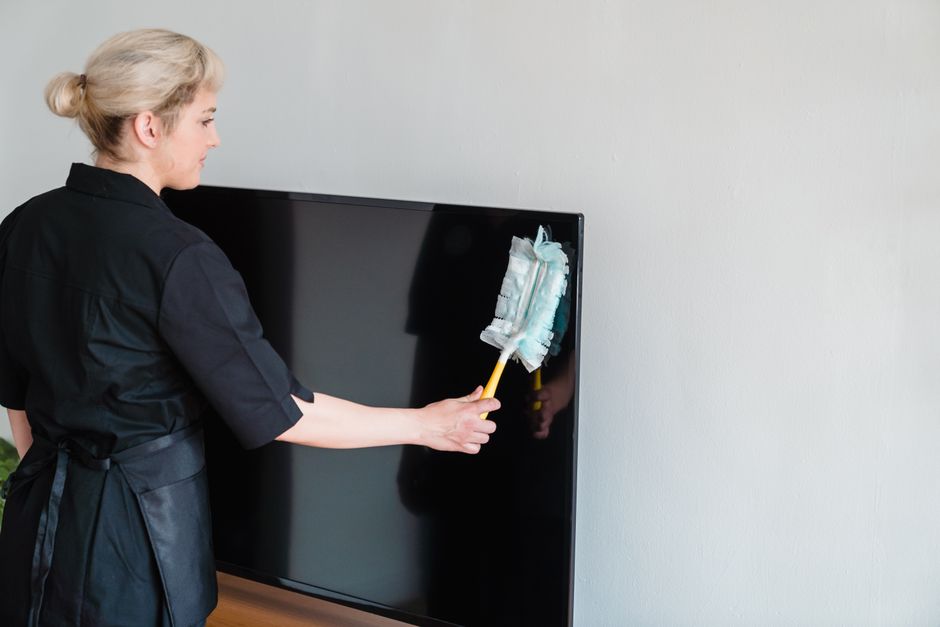
House cleaning has something most service businesses don’t: people almost never search unless they’re ready to hire. Someone Googling “landscaping ideas” might be doing the work themselves. But “house cleaners in Nashville” is a closed set of intent — whoever types that is not cleaning their own home.
That specificity is what makes SEO worth the investment for cleaning companies. According to BrightLocal’s Local Consumer Review Survey, 78% of local mobile searches result in an offline purchase within 24 hours. Cleaning businesses fit that conversion window precisely — the search happens Thursday afternoon, and someone is in the client’s home Friday morning.
There’s another factor: price sensitivity works against you on paid lead platforms. When Angi sends the same lead to four companies, the default competitive move is to lower your quote. SEO removes that dynamic. The person who finds you through Google doesn’t see competing quotes at the same time — they found you, they’re evaluating you, and if your listing looks professional and your reviews are solid, you get the booking at your actual price.
For house cleaners already familiar with the carpet cleaning SEO playbook, the mechanics are nearly identical — see our breakdown on SEO for carpet cleaners for comparison.
The Keywords That Actually Bring Cleaning Clients to Your Website

House cleaners who rank on Google targeted specific keywords — not abstract cleaning advice topics. Your primary targets should be city-specific service terms that signal commercial intent.
A typical keyword set for a cleaning company in a mid-size U.S. market breaks down like this:
- “house cleaners [city]” — highest commercial intent; roughly 50–300 monthly searches depending on market size; almost no national competition
- “maid service [city]” — often interchangeable with “house cleaners” and worth targeting as a second page or alternate phrasing
- “recurring cleaning service [city]” — targets your most valuable client segment: weekly and biweekly contracts
- “deep cleaning service [city]” — higher average ticket jobs like move-outs, post-renovations, and spring cleans
- “how much does house cleaning cost in [city]” — people actively comparing services, on the edge of booking
Those last two aren’t homepage keywords. They belong in blog content. A single 1,200-word post answering the pricing question in your market can pull more qualified monthly traffic than a Facebook campaign — and it keeps pulling for years without additional spend. The long-tail keyword strategy for local service businesses works particularly well in this category because the competition thins out dramatically beyond the main head terms.
In markets like Chicago or Los Angeles, the primary city keywords are more competitive. In mid-size markets — Boise, Raleigh, Tulsa, Spokane — most local cleaning businesses have no web presence worth competing against. The realistic path to a first-page ranking in those markets is three to five solid pages and six months of consistent publishing.
Three Things on Your Website That Determine Whether You Rank
You don’t need a complicated website to rank for cleaning-related searches. But you do need it to do three things correctly.
1. Google Business Profile — the most important asset you’re probably not maximizing
Your Google Business Profile drives more clicks for local service searches than your website does. Cleaning companies with complete, active profiles — photos added weekly, categories set precisely, Q&A section populated, reviews responded to — consistently outrank competitors with better websites. Set your primary category to “House Cleaning Service,” fill every service field, and add your service area by city, not just ZIP code. According to BrightLocal’s Local Search Ranking Factors study, Google Business Profile signals are the dominant ranking factor in local pack results.
2. Service area pages — one per city, not one generic homepage
If you serve ten cities, you need ten pages — each with unique content about cleaning services in that specific location. A single homepage targeting “house cleaners” won’t rank in any individual city as well as a dedicated /house-cleaners-houston/ page does for Houston. This is the structural fix most cleaning websites skip, and it’s one of the highest-leverage changes you can make.
3. Mobile page speed
About 72% of local service searches happen on mobile. Google’s ranking algorithm weights mobile experience heavily. Run your site through Google PageSpeed Insights. A score below 50 on mobile means fixing that single issue may do more for your rankings than months of content publishing.
What to Write About: A Simple Blog Strategy for Cleaning Companies

Most cleaning business owners are not content writers. Most don’t have the time for it — which is exactly why the ones who publish consistently have an outsized advantage in their local market.
Blog content that actually ranks and converts for a cleaning business falls into two categories: informational content that builds trust with people in the research phase, and comparison content that captures buyers who are actively deciding.
Informational posts that pull real traffic:
- “How Often Should You Deep Clean Your Home?” — common question from existing and potential clients, builds authority, pulls deep-clean bookings
- “Standard Cleaning vs. Deep Cleaning: What’s the Difference?” — people searching this question have already decided to hire; you’re helping them pick the service tier
- “What to Expect From Your First Professional House Cleaning” — converts nervous first-timers who are on the fence about handing over a key
Comparison and pricing content that converts best:
- “House Cleaning Prices in [City]: What to Expect in 2026” — the single highest-converting piece of content a cleaning business can publish. Anyone searching this question has already decided to hire someone. They’re choosing between you and a competitor.
- “DIY Cleaning vs. Hiring a Service: When Does It Actually Make Sense?” — attracts people who are leaning toward hiring but haven’t committed; positions you as honest rather than salesy
Two posts per month is the practical minimum. One per month doesn’t compound fast enough. At two per month, you have 24 pieces of indexed content in a year — and most cleaning markets see meaningful ranking movement within six months of consistent publishing at that pace.
The Local SEO Asset Most Cleaning Companies Don’t Take Seriously
Reviews matter more in the cleaning industry than in almost any other home service category, for an obvious reason: clients are letting strangers into their homes. Before they book, they read.
A cleaning business with 40 Google reviews averaging 4.7 stars will almost always outrank a competitor with a better website but 12 reviews. This is partly a ranking signal — Google surfaces businesses that have been verified by real people — but it’s also a conversion factor that operates independently of your rankings. A potential client who finds you through search will call faster if you have 50 reviews than if you have 5, even if you’re the first result.
The fix is simple and completely free: send a follow-up text to every client after each cleaning, include a direct link to your Google review page, and ask for the review explicitly. Most clients are happy to leave one; most cleaning companies never ask. A small incentive — $10 off the next clean for a five-star review — can accelerate this considerably, though the ask alone gets most of the results.
Combine a strong review profile with consistent blog content, a complete Google Business Profile, and city-specific service pages, and you start to own local search results in your city without paying for a single lead.
How Long Until Google Starts Sending You Clients

Four to eight months before you see meaningful organic traffic, and ten to twelve months before it becomes a reliable client acquisition channel. That’s the honest answer — and it’s the same timeline that applies to plumbers, carpet cleaners, and every other local service business that builds SEO the right way.
The companies that quit after three months never see the results. The ones that treat SEO like a 12-month infrastructure project usually don’t need to buy leads by month 14.
For concrete proof of what consistent publishing delivers to a service business: a local martial arts gym in Taipei went from zero to 1,178 monthly visitors within a year of launching a daily content strategy (taipeibjj.com). The mechanics are identical for a local cleaning company — regular publishing plus a structured website plus an active local profile equals compounding traffic.
The math on why this matters: if your average recurring client is worth $2,400 per year (biweekly cleanings at roughly $200 each), and SEO delivers five new recurring clients per month at zero acquisition cost, that’s $12,000 in annual recurring revenue from a single channel with no ongoing cost per lead. Measuring that ROI against the cost of SEO is worth the calculation — our breakdown of how to measure SEO ROI for service businesses covers the exact framework.
If consistent publishing sounds like too much to manage alongside running a cleaning operation, RankOnRepeat handles keyword research, writing, and publishing for a flat monthly fee. Our content model was built specifically for local service businesses that want Google to b
References
- BrightLocal — Local Consumer Review Survey — Annual research on how consumers read and trust online reviews when choosing local service businesses, including cleaning companies.
- Google — Google Business Profile Help Center — Official guidance on optimizing your Business Profile listing for local search visibility and Google Maps placement.
- Moz — The Local SEO Guide — Comprehensive breakdown of local ranking factors including Google Business Profile, citations, reviews, and on-page signals.
- IICRC — Institute of Inspection, Cleaning and Restoration Certification — Industry body for cleaning professionals with standards, certification, and consumer-facing trust signals.
- Search Engine Land — What Is Local SEO? — Authoritative overview of local SEO strategy, ranking signals, and how local pack results are determined.