
- The Google 3-pack captures 44% of all local search clicks — if your business isn’t in that box, your competitor is getting those calls.
- Google ranks local businesses on three factors: relevance, distance, and prominence. Most businesses only optimize for relevance and stop there.
- Your Google Business Profile completeness is the #1 controllable factor — photos, categories, weekly posts, and services all influence where you appear.
- Review recency matters more than total count — a business with 15 reviews from the past 90 days often outranks one with 200 reviews from 2020.
- Your website feeds your map rankings — consistent blog content and clean NAP data act as compounding ranking signals Google can’t ignore.
The top three results on Google Maps — the local 3-pack — capture 44% of all clicks on local search results pages, according to a 2024 BrightLocal study. That’s before a single organic result gets seen. If your business isn’t in that box, someone else is taking those calls.
Ranking in the map pack isn’t luck or an algorithm mystery. There are specific signals Google uses to decide who appears, and most of them are fully within your control.
What Is the Google 3-Pack and Why It Generates More Calls Than Page 1 Organic
Search “HVAC contractor near me” or “dentist in Austin” and before the organic blue links, Google shows three businesses in a shaded box alongside a map. That’s the local 3-pack — also called the map pack or local pack.
What makes it more valuable than standard organic rankings is the intent behind the searches that trigger it. Someone looking at the 3-pack isn’t researching. They’re about to call. The box puts your phone number, address, and reviews directly in front of that decision.
For most local service businesses — plumbers, contractors, attorneys, medical practices — the map pack drives more qualified phone calls than any other marketing channel. Not just digital. Any channel. A roofing company that reliably appears in the 3-pack for “roof repair [city name]” is generating inbound leads around the clock at zero marginal cost per call.
The Three Factors Google Uses to Rank Local Businesses in Maps
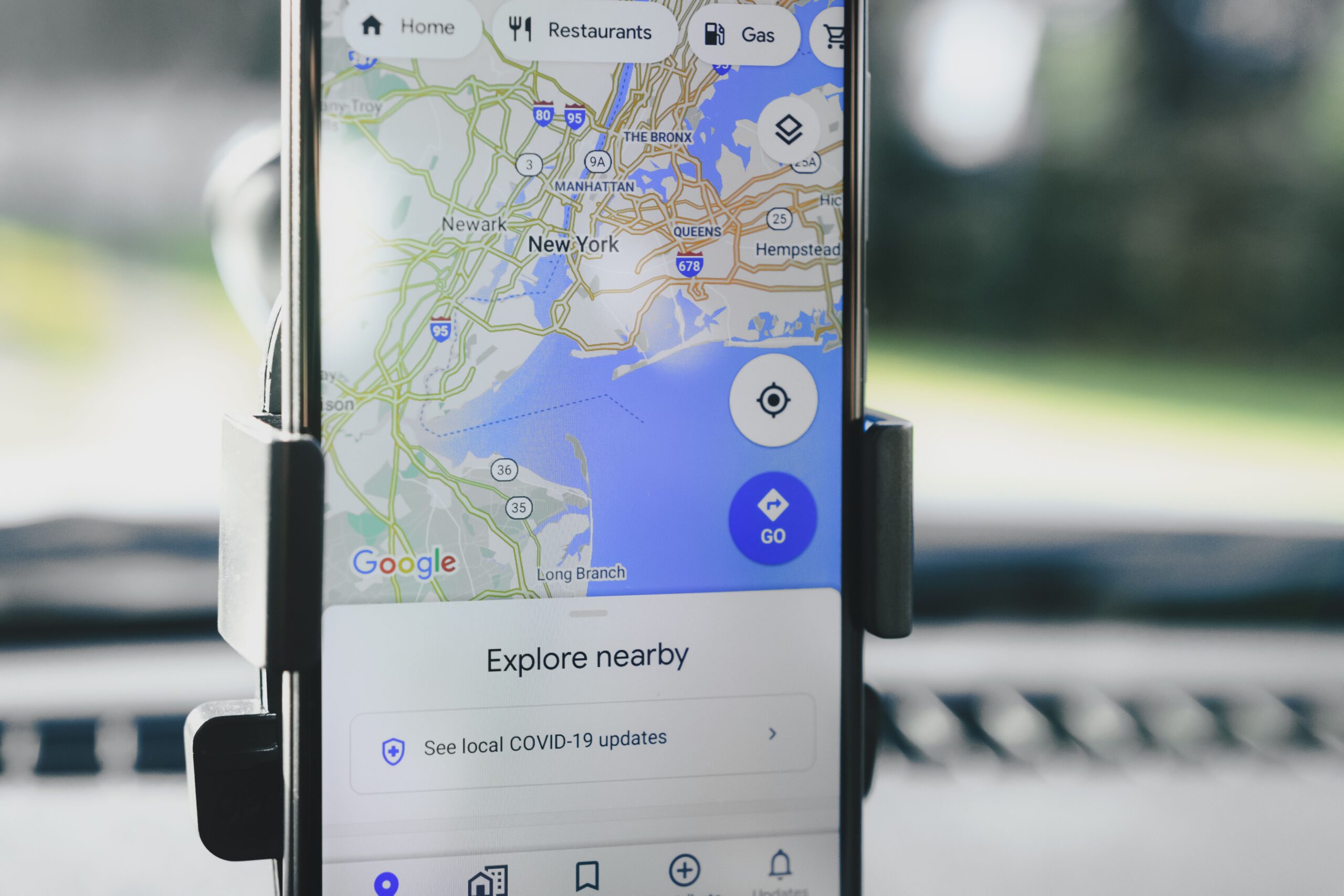
Google’s local ranking algorithm isn’t a black box. The company publishes the three core factors it uses to decide who appears in the map pack, and understanding them changes how you spend your time.
Relevance is how closely your business profile matches what someone searched for. A plumbing company that lists “plumbing” as its only category will lose to one that’s also added “water heater repair,” “drain cleaning,” and “emergency plumber” as secondary categories.
Distance is proximity to the searcher. You can’t engineer this factor directly — your physical address or service area determines it. What you can do is set a precise service area in your Google Business Profile and build location-specific content on your website that signals presence in the cities you want to rank in.
Prominence is how well-known your business is online, and it’s the most controllable factor of the three. Reviews, citations, backlinks, and GBP activity all feed this signal. Most businesses optimize for relevance — filling out their profile — and completely ignore prominence. That’s where the gap lives.
How to Optimize Your Google Business Profile for Map Pack Rankings
If you’re not clear on what a Google Business Profile actually is, start with our breakdown of what a Google Business Profile is and how it affects local rankings before making any changes. Once you’re set up, go beyond the basics.
- Primary category: Pick the most specific one that accurately describes your core service. “Roofing Contractor” beats “General Contractor” if you do mostly roofing. Google weights primary category heavily for relevance matching.
- Secondary categories: Add every relevant service. Each one is a potential keyword match that widens your search footprint.
- Business description: Put your primary keyword in the first sentence — naturally, not stuffed. “ABC Plumbing provides emergency plumbing and drain cleaning services in Phoenix, AZ” does the job.
- Products and Services sections: Fill these out completely. Every listed service is a potential relevance signal Google reads when matching queries.
- Photos: Google’s own data shows profiles with 10+ photos get 35% more clicks than those with fewer. Upload actual job site photos, team photos, before-and-afters. Google can now distinguish between stock images and real business photos — the former carries measurably less weight.
- Posts: Publish a Google Business Profile post at least once a week. It signals that your profile is active, which is a minor but consistent ranking factor that most competitors skip.

Why Review Recency Beats Review Count (and What to Do About It)
BrightLocal’s 2024 Local Consumer Review Survey found that 50% of consumers trust online reviews as much as personal recommendations from friends. But beyond the trust signal, reviews are a direct map pack ranking factor — and Google weighs them in a way most business owners don’t expect.
It’s not just the total number of reviews. Google also weighs recency, response rate, and keyword mentions inside review text. A customer who writes “called FastFix Plumbing for a burst pipe in the middle of the night — they arrived in 45 minutes and had everything working before morning” is accidentally doing keyword optimization for you. Those terms — the service, the urgency — match exactly what future customers search for.
Ask every satisfied customer for a review within 48 hours of completing the job, while the experience is still fresh. A plumber who texts a simple review link right after closing a job will collect more reviews in a week than most competitors get in a year.
Respond to every review — positive or negative — within a week. Response rate is a ranking signal, and a thoughtful response to a negative review often does more for your reputation than ten five-star reviews. The goal isn’t a mountain of reviews. It’s a steady stream over time. A business with 20 reviews from the last 90 days routinely outranks one with 200 reviews from 2020. Google interprets review recency as evidence that the business is still active and still earning customer trust.
How Your Website Feeds Your Google Maps Rankings
This surprises a lot of business owners: your Google Business Profile and your website aren’t separate ranking systems. Google cross-references them constantly.
A well-optimized website reinforces your map pack position in three specific ways. First, your NAP — Name, Address, and Phone number — must match exactly across your website, your GBP, and every directory you’re listed in. Even minor variations (“St.” vs “Street,” an old phone number that was never updated) create conflicting signals that drag down your prominence score.
Second, location pages work. If you serve multiple cities, a dedicated page for each one significantly improves your chances of appearing in that city’s map pack. A landscaping company in Dallas that publishes a page titled “Lawn Care in Plano, TX” has a far better shot at Plano map pack appearances than one that just mentions Plano in its service area settings.
Third — and this is the compounding piece — consistent blog content builds the kind of domain authority that bleeds into your map pack rankings. For more on how this plays out across geographic markets, see our guide on local SEO for service area businesses. An HVAC contractor who publishes two blog posts a week about heating and cooling problems becomes, in Google’s eyes, the authority HVAC resource in their city. That authority carries over to the map pack.

Local Citations: The NAP Consistency Factor Most Businesses Overlook
A citation is any online mention of your business name, address, and phone number — Yelp, Angi, the BBB, industry-specific directories, chamber of commerce sites, local news mentions. The quantity and consistency of these citations is a proven prominence signal.
Here’s the problem most businesses have: they get listed in directories over the years and never update them. A phone number change three years ago that never got corrected in 14 directories is silently eroding your map pack rankings right now. Google sees conflicting NAP data and reduces confidence in your business’s prominence score.
Fix existing citations before building new ones. Search your business name to find where you’re listed, or use BrightLocal’s citation tracker to surface inconsistencies at scale. Once your existing data is clean, actively build new citations in industry-specific directories — HVAC companies should be on manufacturer dealer locators, plumbers on PlumberSearch, attorneys on Avvo and Martindale.
The target isn’t hundreds of citations. Twenty citations from high-authority, relevant directories are worth more than two hundred from low-quality listing farms. Quality and consistency beat volume every time.

How Long Does It Take to Rank in the Google Maps 3-Pack?
For a brand-new Google Business Profile with no reviews, a thin website, and no citations, expect 3–6 months before you start appearing in the 3-pack for competitive searches. In lower-competition markets or less contested service categories, some businesses see meaningful movement in 6–8 weeks.
Domain age matters. A website that’s been around for years — even without much content — carries baseline authority a brand-new domain doesn’t have. Market competitiveness is the biggest variable: a window cleaning company in a mid-sized city will rank far faster than an HVAC contractor in a market with 50 competitors all actively doing SEO.
Content consistency is the lever most businesses underestimate. A roofing contractor who publishes one blog post per week about repair costs, maintenance tips, and common roofing problems will rank faster — both in maps and organically — than one who sets up their GBP and waits. Clients managed through RankOnRepeat — including a BJJ gym in Taipei that grew to over 1,100 monthly visitors through consistent daily content — consistently see map pack movement accelerate once their site reaches a steady publishing cadence.
For the question of whether backlinks belong in that effort, our breakdown of whether local service businesses actually need backlinks gives a direct answer: for most of them, citations and content deliver a higher return on time invested.
Frequently Asked Questions
Do I need a physical address to rank in Google Maps?
No. Service area businesses — plumbers, landscapers, cleaners who travel to clients — can hide their address in Google Business Profile and still rank in the 3-pack. You’ll set a service area instead of a storefront address. Just know that distance is still a factor, so specifying your actual target cities explicitly (rather than “all of Texas”) produces better map pack results in those markets.
How many Google reviews do I need to appear in the 3-pack?
There’s no hard floor, but most map pack businesses have at least 10–20 reviews. More important than the total is recency — a business with 12 reviews from the past 90 days routinely outranks one with 85 reviews from 2021. Start asking every customer and focus on maintaining a steady stream over time rather than a one-time push.
Why is my competitor outranking me when I have more reviews?
Reviews are one of three ranking factors. If your competitor’s Google Business Profile is more completely filled out, their website publishes consistent content, or their citations are cleaner across directories, any of those can outweigh your review count advantage. Run a full audit across relevance, distance, and prominence before deciding which lever to pull.
Does the primary category in my Google Business Profile actually matter for rankings?
Yes, significantly. Primary category is one of the strongest on-profile relevance signals. Choosing “Contractor” instead of “Roofing Contractor” when roofing is your core service means missing map pack appearances for the searches that matter most to your revenue. It’s the single fastest change you can make with a meaningful impact.
If building and maintaining this kind of SEO presence sounds like a full-time job on top of running your business, that’s because it is. RankOnRepeat handles keyword research, writing, and publishing for a flat monthly fee — so your site keeps compounding rankings while you’re on the job. Learn more about how it works.
References
- BrightLocal — Local Consumer Review Survey 2024 — source for consumer trust in online reviews and review influence on local decisions
- Google — How Google determines local ranking — official documentation on the relevance, distance, and prominence framework
- BrightLocal — How to Rank in Google Maps — comprehensive local map pack ranking guide and citation research
- Ahrefs — Local SEO: A Simple (But Complete) Guide — keyword and content strategy for local search visibility
- Google — Add photos to your Business Profile — source for the 35% higher click-through rate on profiles with 10 or more photos
Published by the RankOnRepeat editorial team · Last updated: August 3, 2026 · How RankOnRepeat works