
- Rented siding leads are expensive and shared — Angi/HomeAdvisor leads run $25–$120 each, get sold to 3–8 competitors at once, and often push real cost-per-booked-job past $1,400.
- Homeowners are already searching before they call anyone — terms like “siding cost per square foot” and “best siding company near me” get typed daily in every metro; ranking for them means the lead comes to you first, for free.
- Google Business Profile category and photo count matter more than most contractors think — it’s one of the fastest local ranking levers available, and most siding companies have it half-filled out.
- Fiber cement siding returns roughly 88.5% of project cost at resale — a real housing-data number you can use to justify a $10,000+ estimate instead of just quoting price.
- Consistent publishing compounds — a small local business site (taipeibjj.com, a Taipei BJJ gym) went from zero to over 1,100 monthly visitors running the same steady content cadence described below.
Table of Contents
- What a Rented Siding Lead Really Costs You
- What Homeowners Type Before They Hire a Siding Company
- Google Business Profile: The Fastest Local Ranking Lever You’re Ignoring
- The Content That Actually Turns Search Traffic Into Signed Jobs
- How Long Before a Siding Company Starts Ranking
- Reviews Are a Ranking Factor, Not Just a Trust Signal
- What a Year of Consistent Content Actually Looks Like
- Frequently Asked Questions
A single lead for a siding job costs $25 to $120 on Angi, and that same homeowner’s contact information gets sold to as many as seven other contractors at the same time. Convert one in ten and the real acquisition cost — once you count the bids you lose — runs past $1,400 per signed job, roughly four to five times what it costs to win the same customer through a Google search. “Vinyl siding cost near me” and “best siding company [city]” get typed into Google every day in your market, and whoever shows up first gets the call for free, month after month, without splitting it eight ways. This isn’t theoretical. It’s the same math that already pulled plumbers, roofers, and general contractors off the lead-buying treadmill. Siding companies are just late to catch on.
What a Rented Siding Lead Really Costs You
A rented Angi or HomeAdvisor lead for a siding job isn’t a $25–$120 expense — it’s closer to $1,400 once you factor in the contractors you’re bidding against and the jobs you never win.
HomeAdvisor charges an annual membership fee on top of per-lead pricing, and the lead itself is sold to your competitors at the same moment it’s sold to you. Trustpilot shows HomeAdvisor sitting at 1.4 out of 5 stars from over 37,000 reviews, and the FTC ordered the company to pay up to $7.2 million for making unsubstantiated claims about how those leads were sourced and qualified.[1] None of that stops contractors from paying, because the alternative — building a pipeline yourself — feels slower and harder to control.
Here’s the part most siding companies miss: it isn’t actually slower once it’s running. A blog post targeting “siding replacement cost [city]” ranks once and keeps sending the same lead volume every month for years, with no per-click or per-lead charge attached to it. Compare that to a shared lead you pay for exactly once and then compete for against seven strangers.
What Homeowners Type Before They Hire a Siding Company
Homeowners research siding almost entirely by cost and material before they ever contact a contractor — “siding cost per square foot,” “vinyl vs fiber cement siding,” and “how much does new siding cost” are the searches that precede a phone call.
Replacing siding on a typical 1,500-square-foot home runs $5,000 to $22,500 depending on material, with fiber cement averaging closer to $11,000 installed on a standard two-story house.[2] That’s a big enough number that almost nobody calls a contractor cold — they Google the price range first, then compare materials, then start looking for a company near them. A siding company that answers those cost and material questions on its own site captures that homeowner at the research stage, before three competitors’ quotes show up in their inbox.
The keyword list isn’t complicated. “Vinyl siding cost,” “fiber cement siding pros and cons,” “siding repair vs replacement,” “how long does siding installation take,” and “[city] siding contractor” cover most of the search volume a local siding company can realistically capture. None of these require a national content budget — they require someone who actually installs siding writing down what they already know.

Google Business Profile: The Fastest Local Ranking Lever You’re Ignoring
Your Google Business Profile’s primary category is the single most influential field for which local searches you’re eligible to rank for — and most siding companies either leave it generic or never update it after setup.
Google’s local pack — the three-listing map result that shows up above organic results for “siding contractor near me” — runs almost entirely on Business Profile signals: category accuracy, photo volume, and review velocity, not blog content. Photos matter more than owners assume. Profiles with exterior shots from multiple angles, before-and-after job photos, and crew photos consistently outperform listings with a handful of stock images or none at all.
The mistake is treating the profile as a one-time setup task. It isn’t. Adding new job photos after every completed project, keeping service areas current, and responding to every review — good or bad — within a day or two are the ongoing habits that separate a profile that ranks from one that just exists.
The Content That Actually Turns Search Traffic Into Signed Jobs
Cost guides, material comparisons, and before-and-after project posts convert better than generic “why choose us” pages because they match exactly what a homeowner is trying to figure out before they book an estimate.
A homeowner who lands on “Fiber Cement vs Vinyl Siding: Which Is Worth the Extra Cost” is already past the “do I need new siding” question — they’re deciding between two options and deciding who to trust with the answer. That’s a warmer visitor than one who searched your company name directly, because they arrived with a real question and you answered it honestly, including the parts where the cheaper option might genuinely be fine for their situation.
Three content types do the heavy lifting for a siding company specifically:
- Cost breakdowns by material and square footage — the single highest-intent search category for siding.
- Before-and-after project posts — tied to a specific neighborhood or city, doubling as local relevance signals.
- Comparison posts — vinyl vs. fiber cement, repair vs. replace, DIY vs. professional install — that capture the “still deciding” stage of the search.
A general contractor site that publishes one of these a week starts showing up for a wider net of searches within a few months, not because of some algorithm trick, but because there’s simply more surface area on Google matching what people are actually typing.
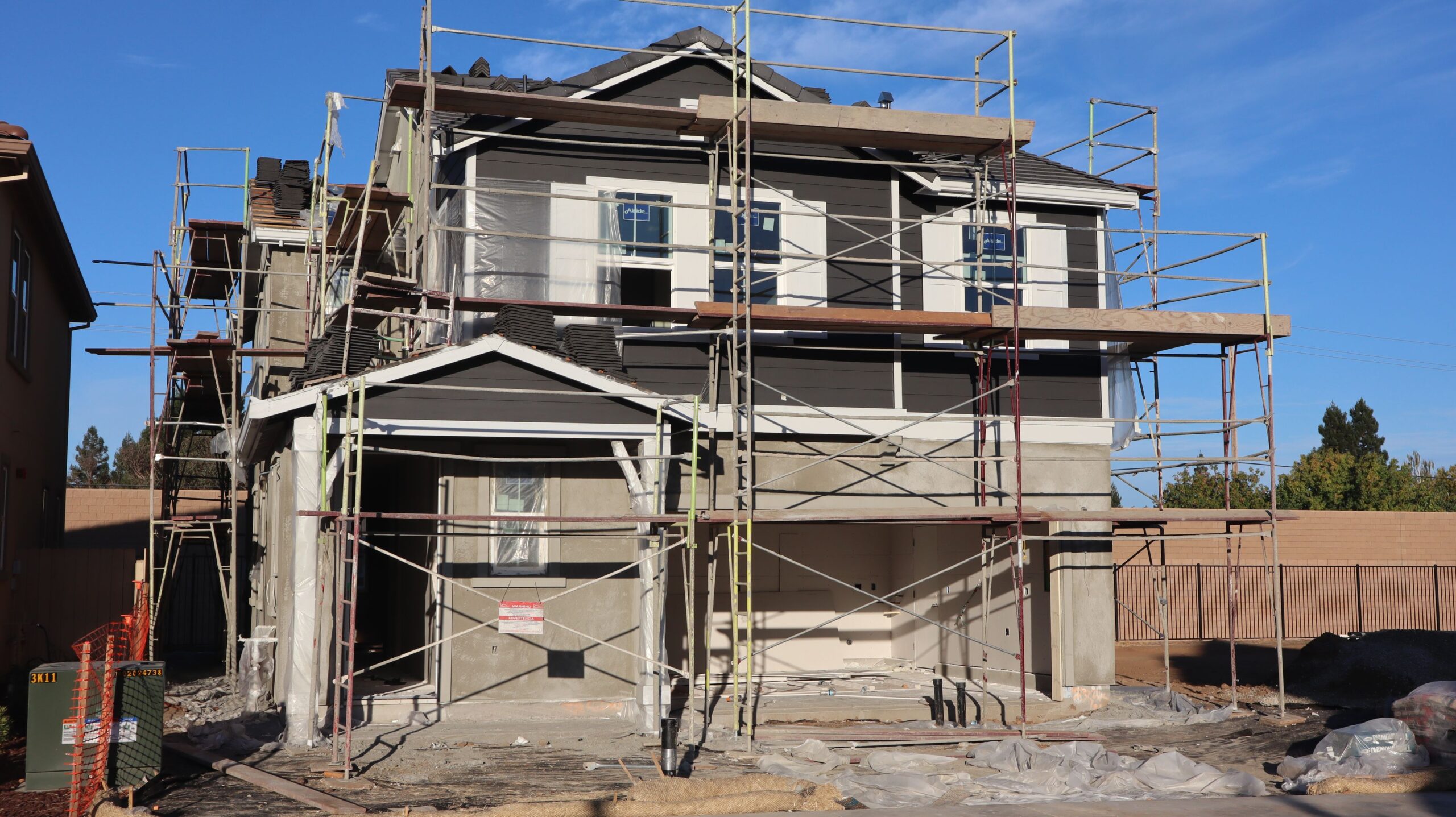
How Long Before a Siding Company Starts Ranking
Most siding companies see the first meaningful traffic increase in 60 to 90 days, with compounding growth from month four onward as more pages accumulate and start linking to each other.
The honest version of this timeline: nothing happens in the first few weeks. Google needs to crawl, index, and start testing where a new page ranks, and that process alone eats two to four weeks before any movement shows up in Search Console. What determines whether month three looks good or forgettable is mostly consistency — a site that published eight posts and stopped will plateau, while one that kept a steady weekly pace keeps adding new terms it ranks for every month. A related roofing company on the same publishing cadence saw the same pattern — slow first month, then a steady climb once enough pages existed to reinforce each other through internal links.
Reviews Are a Ranking Factor, Not Just a Trust Signal
97% of consumers now read reviews before choosing a local business, and 68% require at least a 4-star average before they’ll even consider a company — making review volume and recency a direct local ranking input, not just a trust nicety.
BrightLocal’s 2026 Local Consumer Review Survey found that 41% of consumers now say they always check reviews when browsing, up from 29% the year before, and that AI tools have jumped from 6% to 45% as a discovery channel for local businesses — putting AI search ahead of Yelp and Tripadvisor.[3] That shift matters for siding contractors specifically because most review activity clusters around a handful of national brands with review-request automation already built into their sales process. A local company that asks for a review after every completed job, in person or by text, closes that gap fast — review velocity, not just star rating, is what Google’s local algorithm actually weighs.

What a Year of Consistent Content Actually Looks Like
Most siding companies that try content marketing quit around week six, right when it feels like nothing is working. That’s also usually right before it starts working. A martial arts gym in Taipei, taipeibjj.com, ran a daily publishing schedule and went from zero organic traffic to over 1,100 monthly visitors — not because martial arts content is easier to rank than siding content, but because the gym kept publishing past the point where most owners give up. An archery equipment retailer on the same model, archerysupplier.com, crossed 1,100 monthly sessions the same way: steady output, not viral posts.
The pattern holds across industries because it isn’t industry-specific — it’s a function of how many indexed, relevant pages a site has answering real search questions. A siding company publishing one solid post a week has 52 new opportunities to rank by the end of the year that it didn’t have in January. Most competitors in the same city still don’t have a blog at all.
If publishing that consistently sounds like more than your team can take on between actual install jobs, RankOnRepeat handles the keyword research, writing, and publishing for a flat monthly fee — see how it works before deciding whether to build this in-house or hand it off.

Frequently Asked Questions
How much does SEO cost for a siding company?
A reasonable range for a local siding company is $500–$2,500 a month for content and on-page work, well under what most contractors spend on Angi leads in a single month. The gap is that SEO compounds over time instead of resetting every billing cycle.
How is SEO different from just running Google Ads for siding leads?
Google Ads leads stop the moment you stop paying; SEO pages keep ranking and sending traffic for years after they’re published. Most siding companies get the best results running both together — ads for immediate volume, content for the leads that keep arriving after the ad budget runs out.
Do I need a blog post for every city I serve?
Only if you genuinely serve that city with a real service area and can write something specific to it — a shared job photo, a local material supplier, a neighborhood name. Thin, duplicated city pages with the same content swapped for a place name tend to get filtered out of results rather than ranked.
Can I write this content myself instead of hiring someone?
Yes, and plenty of small siding companies do — the content doesn’t need to be polished, it needs to answer a real question a homeowner is searching. The limiting factor is almost never writing skill, it’s finding an hour a week between jobs to actually publish something.
References
- Federal Trade Commission — order requiring HomeAdvisor to pay up to $7.2 million over deceptive lead-marketing claims.
- This Old House — 2026 siding replacement cost data by material and home size.
- BrightLocal — 2026 Local Consumer Review Survey on review behavior and star-rating thresholds.
- Google Search Central — guidance on Business Profile signals and local search appearance.
- RankOnRepeat — cost comparison of rented contractor leads vs. organic SEO traffic.
Published by the RankOnRepeat editorial team · Last updated: September 26, 2026 · How RankOnRepeat works