Blogging for Medical Weight Loss Clinics: How to Win GLP-1 Patients From Google Without Paying $12 a Click
- 11% of U.S. adults now take a GLP-1 drug for weight loss, up from 3% in 2024 — a four-fold jump in two years, per Gallup’s June 2026 survey.
- Core GLP-1 keywords cost $6 to $15 per click on Google Ads, and running the ad at all requires LegitScript certification most independent clinics don’t have.
- The U.S. medical weight loss clinic market is worth $11.8 billion in 2026 and growing 13.6% a year, pulling new competitors into the same keyword auctions every quarter.
- Google doesn’t require LegitScript certification to rank a blog post — only to run a paid ad — which leaves organic content as one of the few channels smaller clinics can still win.
- A clinic publishing weekly builds a compounding patient pipeline that doesn’t disappear the moment the ad budget runs out.
Table of Contents
- The GLP-1 Boom Turned Medical Weight Loss Clinics Into an $11.8 Billion Vertical
- What Google Actually Charges for GLP-1 Keywords Right Now
- Why LegitScript Certification Locks Most Clinics Out of Paid Ads
- The Questions Patients Google Before They Ever Call
- How a Weekly Blog Builds a Pipeline Ads Can’t Touch
- What to Write About When You Can’t Say “Ozempic” in an Ad
- How Long Before Content Starts Producing Booked Consultations
- Turning Readers Into Patients Without Sounding Like a Pharmacy Ad
- Frequently Asked Questions
Eleven percent of American adults are currently taking a GLP-1 drug for weight loss, up from just 3% two years ago — a four-fold jump Gallup’s June 2026 survey calls the fastest adoption curve of any prescription category in recent memory. Every one of those roughly 28 million people had to find a prescriber somewhere, and for a growing share, that search starts on Google. The problem: a single click on a semaglutide or tirzepatide keyword now runs $6 to $15, and Google won’t even serve that ad unless the clinic holds LegitScript certification first. Medical weight loss clinics without a six-figure ad budget watch competitors buy the top three results while their own site sits on page two. Blogging doesn’t have that gate.
The GLP-1 Boom Turned Medical Weight Loss Clinics Into an $11.8 Billion Vertical
Direct answer: The U.S. medical weight loss clinic market hit $11.8 billion in 2026 and is projected to reach $37.18 billion by 2035, a 13.6% annual growth rate that is pulling new competitors — telehealth startups, med spas, and solo practitioners — into the same keyword auctions every quarter.
Two years ago, “medical weight loss clinic” was a sleepy category dominated by a handful of bariatric practices and the occasional endocrinologist. Then GLP-1 adoption went from 3% of U.S. adults in 2024 to 11% in 2026, per Gallup, and the clinic landscape reorganized almost overnight. Dermatologists added weight loss menus. Med spas that used to live on Botox and filler revenue now run semaglutide programs as their primary draw. Telehealth platforms built entire business models around prescribing GLP-1s without ever opening a physical location.
Ninety percent of Americans now say they’re aware of GLP-1 drugs, up from 80% in 2024 — this isn’t just existing patients switching clinics, it’s a genuinely new category of searcher typing “weight loss clinic near me” for the first time. Every clinic that opened in the last eighteen months is bidding on the same forty or fifty keywords the first movers already own.
What Google Actually Charges for GLP-1 Keywords Right Now
Direct answer: Core GLP-1 and medical weight loss keywords cost $6 to $15 per click on Google Ads in 2026, putting the category in similar territory to dental implants and personal injury law — two of the most expensive verticals on the platform.
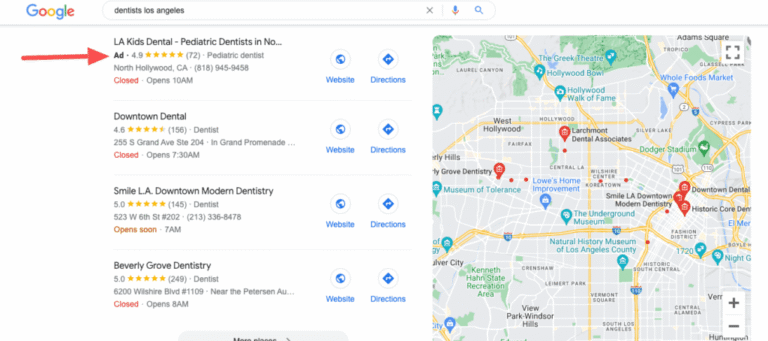
A clinic spending $5,000 a month at the midpoint of that range buys roughly 475 clicks. Industry benchmarks put cost-per-booked-consultation at $50 to $75 after the first three months, once underperforming keywords get cut — not a bad number for a program with real lifetime value. The problem is what happens the day the budget stops. The clicks stop too, and so does the pipeline.
Clinics running $10,000 to $30,000 a month are the ones showing up first for the highest-intent terms — a budget tier most independent, one- or two-location practices can’t sustain alongside payroll and rent. Bariatric surgery practices ran into the same math last year: the CPC is high enough that only the deepest pockets stay visible month after month.
Why LegitScript Certification Locks Most Clinics Out of Paid Ads
Direct answer: Google’s healthcare and medicines policy requires LegitScript certification before any advertiser can reference prescription weight loss drugs in ads, landing pages, or keywords — a requirement that applies regardless of budget and excludes clinics that haven’t completed the annual licensing and prescriber-verification review the certification demands.
This is the part most clinic owners don’t find out until an ad gets rejected. Mentioning semaglutide, tirzepatide, or a brand name like Ozempic or Zepbound anywhere in an ad, landing page, or keyword list triggers Google’s prescription drug policy, and enforcement has tightened to the point where unverified advertisers get an automatic rejection rather than a warning. Certification itself isn’t free or fast — it involves verifying pharmacy licensing and prescriber credentials, and it has to be renewed every year.
A clinic that clears LegitScript can still only target certain terms in certain states. A clinic that hasn’t started the process can’t run a compliant ad at all, no matter how legitimate the practice is. None of that applies to organic content — Google doesn’t ask a blog post for a LegitScript number before it ranks it, only whether the post actually answers the question someone searched.
The Questions Patients Google Before They Ever Call
Direct answer: Most GLP-1 patients research dosing, side effects, insurance coverage, and compounded-versus-brand-name differences for weeks before booking a consultation, which means the clinic that answers those questions in detail usually gets the call — not necessarily the one with the highest ad bid.
Think about what someone actually types before they pick up the phone: “does insurance cover semaglutide for weight loss,” “compounded tirzepatide vs Zepbound,” “GLP-1 clinic that takes new patients near me.” None of those searches look like a sales pitch, and none require LegitScript to answer honestly in a blog post, because the post isn’t selling a prescription — it’s explaining one.
A clinic that publishes a clear, specific answer to each question — with real numbers, not marketing language — ends up ranking for dozens of long-tail searches a single paid ad could never cover. Nutritionists chasing the same patient base have found the same thing: specific, practical content outranks generic sales pages almost every time.

How a Weekly Blog Builds a Pipeline Ads Can’t Touch
Direct answer: A blog that publishes consistently compounds — each post keeps ranking and sending traffic long after it’s published, while a paid ad stops producing the moment the budget runs out, which is the core economic difference between the two channels.
Say a clinic publishes one well-researched post a week for six months — roughly 26 pieces of content, each targeting a different question, procedure, or patient concern. Some will rank for a handful of searches a month. A few will catch a cluster of related long-tail terms and become genuine traffic sources. None of them cost anything to keep running once they’re live — no daily budget being drained, no bid war to win every morning.
Compare that to the ad math from earlier: $5,000 a month buys 475 clicks, and the month that spend stops, so does everything it was producing. A blog built over the same six months doesn’t reset. It keeps compounding whether or not the clinic has cleared LegitScript, raised its ad budget, or survived the next Google Ads policy update.
What to Write About When You Can’t Say “Ozempic” in an Ad
Direct answer: Clinics should write about outcomes, process, and cost transparency — insurance navigation, what the first consultation actually involves, realistic timelines, and side-effect management — rather than drug names alone, since those are the topics patients search for repeatedly and the ones Google doesn’t restrict.
A few angles that consistently work: a patient’s first-month experience in plain language, what insurance typically covers versus what comes out of pocket, compounded-versus-brand-name pricing, and what actually happens during an initial consultation. None of this requires naming a drug in a way that trips Google’s ad restrictions, because it’s not an ad — it’s an answer.
Med spas that added GLP-1 programs to their existing service menu are in a similar spot — they already know how to write about procedures and outcomes without sounding like a pharmacy insert, and that skill transfers directly.

How Long Before Content Starts Producing Booked Consultations
Direct answer: New content in a competitive, high-CPC category like medical weight loss typically needs a few months of consistent publishing before it starts ranking meaningfully — slower than switching on a Google Ads campaign, but it produces a channel that keeps running without ongoing spend.
That timeline frustrates owners used to paid search, where a campaign sends clicks the same afternoon it goes live. Content doesn’t work that way, and pretending otherwise sets owners up to quit three weeks in, right before the first posts start ranking. The truth is, clinics that abandon a blog after one slow month aren’t being pragmatic — they’re walking away right before it would have started paying off.
A clinic that can’t commit a staff member’s time to a weekly schedule is better off hiring it out. RankOnRepeat runs the keyword research, writing, and publishing on a set schedule, so the compounding starts without anyone on staff losing a day a week to it.
Turning Readers Into Patients Without Sounding Like a Pharmacy Ad
Direct answer: The best-converting weight loss clinic content ends with a specific, low-friction next step — booking a free consultation or checking insurance eligibility — rather than a hard sell, because readers who found the post through a research-stage search aren’t ready to be pitched a prescription yet.
Every post should end somewhere a reader can actually go: a consultation booking form, an insurance-check tool, or a phone number with a specific reason to call (“ask about our compounded pricing”). Putting that step at the bottom, after the reader already has the honest answer they came for, converts better than a sales pitch they haven’t earned yet. One client site RankOnRepeat manages grew 369% in 30 days after switching to a daily publishing schedule — proof the compounding effect shows up fast once the schedule actually holds.

Frequently Asked Questions
Can a medical weight loss clinic run Google Ads for GLP-1 drugs without LegitScript certification?
No. Google’s healthcare and medicines policy requires LegitScript certification before any advertiser can reference prescription weight loss drugs like semaglutide or tirzepatide in ads, landing pages, or keywords, regardless of budget.
How much does a Google Ads click cost for weight loss clinic keywords?
Core GLP-1 and medical weight loss keywords run $6 to $15 per click in 2026, putting the category alongside dental and legal keywords as some of the most expensive on the platform.
Does blogging require the same LegitScript certification as paid ads?
No. LegitScript certification is a Google Ads advertising requirement, not a search-ranking requirement — organic content about weight loss treatment doesn’t need it to rank, only to appear in a paid ad.
How fast is the medical weight loss clinic market growing?
The U.S. medical weight loss clinic market was worth $11.8 billion in 2026 and is projected to reach $37.18 billion by 2035, a 13.6% compound annual growth rate.
If publishing a weekly blog on top of running patient consultations sounds like one more thing nobody on staff has time for, RankOnRepeat handles the keyword research, writing, and publishing for a flat monthly fee — built for clinics that know content works but can’t spare a day a week to produce it.
References
- Gallup, “In U.S., GLP-1 Usage Reaches New High” (2026) — survey of 5,065 U.S. adults showing GLP-1 use for weight loss rising to 11% in 2026 from 3% in 2024.
- Google Ads Healthcare and Medicines Policy — LegitScript certification requirements for advertising prescription drugs and telemedicine services.
- Markwide Research, U.S. Medical Weight Loss Clinics Market Report — market sized at $11.8 billion in 2026, projected to reach $37.18 billion by 2035.
- The Valley Marketing Group, GLP-1 Weight Loss Clinic Google Ads Marketing (2026) — cost-per-click and ad budget benchmarks for GLP-1 keyword campaigns.
Published by the RankOnRepeat editorial team · Last updated: October 14, 2026 · How RankOnRepeat works