Key Takeaways
- Flooring is a low-competition SEO niche — most flooring companies still buy leads instead of ranking, so the search results are wide open in the average city.
- The money keyword is “flooring installer near me” plus your material — hardwood, LVP, tile, and epoxy searches carry buyer intent that no ad targeting can match.
- Your Google Business Profile ranks before your website does — a complete, photo-heavy, review-rich profile is the single highest-ROI thing a flooring contractor can fix this week.
- Blog posts about cost, materials, and “how long does it take” pull people who are ready to buy, not tire-kickers.
- SEO leads cost a fraction of Angi or Thumbtack over time — you own the traffic instead of renting it, and it doesn’t get resold to four competitors.
On this page
- Why flooring contractors rank faster than most local businesses
- What SEO for flooring contractors actually involves
- The keywords flooring customers actually type into Google
- Your Google Business Profile is your highest-ROI asset
- The blog posts that turn searchers into booked flooring jobs
- How long before SEO fills your schedule?
- SEO vs Angi, Thumbtack, and paid leads: the real math
- Frequently asked questions
A shared flooring lead from Angi runs $15 to $100, and the person on the other end just handed the same phone number to three or four of your competitors. You’re not buying a customer. You’re buying a coin flip, and you’re paying whether or not you win it. Meanwhile the flooring company two towns over stopped buying leads eighteen months ago and now shows up first when someone searches “vinyl plank installer near me.” Same trade, same trucks, completely different math. The difference is that one of them treats Google like a billboard they rent and the other treats it like an asset they own. This is how you become the second kind.
Why flooring contractors rank faster than most local businesses
Flooring is one of the easiest trades to rank for on Google, mostly because your competition isn’t trying. Search “flooring installer near me” in a mid-size city and you’ll usually find a couple of national franchises, a big-box store’s install page, and a scattering of local sites that were last updated in 2019. Almost none of them publish content. That vacuum is your opening.
Compare that to a dentist or a personal injury lawyer, where every practice in town has a marketing agency and a five-figure ad budget. Flooring keywords carry a keyword difficulty score of roughly 0 to 15 in most markets — low enough that a consistent blog and a well-kept profile can climb into the top three within months, not years. The same pattern holds across the trades; we’ve watched it play out with painters and general contractors, and flooring is if anything softer.
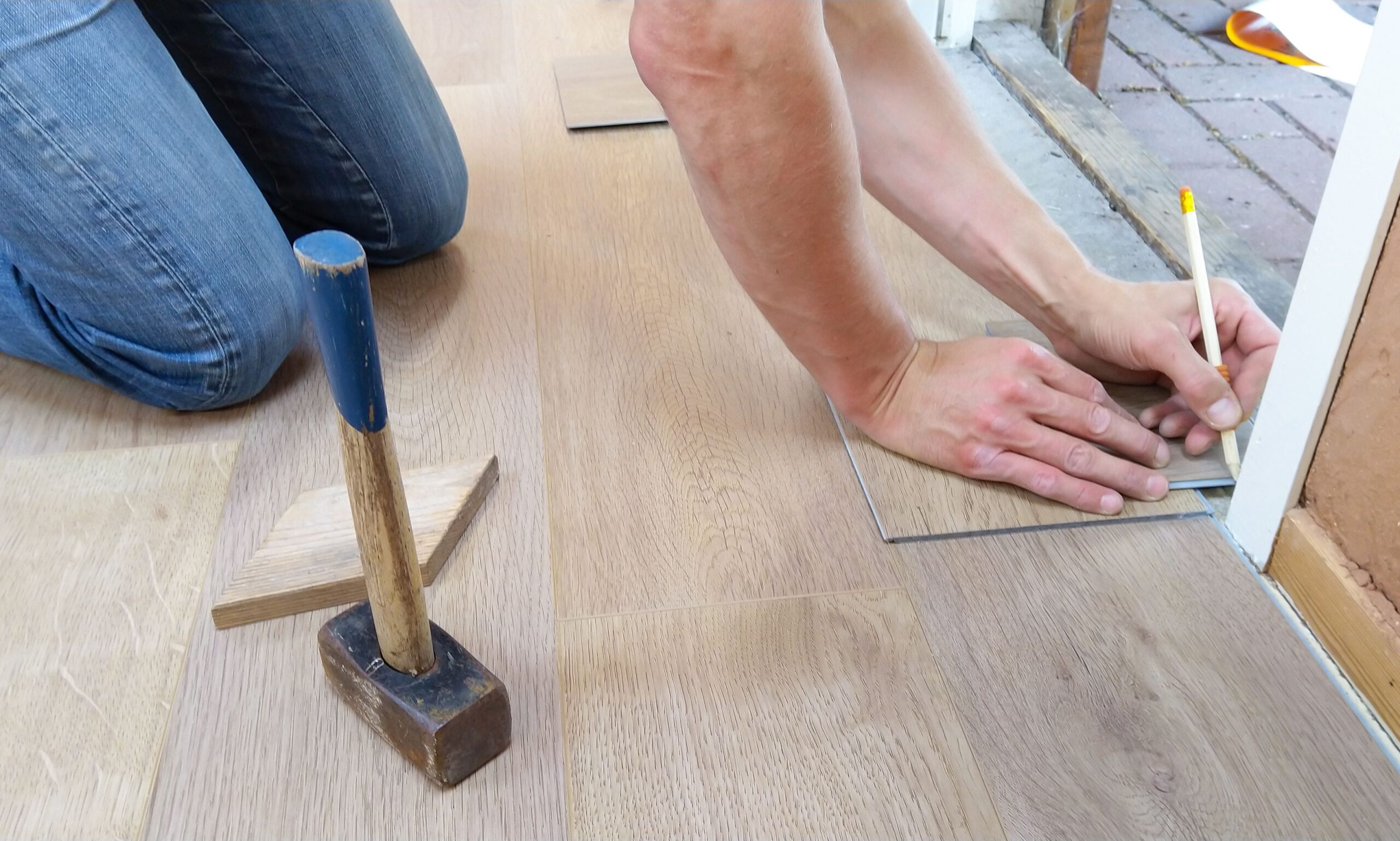
There’s a second advantage: your jobs photograph beautifully. A finished herringbone floor or a clean tile transition is the kind of image that earns clicks and keeps people on the page — signals Google reads as “this result is useful.” Most trades can’t say that about their work.
What SEO for flooring contractors actually involves
SEO for flooring contractors comes down to three moving parts: a fully optimized Google Business Profile, a website with a page for every service and service area, and a steady stream of helpful blog content. Get those three working together and you stop depending on lead brokers. Skip any one of them and the other two work at half strength.
The Business Profile is what shows up in the map pack — the three listings with stars that sit above the regular results. Your service pages are what rank in those regular results for terms like “hardwood floor refinishing” or “epoxy garage floor.” And the blog is what pulls in people earlier in their decision, when they’re still asking whether luxury vinyl is worth it or how much a tile floor really costs. Each layer catches a different buyer at a different moment.
None of this requires you to become a marketer. It requires the work to actually get done, consistently, which is exactly where most flooring companies fall down — they set up a profile once, publish two blog posts, and never touch it again.
The keywords flooring customers actually type into Google
The highest-intent flooring searches pair a material with an action or a location: “LVP installation cost,” “hardwood floor refinishing near me,” “tile installer [city].” These are people ready to spend, not researchers killing time.
Broad terms like “flooring” are almost useless — too competitive, too vague, and half the searchers are shopping for a DIY project at the hardware store. What fills your calendar are the specific, unglamorous long-tail phrases. Think “cost to install vinyl plank flooring in a 1,000 sq ft house” or “engineered hardwood vs laminate for basements.” Each one signals a homeowner with a specific project and a budget forming in their head.
Group your keywords by material, because that’s how customers think and how you’ll structure your site: hardwood (installation, refinishing, repair), luxury vinyl and laminate, tile and stone, carpet, and specialty work like epoxy or heated floors. Every one of those deserves its own service page with its own dedicated content. If you want a repeatable way to surface these terms, our guide on finding low-competition keywords walks through the exact process.

Your Google Business Profile is your highest-ROI asset
For a local flooring company, the Google Business Profile drives more calls than the website in the early months. It’s free, it ranks in the map pack, and a complete profile with real photos and steady reviews beats a half-finished one every time.
According to BrightLocal’s Local Consumer Review Survey, the overwhelming majority of consumers use Google to evaluate local businesses, and they lean heavily on reviews before they ever click through to a website. That means your profile is doing the selling before your site gets a chance. Fill out every field. List each service — hardwood installation, refinishing, tile, LVP, repairs — as its own entry. Set your service areas by neighborhood, not just your city.
Then feed it. Upload fresh job photos every week, because Google rewards active profiles and homeowners want to see real floors you’ve actually laid, not stock images. Ask every satisfied customer for a review and mention the material and neighborhood in your reply — “Thrilled the white oak turned out great in your Riverside kitchen.” Those replies quietly stuff your profile with the exact keywords people search.
The blog posts that turn searchers into booked flooring jobs
Here’s where most flooring contractors either do nothing or do it wrong. They write a post titled “Welcome to our blog” and wonder why nothing happens. The posts that actually book jobs answer the questions a homeowner asks the night before they call for an estimate.
The best-performing flooring content tends to fall into a few buckets. Cost breakdowns pull the most traffic — “How much does it cost to install hardwood floors in 2026?” gets searched constantly, and the person reading it is minutes away from requesting a quote. Comparison posts (“Engineered hardwood vs solid: which is right for your home?”) catch people mid-decision. And problem-solving pieces (“Why is my new laminate floor cupping?”) build the kind of trust that turns a reader into a caller.

The catch is frequency. One post a month doesn’t move the needle; Google rewards sites that publish consistently, and a flooring blog updated twice a week will outrank a dormant competitor within a season. That’s the entire premise behind sites like taipeibjj.com, a local service business we grew from zero to over 1,100 monthly visitors on nothing but a daily publishing habit. The trade is different; the mechanism is identical. Consistency is the whole game, and it’s exactly the part busy flooring owners can’t sustain on their own.
How long before SEO fills your schedule?
Most flooring contractors see their first ranking movement in 60 to 90 days and meaningful, steady lead flow by month six. The Google Business Profile usually produces calls faster than the website — sometimes within weeks — while blog content compounds more slowly.
The timeline is honest, not instant, and anyone promising page-one results in two weeks is selling you something. What actually happens is a slope. Early on you’ll notice your profile appearing for more searches. A month or two later a service page cracks the top ten. By the half-year mark, if you’ve been publishing consistently, you’ve got a handful of blog posts pulling in searchers every day and a profile the map pack trusts. The floor keeps rising because old content keeps working — a cost guide you published in spring is still booking jobs the following winter. Paid leads stop the second you stop paying. For a fuller breakdown, see our piece on how long SEO takes to work.

SEO vs Angi, Thumbtack, and paid leads: the real math
The truth is, most flooring contractors who skip SEO aren’t saving money — they’re just paying Angi and Thumbtack for leads instead, forever, at a price that only goes up. A shared lead gets sold to multiple contractors, so you’re often paying to lose. Even when you win, you’ve spent $50 to $100 before you’ve quoted a dime.
SEO flips the arrangement. The upfront cost is real, but every ranking you earn keeps producing leads that are yours alone — no reselling, no bidding war, no monthly subscription that evaporates the day you pause it. A single cost-guide blog post that ranks can generate more qualified estimate requests in a year than a season of shared leads, at a fraction of the cost per booked job. That’s the case we make in detail in SEO vs Angi leads. Paid lead platforms have their place for filling a slow week. As a foundation, they’re quicksand.
Frequently Asked Questions
How much does SEO cost for a flooring contractor?
Most flooring companies invest somewhere between $500 and $2,000 a month depending on whether they handle content themselves or outsource it. A flat-rate content service sits at the lower end and covers the part most owners can’t keep up with — consistent publishing. Compared to $50-plus per shared lead, it usually pays for itself within a few booked jobs.
Do I need a website, or is a Google Business Profile enough?
The profile alone can generate calls, but it caps out fast. Your website is what ranks for specific searches like “epoxy garage floor cost” and gives Google the content it needs to trust you. The two work together — the profile for the map pack, the site for everything else.
Which flooring keywords are easiest to rank for?
Material-plus-location long-tail terms are the softest — “LVP installer [your city],” “hardwood refinishing near me,” “tile installation [neighborhood].” They have lower competition than broad terms and far higher buyer intent, which is exactly the combination you want.
How often should a flooring company publish blog posts?
Consistency beats volume, but volume still matters. One or two quality posts a week will outperform a dormant blog within a few months. The sites that dominate local flooring searches publish steadily rather than in occasional bursts.
Let someone else keep the floors — and the content — coming
The flooring contractors winning on Google aren’t better marketers. They just show up every week while everyone else quits after two posts. If publishing SEO content consistently sounds like too much work on top of running crews and quoting jobs, RankOnRepeat handles everything — keyword research, writing, and publishing — for a flat monthly fee. Take a look at how it works and picture your schedule six months from now, full of jobs you didn’t have to buy.
References
- BrightLocal — Local Consumer Review Survey — data on how consumers use Google and reviews to evaluate local businesses.
- Backlinko — Google Organic CTR Study — click-through rates by search position, showing the value of top-three rankings.
- Google Search Central — Google Business Profile & local ranking guidance — Google’s own documentation on local visibility and relevance signals.
- Search Engine Journal — Local SEO Ranking Factors — overview of what influences local map-pack and organic rankings.
Published by the RankOnRepeat editorial team · Last updated: July 16, 2026 · How RankOnRepeat works