Key Takeaways
- Landscaping is one of the cheapest niches to rank for — most local landscaping keywords sit at a keyword difficulty of 0 to 8, far below what dentists or lawyers face.
- Homeowners search before they call — roughly 46% of all Google searches have local intent, and “landscapers near me” spikes every spring and summer.
- A Google Business Profile plus a steady blog beats paid leads — you own the traffic instead of renting it from Angi or Thumbtack one job at a time.
- SEO compounds; lead-gen apps don’t — an article you publish this July can book jobs for years, while a $45 Angi lead is gone the second a competitor closes it.
- Expect traction in 3 to 6 months — landscaping sites move faster than most industries because the competition is thin and the buyer intent is high.
Table of Contents
- Why Landscapers Rank Faster Than Almost Any Other Business
- What “SEO for Landscapers” Actually Means
- The Keywords That Bring Jobs, Not Just Traffic
- Your Google Business Profile Is the Highest-ROI Free Asset You Own
- Why a Blog Turns Your Website Into a 24/7 Salesperson
- SEO vs Angi and Thumbtack: The Math Most Landscapers Miss
- How Long Until Google Starts Filling Your Schedule
- Frequently Asked Questions
A single Angi lead for a landscaping job can cost you $30 to $50 — and Angi sells that same lead to three or four of your competitors at the same time. Run the numbers over a summer and most crews are handing over $1,500 to $3,000 a month just to compete for jobs they might not even win. Meanwhile, the homeowner who typed “paver patio installer near me” into Google found four businesses on the first page, and none of them paid a cent for that click. That gap — between renting leads and owning your spot on Google — is the whole game. Landscaping happens to be one of the easiest trades to win it in.
Why Landscapers Rank Faster Than Almost Any Other Business
Here’s the part nobody tells you: the industry you’re in decides how hard SEO is, and landscaping drew a good hand. When a family law attorney tries to rank for “divorce lawyer,” they’re fighting firms with twenty years of backlinks and five-figure content budgets. A landscaper competing for “lawn care company in [your town]” is usually up against a handful of local outfits, half of which have a website that hasn’t been touched since 2019.
That thin competition shows up in the numbers. Most local landscaping and hardscaping keywords carry a keyword difficulty score between 0 and 8 on Ahrefs’ 100-point scale — meaning a modest website with a few solid pages can crack the first page. Compare that to cosmetic dentistry or personal injury law, where difficulty routinely tops 40. Trades like landscaping rank faster because your competitors simply aren’t trying very hard online. The ones who do show up tend to own the whole market.
The demand side is just as friendly. Landscaping is deeply local and deeply seasonal, so the searches cluster into predictable, high-intent phrases — someone Googling “sod installation cost” or “backyard landscaping near me” in June is a buyer, not a browser. You don’t need national traffic. You need to be the first name a homeowner in your service area finds, and that’s a far smaller hill to climb.
What “SEO for Landscapers” Actually Means
Strip away the jargon and SEO is three things working together: showing Google what you do, showing Google where you do it, and giving Google enough evidence that you’re the best answer. For a landscaping business, that translates into a fast website with a page for each service, a fully filled-out Google Business Profile, and a stream of helpful content that answers the questions your customers are already typing.

Most landscapers get the first two roughly right and then stop. They build a five-page website — home, about, services, gallery, contact — and wonder why the phone doesn’t ring. The problem is that five pages give Google almost nothing to rank. There’s no page that answers “how much does a retaining wall cost in [city]” or “when should I aerate my lawn,” so when someone searches those things, Google sends them to a competitor who bothered to write it down. SEO isn’t a one-time setup. It’s the ongoing habit of being the business that answered the question first.
The Keywords That Bring Jobs, Not Just Traffic
The mistake I see over and over is landscapers chasing big, vague keywords like “landscaping” or “lawn care.” Those get searched a lot, they’re brutally competitive, and half the people typing them are looking for DIY tips, not a company to hire. Traffic that never converts is a vanity metric.

The money is in specific, local, buyer-intent phrases — the long-tail keywords that signal someone is ready to spend. Think about the difference between “lawn care” and these:
- “paver patio installation [your city]”
- “retaining wall contractor near me”
- “sod installation cost per square foot”
- “landscape lighting installer [your suburb]”
- “drainage solutions for a wet backyard”
Each of those has a person and a project behind it. They’re lower volume, sure, but the person searching “cost to install a paver patio” is standing in their backyard imagining one. That’s who you want. If you want the full method for finding these, our guide to finding low-competition keywords that bring real customers walks through it step by step. The short version: target the searches that name a service and a place, and let your competitors fight over the one-word terms.
Your Google Business Profile Is the Highest-ROI Free Asset You Own
Before a single blog post, claim and fill out your Google Business Profile. When someone searches “landscapers near me,” the first thing Google shows — above the regular results — is the map pack: three local businesses with star ratings, photos, and a call button. Landing in that pack is often worth more than the number-one organic spot, and it costs nothing but attention.
Fill every field. Pick the right primary category (landscaper, lawn care service, hardscape contractor — whatever fits), list your service areas, add real photos of completed jobs, and post updates. Then chase reviews relentlessly, because reviews are the single biggest lever on local ranking. BrightLocal’s research found that the average consumer reads reviews before choosing a local business, and Google leans on both the count and the recency of those reviews to decide who sits in the map pack. A landscaper with 60 reviews and photos from last week outranks the one with 8 reviews from 2022, almost every time.
The video below breaks down how landscaping and hardscape businesses put these pieces together — profile, website, and content — into one system that ranks.
Why a Blog Turns Your Website Into a 24/7 Salesperson
A homeowner planning a backyard renovation doesn’t wake up ready to call. They spend weeks researching — “how much does landscaping cost,” “paver vs concrete patio,” “best low-maintenance plants for a front yard.” Every one of those searches is a chance to be the business that shows up with a clear, genuinely useful answer. Do it well and you’re not a stranger when they finally call; you’re the expert who already helped them.
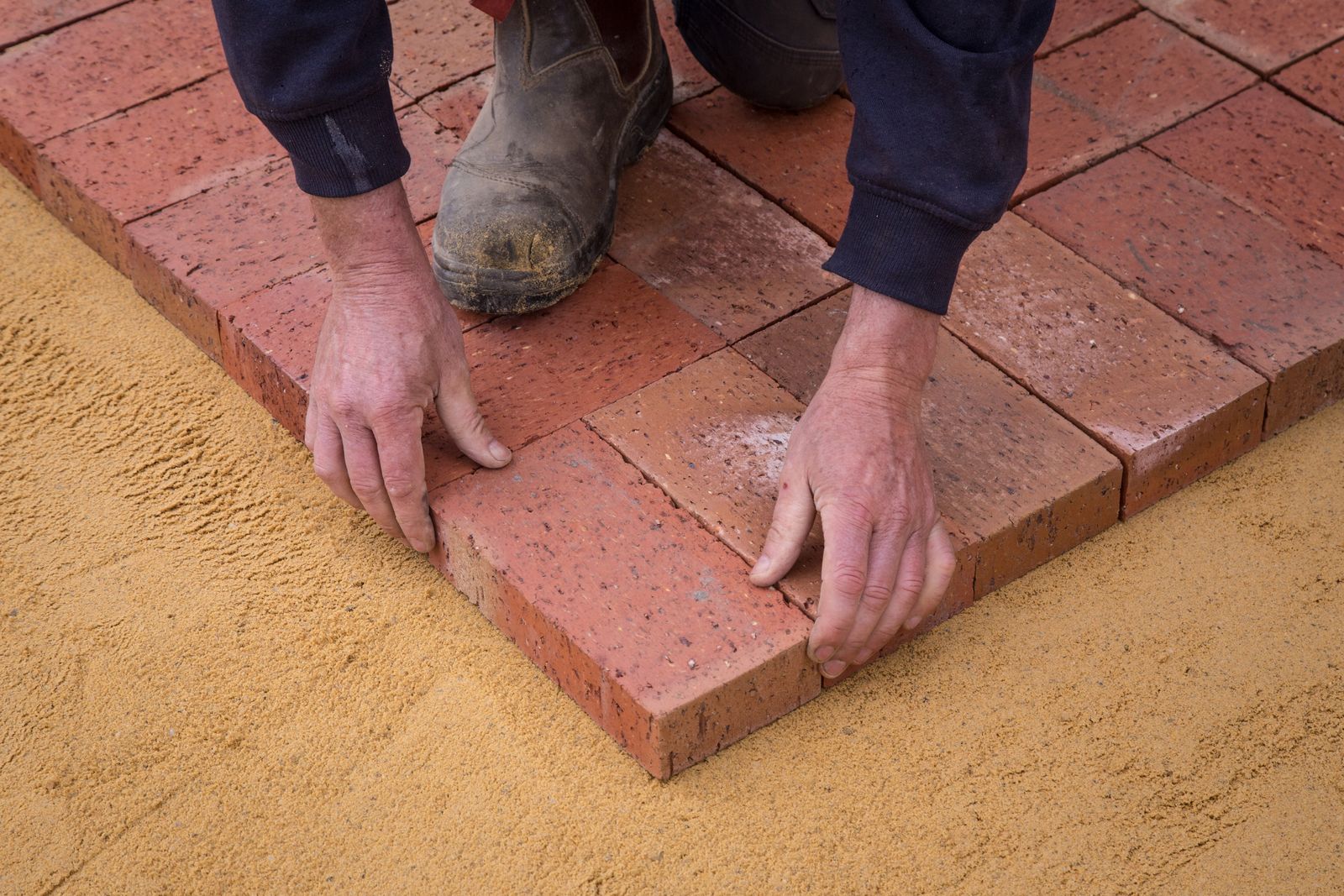
This is where consistency separates the winners from everyone else. One blog post does almost nothing. Forty of them, published steadily over a year, turn a five-page brochure into a library that Google trusts and homeowners find at every stage of their decision. It’s the same pattern we’ve watched play out across service businesses — TaipeiBJJ, a local martial arts gym we publish for, went from near-zero to over 1,100 monthly visitors on the back of daily SEO content. Different industry, identical mechanics: answer enough real questions and you become the obvious choice. The catch is that most landscapers are too busy running crews in July to write anything, which is exactly why the ones who keep publishing pull away from the pack.
The same logic that fills a patio installer’s calendar applies to adjacent trades, too — our breakdowns of SEO for concrete contractors and SEO for tree service companies use the same playbook, tuned to those seasons and price points.
SEO vs Angi and Thumbtack: The Math Most Landscapers Miss
The truth is, most landscapers who buy Angi and Thumbtack leads aren’t marketing their business — they’re renting someone else’s. You pay per lead, that lead gets sold to several competitors at once, and the moment you stop paying, the pipeline goes dry. You’ve built nothing you own.

Run the comparison over a year. Say you spend $2,000 a month on lead-gen apps — that’s $24,000, and at the end of it you have exactly what you started with: nothing but the jobs you closed and a habit of paying to compete. Put a fraction of that into SEO and content, and after twelve months you own a website that ranks, a reviews profile competitors can’t buy their way past, and a blog that keeps pulling in searchers while you sleep. One of those assets appreciates. The other resets to zero every 30 days. If you’re weighing the two channels head-to-head, we go deeper in SEO vs Thumbtack. None of this means you rip out paid leads tomorrow — they’re fine as a bridge while your rankings climb. Just don’t mistake the bridge for the destination.
How Long Until Google Starts Filling Your Schedule
Straight answer: most landscaping sites start seeing real movement in three to six months, with the bigger gains landing between months six and twelve. That’s faster than most industries, because the competition is thin and the intent is high — but it’s not overnight, and anyone promising page one in two weeks is selling something.
Ahrefs studied two million pages and found that only 5.7% of them reached the top 10 for any keyword within a year of being published, and the pages that do rank at the top are, on average, over two years old. That sounds discouraging until you flip it: the businesses that start now and keep going are building an asset almost none of their competitors have the patience to build. Season plays in your favor here as well. Publish through the summer and early fall, and your content is indexed and climbing by the time next spring’s rush of “landscaper near me” searches hits. The landscapers booked solid next April are the ones who started their SEO last July.
Frequently Asked Questions
How much does SEO cost for a landscaping business?
Done-for-you SEO for a local landscaper typically runs $500 to $2,000 a month depending on how much content and how many services you’re targeting. That’s often less than a single month of Angi leads, and unlike those leads, the work compounds instead of disappearing when you stop paying.
Do landscapers really need a blog to rank on Google?
Yes — a service-page-only website gives Google very little to rank and no way to reach homeowners in the research phase. A steady blog answering real questions (“paver vs concrete patio,” “cost to install sod”) is what pulls in searchers before they’re ready to call and builds the authority that lifts your whole site.
What’s the fastest way for a new landscaping company to show up on Google?
Claim and fully complete your Google Business Profile, then start collecting reviews from every happy customer. The local map pack is the quickest win, and reviews are the strongest signal for landing in it — you can start ranking there well before your website’s organic pages mature.
Is SEO better than paying for Angi or Thumbtack leads?
For long-term growth, yes. Paid leads stop the moment you stop paying and are shared with your competitors, while SEO builds an asset you own. Many landscapers run paid leads as a bridge while their rankings climb, then wind them down as organic traffic takes over.
Stop Renting Leads. Start Owning Your Spot on Google.
Next spring’s booked-solid landscapers are publishing content this July. The window to get indexed and climbing before the rush is open right now — and it closes a little more every week you wait. If publishing SEO content consistently sounds like too much work on top of running crews all summer, RankOnRepeat handles everything — keyword research, writing, and publishing — for a flat monthly fee. Take a look at how it works and let the content compound while you’re out on jobs.
References
- BrightLocal — Local Consumer Review Survey — how consumers read reviews and use Google to choose local businesses.
- Ahrefs — How Long Does It Take to Rank in Google — study of 2M pages finding only 5.7% reach the top 10 within a year.
- Google Search Central — Creating Helpful, Reliable, People-First Content — Google’s own guidance on what earns rankings.
- HubSpot — Marketing Statistics — data on local search intent, including the share of Google searches with local intent.
Want content like this working for your business? RankOnRepeat writes, publishes, and manages your entire blog — keyword-targeted articles that attract clients and rank on Google, hands-free. Get started today → · Browse content samples
Published by the RankOnRepeat editorial team · Last updated: July 2, 2026 · How RankOnRepeat works