
- Pet owners search before they call — 81% of consumers use Google to research local service providers before booking, and vet clinics are no exception.
- SEO outperforms Google Ads after month 12 — the cost-per-client from organic content drops to near zero over time; paid traffic stops the moment the budget does.
- Vet clinic SEO is low-competition — most practices publish little to no blog content, which means a consistent publishing schedule stands out fast.
- Symptom-based content drives appointments — people searching “my dog is limping” or “signs of heartworm” are one step away from booking; a practice that answers those questions owns that conversion.
- Four to six posts per month is enough — you don’t need to publish daily. Consistency over 12 months builds the topical authority Google rewards.
Table of Contents
- The Referral Problem Most Vet Practices Don’t Talk About
- What Pet Owners Actually Search Before Choosing a Vet
- Why SEO Outperforms Google Ads for Vet Clinics Over 12 Months
- The Three Content Types That Drive Vet Clinic Appointments From Google
- What the First 12 Months of SEO Actually Looks Like for a Vet Practice
- Frequently Asked Questions
The average American household now spends $1,380 a year on veterinary care, according to the American Pet Products Association’s 2023–2024 National Pet Owners Survey. There are 90 million pet-owning households in the U.S., and the majority of them will find their next vet the same way they find a plumber: a Google search on a Tuesday evening when something seems wrong with their dog.
Most vet clinics are not set up to be found that way. They have a website—usually built five years ago, rarely updated—and they rely on satisfied clients to spread the word. That’s not a marketing strategy. It’s a hope.
Blogging—consistent, search-optimized content published on a regular schedule—is how vet practices build a new-client pipeline that doesn’t depend on referrals, the local Facebook group, or a $1,500-a-month Google Ads budget.
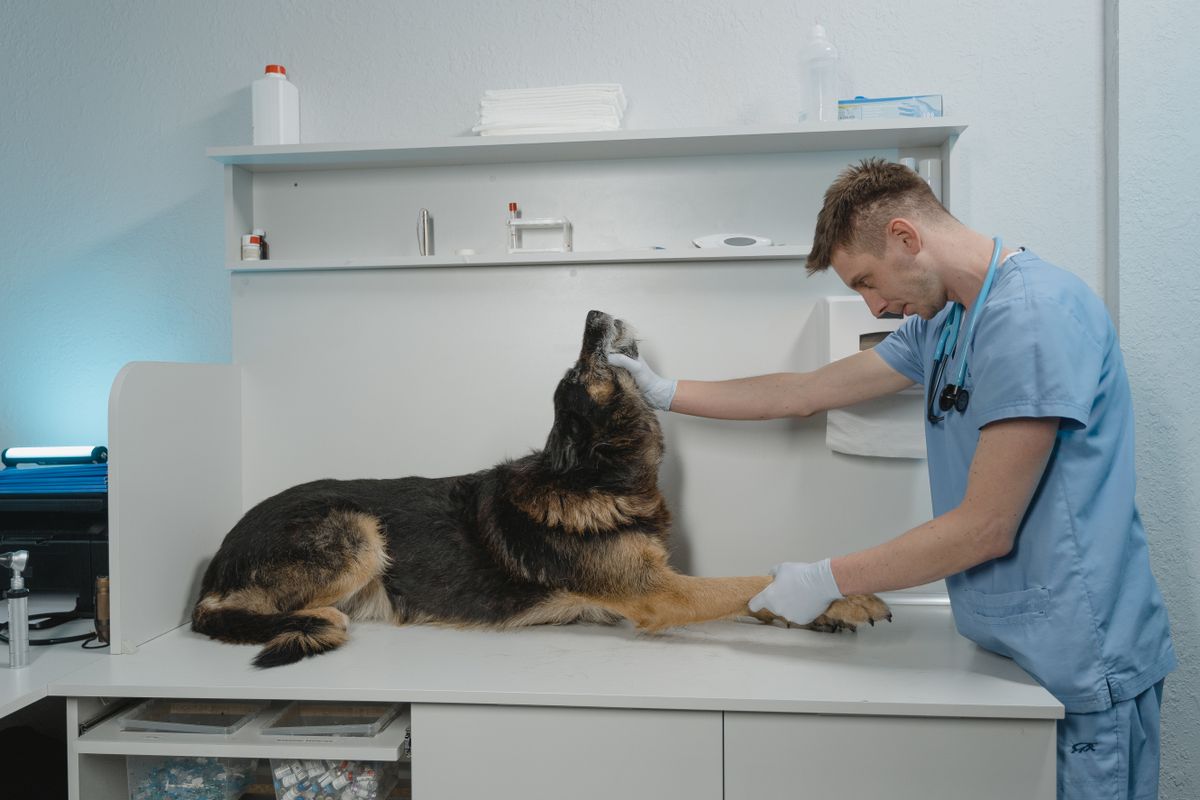
The Referral Problem Most Vet Practices Don’t Talk About
Referrals feel reliable because they work—right up until they don’t. A good client moves to a different city. Their dog passes away. They switch to the vet closer to their new office. When that happens, the practice has no way to replace that revenue on its own timeline.
The harder truth is that referral-dependent practices have essentially no control over growth. They can’t turn the faucet up in slow months. They can’t reach the neighborhood three miles away where a new apartment complex just opened. They wait and hope.
Google Ads solve the “reach” problem, but not the economics. Veterinary keywords in mid-size U.S. cities typically cost $8 to $22 per click, based on competitive analysis from industry tools. A $1,500 monthly ad budget buys roughly 80 to 150 clicks. With a 3–5% conversion rate—typical for veterinary services—that’s 2 to 7 inquiries per month. At a 50% close rate, you’re acquiring 1 to 4 new clients for $375 to $1,500 each, with zero residual value when the campaign pauses.
A blog post, written once, can send traffic for three to five years.
What Pet Owners Actually Search Before Choosing a Vet

The searches that lead to a vet clinic appointment fall into two categories. The first is pure discovery: “vet near me,” “animal hospital [city name],” “emergency vet [neighborhood].” These are captured through a well-maintained Google Business Profile and consistent NAP (name, address, phone) citations—important, but not where blogging helps.
The second category is much larger, and almost completely ignored by most practices. These are the research searches—the ones happening at 11 PM when a pet owner notices something worrying:
- “my dog is limping on front left leg”
- “cat not eating for 2 days”
- “how much does it cost to neuter a dog”
- “signs of parvo in unvaccinated puppies”
- “why does my dog keep scratching ears”
- “is it normal for a kitten to sleep all day”
Every one of those searches represents someone on the edge of booking an appointment. A vet clinic that ranks for these queries—with a genuinely helpful article that answers the question clearly—stays top of mind. Often, it gets the call the next morning.
BrightLocal’s Local Consumer Review Survey shows that 98% of consumers read online content to evaluate local businesses before making contact. The practice that answers their questions before they pick up the phone starts that relationship with a significant head start. For more on how local service businesses can extend that reach, see this guide on local SEO strategies for service businesses.
Why SEO Outperforms Google Ads for Vet Clinics Over 12 Months

This is not an argument against running Google Ads. For a practice that needs new clients immediately—opening a second location, recovering from a slow winter—ads work. But the math over a 12-month horizon is worth looking at honestly.
A practice spending $1,500 per month on Google Ads spends $18,000 in a year. The traffic it buys is real, but temporary. The moment the budget drops, the phone volume drops with it. There’s no compounding. No residual. No content asset built.
The same $1,500 invested in consistent content—six posts per month across 12 months—produces 72 indexed articles. Each one is a permanent presence in Google search results. A post published in March 2026 about “signs of Lyme disease in dogs” still drives traffic in March 2028. The cost-per-click on that traffic trends toward zero over time, while the cost of ads stays fixed or rises with competition.
This is exactly what played out with retroradical.com, a content-driven site managed through RankOnRepeat that grew 369% in 30 days after launching a consistent daily publishing schedule. Or taipeibjj.com, a martial arts gym in Taipei that went from zero to 1,178 monthly organic visitors through regular, targeted content—no ads required. The compounding mechanism is the same for a vet practice: show up consistently, in the right searches, with content that actually helps people.
The compounding is also why measuring SEO return on investment for service businesses requires a longer time horizon than paid media. Month three looks like nothing. Month nine often looks like a breakthrough.
The Three Content Types That Drive Vet Clinic Appointments From Google
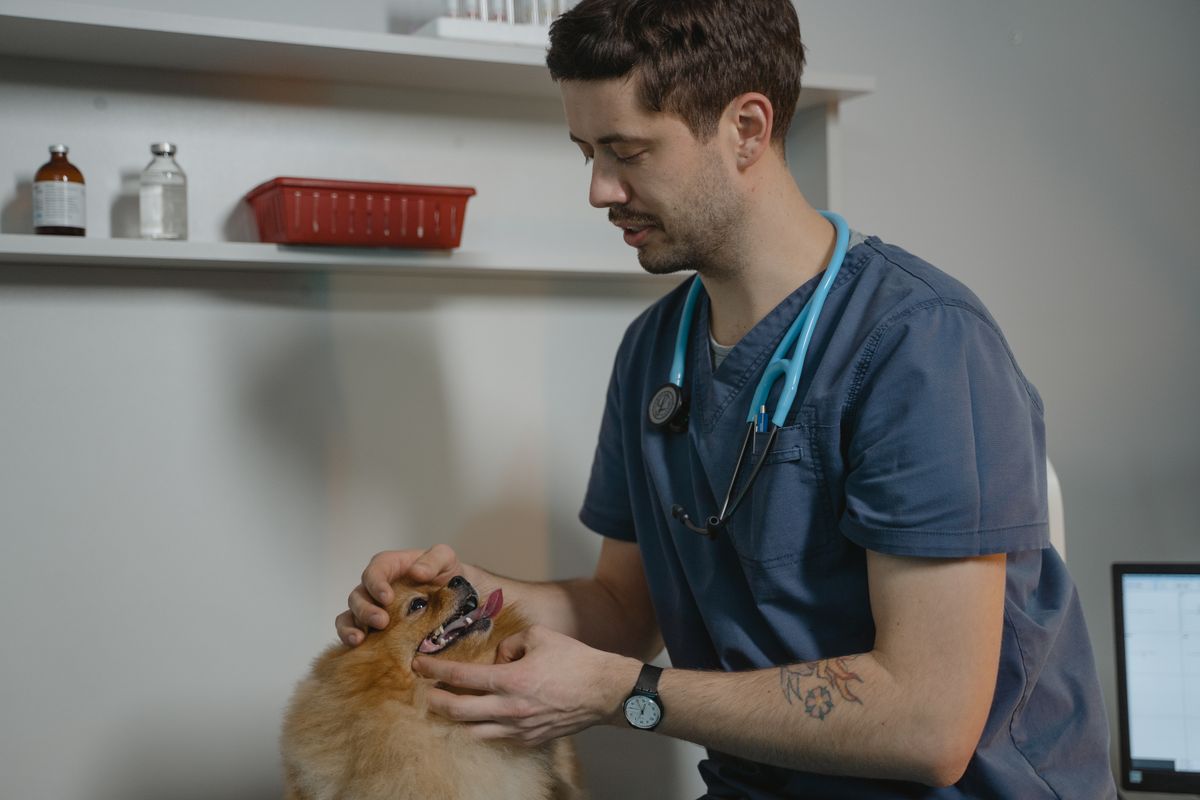
Not all content performs equally. The practices that see the fastest results focus on three categories and ignore everything else.
Symptom and condition guides. “Dog limping on back leg—causes and when to see a vet,” “why is my cat hiding and not eating,” “signs of bloat in large breed dogs.” These pages capture worried pet owners at the exact moment they’re deciding whether to call. A clinic that ranks for five of these queries in its city is effectively intercepting potential clients before competitors even enter the picture. These also tend to rank relatively quickly—in 60 to 120 days—because the local competition is thin.
Cost transparency pages. “How much does it cost to spay a dog in [city]” is one of the most consistently searched queries in veterinary SEO, and almost no practices will write it because they’re afraid to publish pricing. That fear is precisely the opportunity. A page that gives an honest range, explains what’s included, and answers the follow-up questions (does that include anesthesia? what about pain medication?) builds trust fast and ranks quickly because the competitive gap is wide open.
Breed-specific care guides. “Labrador hip dysplasia—symptoms, costs, and treatment options,” “dental disease in small dogs—what owners need to know,” “brachycephalic breathing issues in French Bulldogs.” These attract engaged, high-compliance pet owners—exactly the kind of clients who come in for every annual wellness exam, follow through on recommended diagnostics, and refer their friends.
General “how to care for your dog” content is close to worthless for SEO purposes. Google is already saturated with it from major pet media brands with domain authority in the hundreds. The clinic in Tucson writing about “why does my golden retriever keep licking his paws” has a real shot at page one. The clinic writing “how to care for your golden retriever” does not.
What the First 12 Months of SEO Actually Looks Like for a Vet Practice
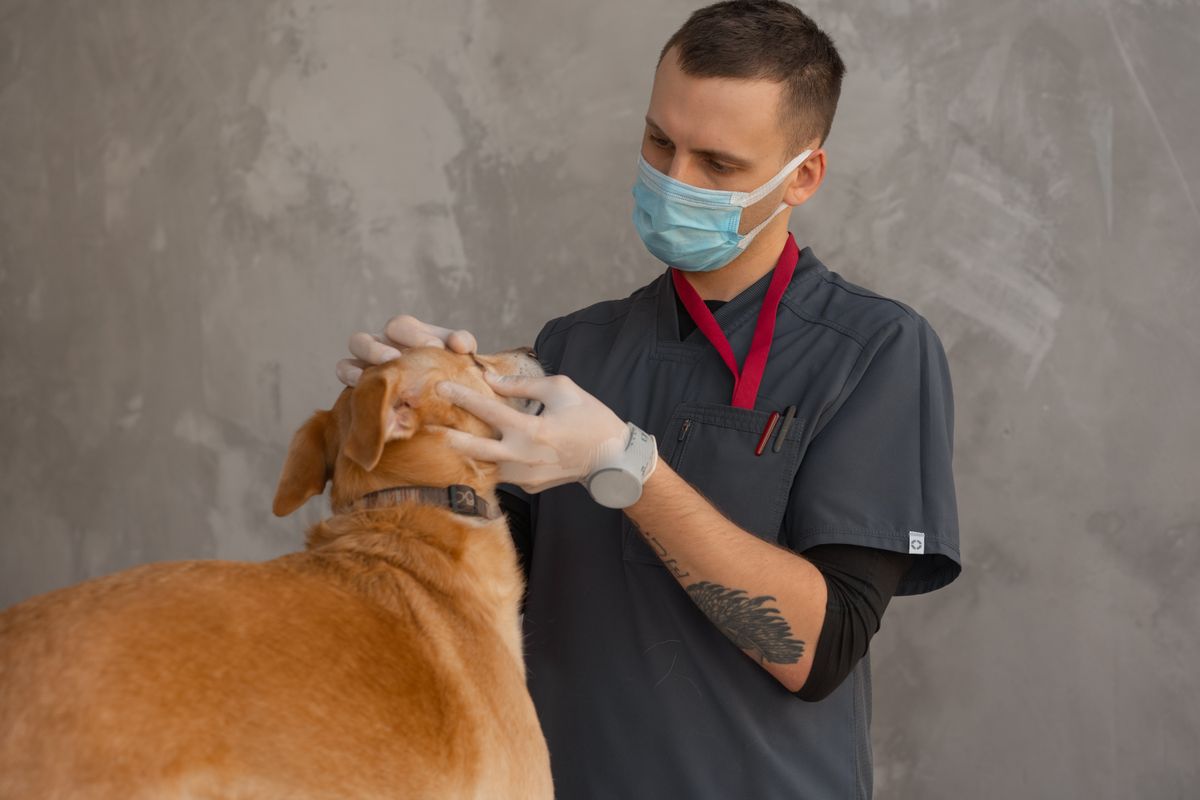
The most common reason vet practices give up on SEO is that they quit before it starts working. Here is an honest picture of what the timeline actually looks like.
Months one and two are the indexing phase. Google crawls and indexes new content, but rarely ranks it immediately. You’ll see impressions start appearing in Google Search Console—meaning Google is starting to show your content in results—but click counts are usually near zero. This is normal and expected.
Months three and four are when low-competition queries begin to rank. A post about “how much does a dog teeth cleaning cost in [city]” or “signs of flea allergy dermatitis in cats” might land on the first page of Google in a city with limited competition. Traffic is modest at this stage—20 to 50 visits per month from individual posts—but it’s organic, recurring, and costs nothing to maintain.
By month six, a clinic publishing four to six posts per month will typically rank on the first page for 15 to 30 queries in its local market. That’s usually enough to generate 100 to 300 monthly organic visitors. Some book online. Some call.
The real inflection point is months nine through twelve. By this stage, topical authority starts compounding. Older posts acquire more internal links from newer ones. New posts rank faster because the domain is established as a local expert on pet health. As detailed in the breakdown of what Google actually rewards in 2026, topical authority is one of the most durable ranking signals available to a small practice—and it builds with every post published.
A vet clinic that publishes consistently for 12 months and then stops will continue receiving traffic from that content for years. A vet clinic that runs Google Ads for 12 months and then stops receives nothing the following day.
Frequently Asked Questions
How long before a vet clinic sees results from SEO?
Most practices start seeing Google Search Console impressions within 6–8 weeks of consistent publishing. Actual clicks and appointment inquiries typically emerge in months three through six, depending on how competitive the local market is and publishing frequency. Very low-competition markets—small cities, suburban areas—can rank meaningful queries faster.
Should a vet clinic blog even if the practice is already busy?
Yes, especially then. New clients are offset by constant churn—pets that pass, families that move, clients who switch after a billing dispute. A busy practice with no organic pipeline is more fragile than it looks. Content published now protects future revenue, not just current capacity.
How many blog posts per month does a vet clinic need?
Four to six posts per month is enough to build meaningful topical authority in most mid-size markets within 12 months. That’s roughly one post per week, plus a couple extra. Frequency matters more than individual post length—Google rewards consistent publishing over irregular bursts.
Can a vet clinic blog about topics outside pet health?
Technically yes, but it rarely helps. Content about local community events or general business topics doesn’t send Google clear topical signals. Stick to what potential clients are actually searching: pet symptoms, treatment costs, breed-specific care, and service questions. That’s where both the search volume and the conversion intent live.
If publishing four to six posts per month consistently sounds like more bandwidth than your team has, RankOnRepeat handles the full pipeline—keyword selection, writing, and publishing—for a flat monthly fee. See how it works →
References
- American Pet Products Association 2023–2024 National Pet Owners Survey — U.S. pet ownership rates and annual spending on veterinary care
- BrightLocal Local Consumer Review Survey 2024 — data on how consumers research and choose local service providers
- Google Search Central — How Google Search Works — Google’s documentation on content indexing and ranking signals
- American Veterinary Medical Association — U.S. Pet Ownership Statistics — AVMA data on household pet ownership and veterinary visit frequency
Published by the RankOnRepeat editorial team · Last updated: August 5, 2026 · How RankOnRepeat works