- Auto detailing is nearly untouched on Google. Most detailers still rely on Yelp, Groupon, and word of mouth, which means the organic search results for “ceramic coating [city]” or “mobile detailing near me” are wide open in most markets.
- Yelp and Groupon take a cut on every job, forever. A $30/month Google ranking costs the same whether you book 5 cars or 50. A 20% Groupon discount plus their fee comes out of every single job you run through it.
- Detailing customers search with buyer intent, not curiosity. Someone typing “interior detailing cost near me” is closer to booking than someone browsing Instagram — Google traffic converts at a different rate than social traffic.
- Photos and reviews carry more weight here than almost any other trade. Before/after shots and a steady flow of Google reviews are the two biggest ranking and conversion levers for a detailing business.
- Consistent content is what separates the shops that rank from the ones that don’t. A handful of blog posts targeting specific services and vehicle types outperforms a static five-page website every time.
- Why Auto Detailing Is One of the Least Competitive Niches Left on Google
- What Detailing Customers Actually Type Into Google Before They Call
- The Content That Turns a Google Search Into a Booked Appointment
- Why Yelp and Groupon Feel Free but Quietly Aren’t
- Mobile and Multi-Location Detailers Need City-Specific Pages
- Ceramic Coating and Paint Correction Deserve Their Own Pages
- Photos and Reviews Do Half the Ranking Work For You
- How Long Before This Actually Fills Your Schedule
A single ceramic coating job runs $600 to $1,800 depending on the vehicle and market. A full interior and exterior detail averages $150 to $300. Most shops running those numbers are still spending their marketing budget renting customers from Yelp and Groupon instead of owning the search traffic outright. That’s backwards, and it’s costing them margin on every job.
Why Auto Detailing Is One of the Least Competitive Niches Left on Google
Auto detailing ranks among the lowest-competition local service niches because most operators never built a real website in the first place. Most shops run their entire online presence off an Instagram page and a Google Business Profile listing, which leaves the actual search results wide open for anyone willing to publish real content.
Plumbers, electricians, and roofers have been fighting over Google rankings for years now — those trades are saturated with $300-an-hour SEO agencies and franchise marketing budgets. Detailing hasn’t hit that wall yet. Type “mobile detailing [your city]” into Google right now and count how many results are a Groupon page, a Yelp listing, or a Facebook profile instead of an actual business website. In most mid-size markets, that’s 6 or 7 out of the first page of 10.
That gap won’t stay open forever. Detailing is a $15 billion industry in the U.S. and growing every year as more shops go mobile, which means more competitors will eventually figure out that a website with real content beats a Linktree.
What Detailing Customers Actually Type Into Google Before They Call
People rarely search “auto detailing” on its own — that term is too broad and too competitive to be useful. What actually drives bookings is the long-tail: specific services, specific vehicle types, and specific problems.
- “How much does ceramic coating cost”
- “Interior detailing for dog hair”
- “Best detailer for leather seats near me”
- “Mobile detailing that comes to your house”
- “How often should I get my car detailed”
- “Paint correction vs ceramic coating”
Each of those is a blog post waiting to be written, and each one answers a question a real paying customer is asking right before they book. Long-tail keywords like these carry lower search volume individually, but Ahrefs’ own keyword research shows the majority of all search queries fall into this long-tail category — and they convert better precisely because the person searching already knows what they want.[1] A related breakdown of this strategy for other local service businesses is in our guide on long-tail keywords for local business.
The Content That Turns a Google Search Into a Booked Appointment
A detailing website that ranks has a dedicated page for every service, every vehicle type, and every common question — not one generic “services” page. Google rewards specificity. A page titled “Ceramic Coating for Trucks and SUVs” will outrank a vague “Our Services” page almost every time, because it matches exactly what someone searched.
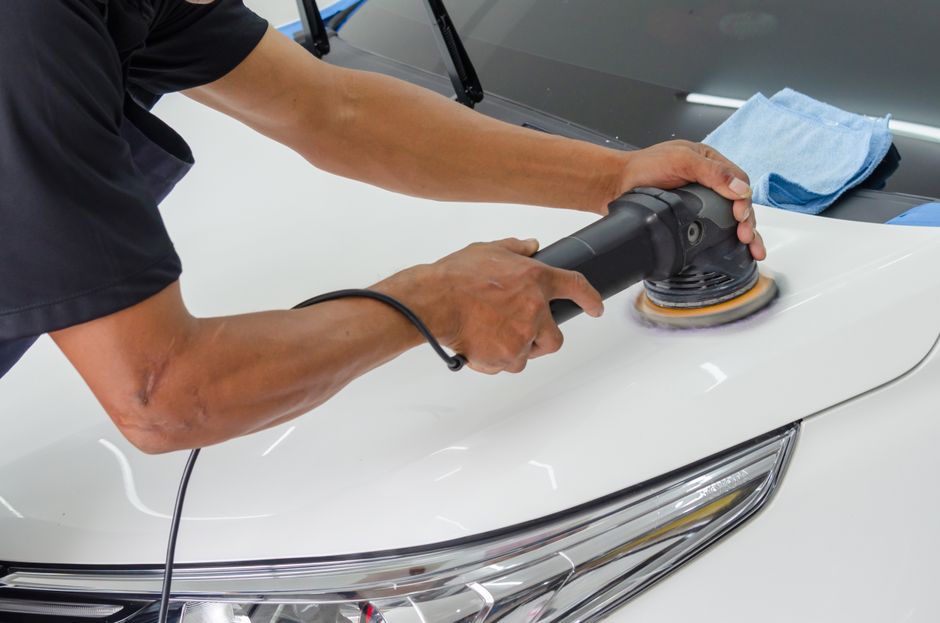
Build out pages for interior detailing, exterior detailing, ceramic coating, paint correction, headlight restoration, and pet hair removal — then support them with blog posts that answer the questions customers ask before they book. A post like “How Long Does Ceramic Coating Actually Last” or “Is Paint Correction Worth It Before You Sell Your Car” does two things at once: it targets a real search, and it builds the kind of trust that turns a browser into a phone call.
This is the same structure we lay out for other service businesses in our local landing pages guide — one page per service, one page per city if you cover more than one.
Why Yelp and Groupon Feel Free but Quietly Aren’t
Yelp doesn’t charge detailers a listing fee, but its ads run $3 to $8 per click in most markets with no guarantee of a booking. Groupon is worse over time: a shop running a $150 detail through a Groupon deal at 40% off, minus Groupon’s cut, can net less than $60 on a job that costs $30 in product and 90 minutes of labor. Do that enough times and you’ve trained an entire customer base to expect a discount every visit.
Google traffic doesn’t work that way. Once a page ranks for “ceramic coating [city],” it keeps bringing in full-price bookings for months without an ongoing per-lead cost. The math only gets better with time, which is the opposite of how Groupon and pay-per-click leads behave. We broke down the same comparison in more depth for a broader mix of trades in SEO vs Yelp Advertising.
None of this means abandon Yelp entirely — a claimed, filled-out profile with reviews still helps local rankings. The mistake is treating it as the whole strategy instead of one small piece of it.
Mobile and Multi-Location Detailers Need City-Specific Pages
A mobile detailer covering five cities needs five pages, not one page listing five cities in a sentence. Google ranks pages for specific locations, and a single “service areas” paragraph buried at the bottom of a homepage rarely earns a spot for any of them.
Each city page should read like it was written for that city specifically — mention the neighborhoods you actually service, the drive times, maybe a local landmark. A page for “Mobile Detailing in Plano” and a near-duplicate page for “Mobile Detailing in Frisco” with the city name swapped will get flagged as thin content. A page that talks about HOA parking restrictions in Plano versus new-construction subdivisions in Frisco reads like it was written by someone who actually works there, because it was.
Ceramic Coating and Paint Correction Deserve Their Own Pages
Ceramic coating and paint correction are where the real margin lives — a coating job can run 5 to 10 times what a basic wash-and-vacuum brings in, and the customers booking them are actively comparing detailers online before they call. That makes this exact search the one worth fighting for.
Give ceramic coating its own dedicated page with real pricing tiers, coating brands used, and warranty terms. Customers shopping for a $1,000+ service want specifics before they’ll pick up the phone, and a page that answers “how long does it last,” “does it prevent scratches,” and “how is it different from a wax” up front will out-convert a generic quote-request form every time. This is the same logic behind a BJJ gym in Taipei that went from zero to 1,178 monthly visitors after building out dedicated pages for each program instead of one general “classes” page — specificity is what Google and customers both reward.

Photos and Reviews Do Half the Ranking Work For You
Before/after photos aren’t optional in this trade — they’re the single biggest trust signal a detailing business has, and Google Business Profile listings with recent photos get more views and more calls than listings that haven’t been updated in months.[2] Upload new photos after every job that turns out well, not just once a quarter.
Reviews matter just as much. BrightLocal’s most recent consumer survey found 87% of people used Google to evaluate a local business in the past year, and the businesses with a steady stream of recent reviews consistently outrank ones sitting on reviews from two years ago.[3] Ask for a review the moment you hand the keys back — that’s the highest-conversion moment you’ll ever get with that customer.
How Long Before This Actually Fills Your Schedule
Most detailing shops that commit to publishing service pages and blog content consistently start seeing movement in Google Search Console within 6 to 8 weeks, and real booking volume by month 3 or 4. That’s slower than a Groupon campaign, which can fill a calendar in a week — but Groupon bookings stop the day you stop paying, and organic rankings compound instead of resetting.
The shops that give up on SEO almost always quit around week 4, right before the curve bends up. The ones that stick with it past month 3 tend to look back and wonder why they waited so long to stop paying for leads they never owned.
If publishing that content consistently sounds like more than you have time for between jobs, RankOnRepeat handles the keyword research, writing, and publishing for a flat monthly fee — you can see exactly how it works before committing to anything.
Frequently Asked Questions
How much does SEO cost for an auto detailing business?
Most local SEO services for detailing businesses run $300 to $1,500 a month depending on how much content is published and how competitive the market is. A flat-fee content service is typically cheaper than hiring an agency or an in-house writer.
Is Google Business Profile enough, or do I need a website too?
Google Business Profile alone can drive map-pack traffic, but it can’t rank for the specific service and question searches that a real website with dedicated pages can. The two work together — a profile without a site plateaus fast.
Should mobile detailers bother with SEO if they don’t have a storefront?
Yes — mobile detailers actually benefit more, since city-specific pages let one business rank across an entire service area instead of a single physical address.
How many blog posts does a detailing site need to start ranking?
There’s no magic number, but most sites need at least 15 to 20 well-targeted pages covering services, vehicle types, and common questions before rankings start compounding noticeably.
References
- Ahrefs — data on long-tail keyword search volume and how the majority of search queries fall outside high-volume head terms.
- Google Business Profile Help — guidance on how photos affect engagement and visibility on local business listings.
- BrightLocal Local Consumer Review Survey — annual data on how consumers use Google reviews to evaluate local businesses.
- Google Search Central — structured data and ranking guidance for local business websites.
Published by the RankOnRepeat editorial team · Last updated: September 21, 2026 · How RankOnRepeat works