
Dentists who blog consistently around three content types — problem-aware posts, decision-stage comparisons, and hire-ready local pages — build a lead channel that works while the practice is closed. Unlike paid ads that stop the moment billing stops, optimized blog content compounds over time. A practice publishing 4–6 posts per month typically sees meaningful organic traffic growth within 90 days and a measurable drop in cost-per-new-patient within a year.
Most dental practices run on two pipelines: insurance network referrals and paid ads. Both have a ceiling. Insurance directories reward whoever accepts the lowest reimbursement. Paid ads charge more each year and go dark the instant you pause the budget. Neither builds anything lasting.
Blog content does. When a post ranks for “how long does a root canal take” or “best dentist in [city] for anxious patients,” it keeps generating clicks without a monthly invoice attached. That’s the core argument for blogging — not that it’s easy or fast, but that it’s the only marketing channel in dentistry that actually compounds.
The problem is that most dental blogs fail before they ever get a chance to rank. Here’s why, and what to do instead.

Why Most Dental Blogs Fail Before They Start
Walk through the blog section of almost any dental practice website and you’ll find the same graveyard: posts about “tips for a healthy smile,” “why flossing matters,” and a holiday hours announcement from three years ago. These posts don’t rank because they don’t target anything specific enough to rank for. They exist because someone told the practice they needed a blog, not because there was a content strategy behind them.
Generic topics face brutal competition. “How to brush your teeth” is owned by Colgate, the American Dental Association, and WebMD. A single-location dental practice in Phoenix or Nashville has no realistic path to ranking for that phrase. The practices that actually win search traffic go narrower: they target the questions real local patients are typing at 11pm when they’re anxious about a procedure or trying to decide between two practices on Google Maps.
The second failure mode is inconsistency. Search engines reward sites that publish regularly. A dental blog with four posts published in a flurry and then nothing for eight months signals neglect. Google’s crawl frequency drops, rankings stagnate, and the practice concludes that “blogging doesn’t work for us.” It didn’t work because the approach was wrong, not because the channel is broken.
The fix is a focused content strategy built around three distinct content types, each targeting patients at a different stage of their decision process.

The 3 Content Types That Actually Bring Patients
Not every person who searches for dental information is ready to book an appointment. Some are in pain and looking for answers. Some are comparing practices before they call. Some are typing “dentist near me” with their wallet out. Each group needs a different kind of content, and a smart dental blog serves all three.
- Problem-aware posts target people who have a symptom or question but aren’t ready to book. They’re educational and build trust.
- Decision-stage posts target people actively comparing options — cost, treatment types, practice philosophy.
- Hire-ready posts target people with high commercial intent: “dentist in [city],” “emergency dental [neighborhood],” or “invisalign near me.”
A practice that only publishes educational content attracts readers who may never convert. A practice that only publishes hire-ready pages misses the 71% of prospective patients who search before they’re ready to book. The combination is what builds a sustainable new-patient pipeline.
According to data from dental marketing research, 69% of people search online before booking a dental appointment, and patients are 37.7% more likely to click organic results than paid ads when comparing local providers. That’s the audience a well-structured blog is built to capture.

Problem-Aware Posts: Meet Patients Before They’re Ready to Book
Problem-aware content targets searches that start with a symptom or a question. “Why does my tooth hurt when I drink cold water?” “Can a cracked tooth heal on its own?” “Is bleeding gums normal?” These are real searches with real monthly volumes, and they’re eminently rankable for a local practice that publishes clear, accurate answers.
The goal of these posts isn’t an immediate booking — it’s the same goal a good GP has when they give a patient useful information before they’re in crisis: trust. When a patient Googles their tooth pain, lands on your practice’s post, finds a clear explanation and a gentle recommendation to come in for a checkup, and then two weeks later has dental pain again — they’re coming to you. They already know your name.
Strong problem-aware topics for dental blogs include:
- “What causes tooth sensitivity to hot and cold” — targets a common complaint with high search volume
- “Is it normal to have jaw pain in the morning” — targets TMJ symptoms before patients know what they have
- “How long does swelling last after a tooth extraction” — post-procedure anxiety searches, high trust-building potential
- “Signs you might need a root canal” — high-intent pre-appointment search
- “Why are my gums receding” — long-tail question with consistent search volume
These posts don’t need to be long to rank. A focused 800-word post that answers the question clearly, recommends professional evaluation, and includes a call-to-action to contact the practice will outperform a generic 2,000-word post that doesn’t take a clear position on anything.
The same principle that applies to finding low-competition long-tail keywords for local businesses applies here — dental long-tail queries like “tooth pain when biting down left side” are far more rankable than head terms, and they convert better because the searcher has a specific problem.
Decision-Stage Posts: When Patients Are Comparing Dentists
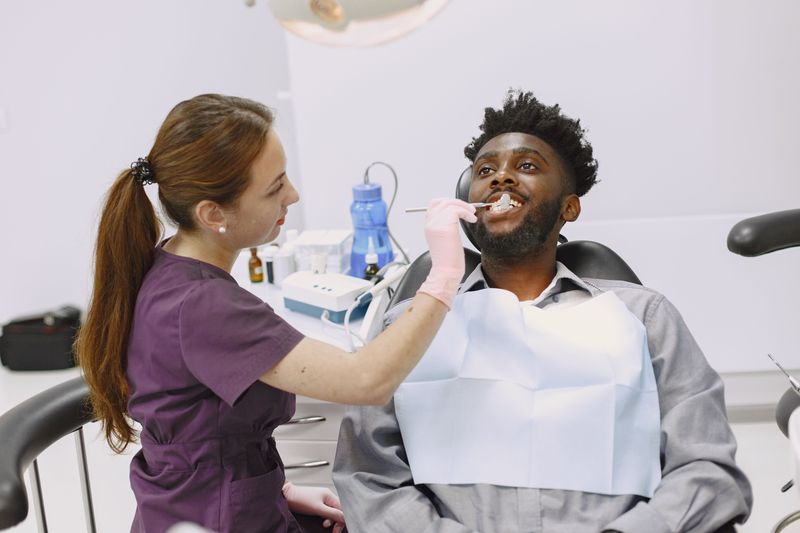
Decision-stage searchers know they need dental care. They’re now evaluating their options. These searches look like “how much does a dental implant cost,” “veneers vs. crowns for chipped tooth,” “best dentist for dental anxiety,” or “sedation dentistry near me.”
The conversion rate on decision-stage content is much higher than problem-aware posts, because the reader is actively shopping. A clear, honest post that breaks down what a procedure costs (with a range, not a dodge), what the experience is like, and how your practice approaches it can close a patient before they ever pick up the phone.
Cost posts are particularly powerful in dentistry because pricing is opaque. Most practices don’t publish prices. A post titled “What Does a Dental Implant Cost in [City]? Here’s What to Expect” will rank — because almost no local practice has answered the question — and it will convert because it’s the kind of transparency that builds trust before a consultation.
Key decision-stage content types for dental practices:
- Cost guides: Break down what procedures cost with insurance vs. out-of-pocket, and what factors affect the price
- Comparison posts: “Invisalign vs. traditional braces: which is right for adults?” or “Dental bonding vs. veneers: which lasts longer?”
- Experience posts: “What to expect at your first visit to [Practice Name]” — reduces anxiety and sets expectations
- Specialty pages: If you offer sedation dentistry, same-day crowns, or pediatric care, each deserves its own post optimized for local searches
Hire-Ready Posts: Capture “Dentist Near Me” Traffic Without Ads
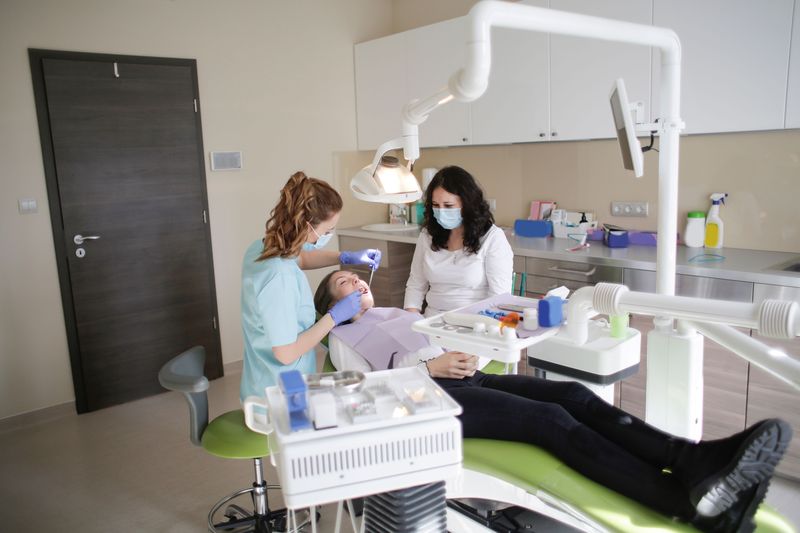
Hire-ready content is the most directly commercial tier. These pages target searchers who have made their decision and are looking for a provider. “Emergency dentist [city],” “pediatric dentist [neighborhood],” “dentist accepting new patients [city]” — these are the searches where someone is about to book.
Most practices try to rank their homepage for these terms. That’s usually the wrong approach. A homepage is a general welcome page. A well-structured post or landing page specifically about emergency dental care in your city, with the relevant details — hours, what qualifies as an emergency, how to reach you — will outrank a homepage in most local markets within a few months.
The mechanics here overlap heavily with local SEO. Practices that blog consistently about their specific city, neighborhood, or service area build topical relevance that generic dental directories can’t replicate. A post titled “Finding a Dentist in [Specific Neighborhood]: What to Look for in 2026” creates a location signal that supports both the blog and the practice’s Google Business Profile.
This is the same pattern that drives results for other service businesses. The blogging strategy that works for physical therapists applies almost directly to dental practices: publish service-plus-city content consistently, and Google learns to associate the practice with that location and service combination.

Local Authority Content: Why City-Specific Posts Outrank Generic Ones
The single most underused tactic in dental content marketing is going hyper-local. Most dental blog posts read as if they could apply to any practice in any city. “5 Tips for Whiter Teeth” could be published by a practice in Seattle or in Savannah — it has no local signal at all.
City-specific content is fundamentally different. “Does [City] Water Affect Your Teeth? What Locals Should Know” pulls in a local geographic signal and addresses a question that no national publication will bother to answer. “Dental Anxiety in [City]: How Our Practice Makes It Easier” is a post that can only exist at your practice. These posts are easier to rank because the competition is local, not national, and they convert better because they speak directly to the reader’s context.
Building local authority through content also supports your Google Business Profile in a way that ads never can. Google’s local pack algorithm weighs relevance, distance, and prominence. A practice with a consistent blog about local dental topics signals relevance and prominence simultaneously. That’s the compounding effect that paid ads simply don’t provide.
Research on patient behavior reinforces this. A study on digital health information seeking found that patients who find authoritative, locally relevant health content online are significantly more likely to follow through with professional consultation. The information-to-action pipeline runs through trust, and local content builds that trust faster than generic content.
Practices managing their own SEO should also read up on how senior home care agencies use local SEO to compete against national directories — the geographic content strategy translates almost directly to dental practices in competitive local markets.

What a 90-Day Dentist Blog Plan Looks Like
Month one is about foundation. The goal is to publish four posts and establish the three content types. A reasonable starting lineup:
- One problem-aware post targeting a high-volume symptom question relevant to your patient base
- One decision-stage cost guide for your highest-value procedure (implants, veneers, Invisalign)
- One hire-ready post targeting your city plus your primary service
- One local authority post connecting your practice to a city-specific topic
Month two expands the footprint. Publish four more posts, ideally targeting related keywords that support the month-one posts. If month one included “signs you need a root canal,” month two might cover “what to expect during a root canal” and “root canal vs. extraction: which is the right choice?” This builds topical clusters — groups of related posts that signal expertise to Google and keep readers on the site longer.
Month three is where movement begins. Organic impressions typically climb before rankings do — Google is indexing the content and deciding where to place it. This is when practices get impatient and conclude that blogging isn’t working. Don’t stop. Clicks follow impressions, and rankings consolidate in months three through six for most local dental keywords.
By the end of a consistent 90-day run with 12+ posts published, a practice will typically have 3–5 posts ranking in positions 6–20 for local dental keywords. That’s the foundation. The next 90 days push those posts up, and the compounding effect becomes visible in Google Search Console as clicks accumulate without additional ad spend.
Dentists who treat their blog as a long-term asset — the same way they treat their patient relationships — build practices that aren’t dependent on any single referral channel. That’s the actual goal: not just more patients, but a more resilient business.
References
- Sixth City Marketing — 60+ Dental Marketing Statistics — Data on patient acquisition channels, digital vs referral, and ROI benchmarks cited throughout this post.
- Web Tonic — 47+ Dental Digital Marketing Statistics — Source for search and online review behavior statistics used in the patient-decision sections.
- National Library of Medicine — Digital Health Information Seeking Behavior — Academic study on how patients research health conditions and providers online before booking.
- Search Engine Land — Google Business Profile Optimization Guide — Used to validate local pack ranking factors and GBP content recommendations.