
- Referral networks have a ceiling — discharge planners work with multiple agencies, and losing one key relationship can crater your census overnight.
- Private-pay families search Google first — 98% of consumers used the internet to find a local business in 2024, and home care searches spike every time a family receives a difficult medical diagnosis.
- Home care keywords have almost no competition — city-specific queries like “in-home caregiver for elderly [city]” carry KD scores of 2–8, meaning a well-structured page ranks fast.
- Google Business Profile is the fastest first win — agencies with optimized GBPs can appear in the local pack within 60–90 days without publishing a single blog post.
- The ROI math is exceptional — a single private-pay client worth $50,000+ annually means one inbound lead from SEO more than pays for a full year of content investment.
Table of Contents
- Why Referral Networks Stop Scaling at a Certain Point
- What Families Are Searching — and Why It’s Low Competition
- Building the Google Business Profile That Wins the Local Pack
- The Three Content Types That Win Private-Pay Inquiries
- The ROI Math That Makes SEO Obvious for Home Care
- What to Prioritize in Your First 90 Days
- Frequently Asked Questions
In the United States, the average private-pay home care client spends more than $5,000 a month on care — and most families spend weeks researching options before they ever make a call. According to BrightLocal’s 2024 Local Consumer Review Survey, 98% of consumers used the internet to find a local business in the past year. The daughter in Cleveland who just learned her father can no longer live alone safely is going to Google before she calls anyone. That search — “in-home caregiver for elderly parent Cleveland” — is happening thousands of times a day across every mid-sized American city.
Most home care agencies have no presence for those searches. They’ve built their growth model around referral relationships — hospital discharge planners, social workers, rehabilitation facilities — and have done almost nothing to capture families who bypass that system entirely. That gap is where agencies investing in SEO are quietly pulling ahead.
Why Referral Networks Stop Scaling at a Certain Point
Referral relationships work — up to a point. When you’re building a new agency, getting listed with hospital social workers and forming connections with discharge planners is the fastest path to first clients. The problem isn’t that referrals don’t work. It’s that they have a ceiling, and that ceiling is lower than most owners realize.
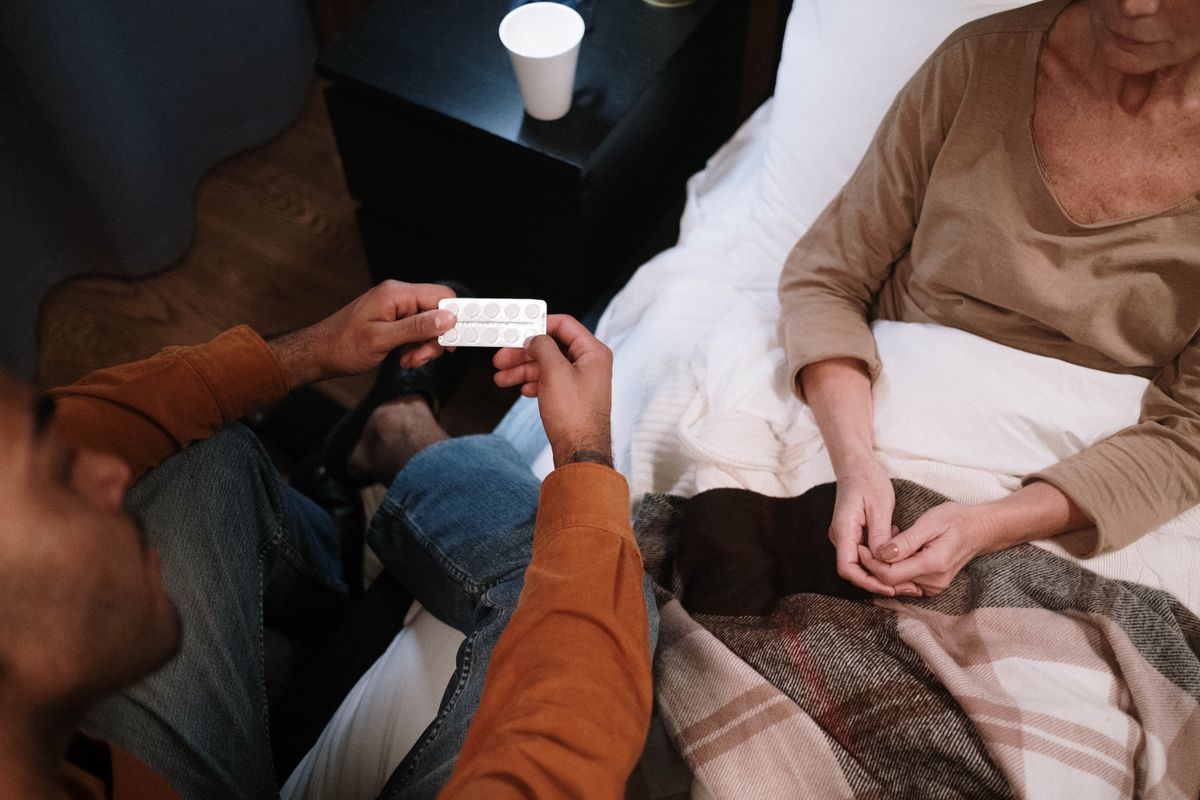
A discharge planner at a regional hospital typically works with four to ten competing agencies. Being on the referral list doesn’t mean you’re the first call — it means you’re one of the calls, competing on availability, rate, and whoever picked up the phone fastest that morning. When a health system consolidates under a larger network, vendor relationships get renegotiated from scratch. When a key social worker changes departments or retires, the relationship resets. Agencies that built their entire census on a handful of referral sources have had their intake cut in half by a single personnel change.
SEO doesn’t work like that. A page that ranks for “in-home caregiver for elderly in [your city]” doesn’t retire. It doesn’t favor a competitor because they called back faster. It works on nights, weekends, and every time a family faces a crisis and starts searching at 11 PM.
What Families Are Searching — and Why It’s Low Competition
The keywords families type when they need home care are specific, emotionally driven, and almost entirely uncontested by agencies. The most common searches look nothing like what a marketing team would assume. It’s not “home care services” — it’s “what to do when a parent can’t live alone anymore,” “how much does it cost to have a caregiver come to the house,” and “in-home care vs. nursing home for dementia.”

The SEO opportunity lives in the specific queries. Phrases like “in-home care for elderly [city],” “live-in caregiver cost [state],” and “home care for Parkinson’s patients [city]” typically carry keyword difficulty scores of KD 2–8 on Ahrefs or Semrush — meaning a well-structured page with real information ranks quickly, with minimal link building required. As covered in our guide to long-tail keywords for local businesses, these high-intent, low-competition searches are where small and mid-sized service businesses consistently beat national brands.
The person typing “home care for elderly parent Cincinnati” has already made the key decision. They’re not exploring abstractly — they have a parent who needs help and are figuring out who to hire. The agency that answers their specific question clearly and honestly wins the inquiry. That’s a fundamentally different buyer from someone searching “home care” generically, who might be a job-seeker, a nursing student, or a software vendor targeting the market.
Building the Google Business Profile That Wins the Local Pack
Before any content strategy, the fastest SEO win for a home care agency is a fully optimized Google Business Profile. When someone searches “home care near me” or “senior home care [city],” Google displays a local pack of three businesses above all organic results — and that pack captures the majority of clicks on the page.
Most agencies have a GBP that’s partially filled out and rarely updated. Here’s what the ones appearing in the local pack have in common:
- Correct primary category — “Home Health Care Service” or “Elderly Care Service,” not a generic option like “Health Consultant”
- Complete service list — each service with its own description: personal care, companionship, Alzheimer’s care, post-surgical assistance, transportation
- 25+ reviews with responses — the local pack algorithm weights both review volume and recency; responding to every review signals active management
- Real photos — caregivers with clients, your office, team headshots; stock photos actively penalize local visibility
- Weekly posts — care tips, available services, and community updates signal to Google that the business is active and engaged
According to a 2023 BrightLocal study, businesses that actively manage their GBP receive 7x more direction requests and 5x more calls than businesses with static profiles. For home care agencies, where families are deciding who to trust with a parent’s safety, every visible review response and every photo of a real caregiver carries weight that no ad can replicate.
The Three Content Types That Win Private-Pay Inquiries
Most home care websites have an “About Us” page, a “Services” page, and a blog with three posts from 2019. That’s a brochure — not a lead generation tool. The content that converts for home care agencies falls into three distinct types, each targeting a different phase of the family’s decision process.
Cost and comparison guides rank fastest and convert hardest. A page titled “How Much Does In-Home Care Cost in [Your City] in 2026” directly answers what every family wants to know before they pick up the phone. It builds trust immediately and positions you as the agency that explains pricing rather than hiding it behind a contact form. Families who find this page arrive knowing roughly what they’re signing up for — they call with intent, not just curiosity.
City and neighborhood landing pages matter because home care is deeply local. A family in Westchester County doesn’t respond to a generic “New York” page — they want to know whether you cover Scarsdale, Yonkers, or White Plains. Creating individual pages for each service area (800 words answering “what in-home care services are available in [neighborhood]?”) tells Google you’re a genuine local provider. These pages often rank in the local pack for smaller suburbs within 60–90 days.

Condition-specific content intercepts families at their highest-intent moment — right after a diagnosis. Pages like “In-Home Care for Parkinson’s Disease,” “Dementia Care Options at Home,” or “What to Expect After a Parent’s Hip Replacement” speak directly to families who know what’s wrong and are working out their options. These pages also build the E-E-A-T signals (Experience, Expertise, Authority, Trust) that Google requires to rank healthcare-adjacent content — signals earned through specific, authoritative answers, not generic overviews.
Agencies that publish two to three pieces of this content weekly typically see organic traffic grow from near-zero to 300–500 monthly visitors within six months. The challenge isn’t knowing what to write — it’s keeping the publishing schedule running while managing an actual care operation. That’s exactly the problem RankOnRepeat’s content subscription is built to solve.
The ROI Math That Makes SEO Obvious for Home Care
Home care is one of the industries where the financial case for SEO is almost embarrassingly clear. The math is worth running explicitly, because most agency owners underestimate how quickly a single organic lead recoups a full year of content spend.
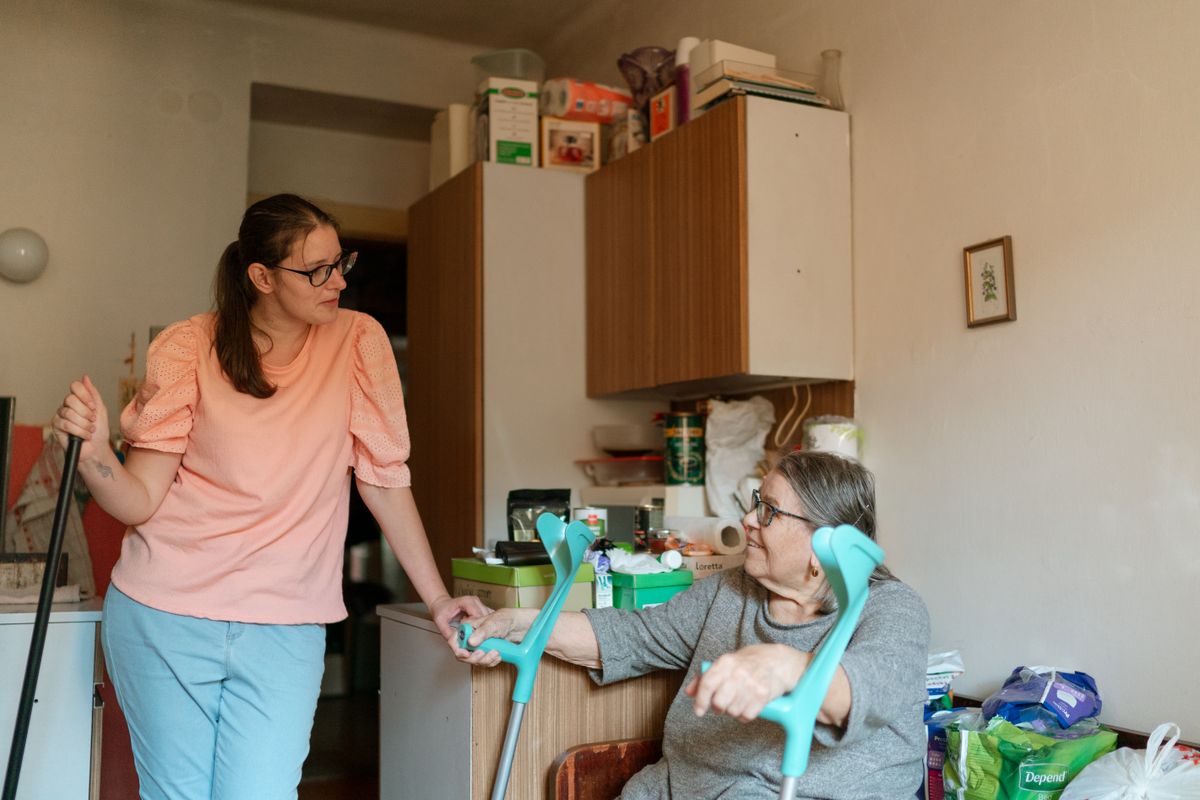
According to the 2024 Activated Insights Home Care Benchmarking Study, the average private-pay home care client receives 30–40 hours of care per week at a national average rate of $29–$33 per hour. That’s $3,800–$5,300 per month, or roughly $46,000–$64,000 per year. High-need clients requiring live-in care or round-the-clock supervision can be worth $80,000–$120,000 annually.
Against that, a content-focused SEO program runs $500–$1,500 per month. If your website generates one new private-pay client per quarter — four clients over the course of a year — you’ve turned $12,000–$18,000 in annual SEO spend into $184,000–$256,000 in new annual revenue. That’s a 10x–15x return, and unlike paid ads, the rankings don’t disappear when you stop writing the check. Content marketing costs more upfront than ads in the short term, but it’s the only channel that builds an asset rather than renting one.
The pushback I hear: “SEO takes too long.” It does have a ramp — typically three to five months before content starts generating consistent leads. But agencies that started six months ago are already fielding calls from Google. The ones that waited are watching a competitor own those searches.
What to Prioritize in Your First 90 Days of Home Care SEO
For an agency starting from scratch, the first 90 days should be narrow and sequential. Trying to build blog posts, city pages, GBP, and backlinks simultaneously produces mediocre output across the board.

Month one: GBP. Fix the category, complete every field, upload real photos, and email your five best current clients or families asking for a Google review. This is free, takes a few hours, and has the most immediate impact on local pack visibility.
Month two: two foundation pages. A cost transparency page (“How Much Does Home Care Cost in [City] in 2026”) and a core city landing page (“In-Home Senior Care in [City]”). Neither needs to be long — 800 words of honest, specific information beats 2,000 words of filler. These pages directly answer the two questions families ask before they call.
Month three: condition-specific content. Pick the three conditions most common among your current clients — typically Alzheimer’s/dementia, Parkinson’s, and post-hospital recovery — and write one dedicated page for each. Add these conditions to your GBP service descriptions as well, reinforcing the signal across both channels.
This sequencing is how the RankOnRepeat content plan launches new home care accounts. It mirrors what drives results for content-heavy sites across industries — archerysupplier.com, an e-commerce retailer managed through the same content publishing system, grew from zero to 1,103 monthly organic sessions through consistent blogging alone. For a home care agency in a mid-sized market, similar momentum typically appears by month four or five. For the long view on why some content pages keep delivering leads for years, see our guide on evergreen content for local service businesses.
If managing a publishing calendar while running care coordination sounds unrealistic, RankOnRepeat handles the keyword research, writing, and publishing — for a flat monthly fee.
Frequently Asked Questions
How long does SEO take for a home care agency?
GBP optimization often shows results within 30–60 days — agencies in lower-competition markets can appear in the local pack within the first month. Organic content rankings typically take 3–6 months to gain traction, with meaningful traffic growth appearing around month four or five for agencies publishing consistently.
What keywords should a home care agency focus on first?
Start with local intent searches: “home care [your city],” “in-home caregiver [county],” and cost-related queries like “how much does home care cost in [city].” These have very low keyword difficulty and high purchase intent. Avoid broad national terms like “home care” — those are dominated by large directories you won’t outrank for years.
Is SEO worth it for a small home care agency?
The math is particularly favorable for home care because the lifetime value of a single private-pay client is so high. If SEO costs $750/month ($9,000/year) and generates one additional private-pay client per quarter, that’s four clients worth $180,000–$250,000 in annual revenue against $9,000 in marketing spend — a return no other channel for home care reliably matches.
Can I do home care SEO myself?
GBP optimization and review management you can handle in-house with a few hours per month. The content publishing — two to three new pages or articles per week, consistently — is where most agency owners stall. Time is the constraint, not skill. That’s the gap services like RankOnRepeat are built to fill.
References
- BrightLocal Local Consumer Review Survey 2024 — cited for 98% internet usage to find local businesses, and 7x GBP engagement for actively managed profiles
- Activated Insights (Home Care Pulse) 2024 Home Care Benchmarking Study — private-pay hourly rates ($29-$33/hr) and weekly care hours (30-40 hrs) for ROI calculations
- Ahrefs — Local SEO Guide — keyword difficulty methodology and local search optimization framework
- Search Engine Land — Google Business Profile Ranking Factors — GBP category selection and optimization impact on local pack visibility
- Google Search Central — Creating Helpful, Reliable, People-First Content — E-E-A-T requirements for healthcare-adjacent content
Published by the RankOnRepeat editorial team · Last updated: September 12, 2026 · How RankOnRepeat works