
Americans spent $150.6 billion on their pets in 2023, according to the American Pet Products Association — and dog grooming is one of the few services in that market that has to happen locally, in person, repeatedly, forever. A dog owner who finds a groomer their dog doesn’t hate books every four to eight weeks and refers every friend who has a dog. The math on one loyal client runs to thousands of dollars over a typical relationship.
The problem is that Thumbtack and Angi both sell shared leads — the same buyer goes to two or three groomers simultaneously for $40–$60 a referral. Rover and Wag take a commission cut. Google, by contrast, sends the search result exclusively to you, permanently, at zero cost per lead once you rank. The gap between a grooming business that has 80 reviews and a well-built website and one that relies on booking platforms is not a marketing budget gap. It is an SEO gap, and it is fixable in three to six months of consistent work.
How Dog Owners Actually Search for a Groomer
Pet grooming search behavior is shaped by trust more than price. A homeowner hires a plumber, evaluates the outcome once, and moves on. A dog owner who finds a groomer they trust returns every six weeks and builds a relationship. That repeat-purchase dynamic changes how people search — they are not just looking for the cheapest option, they are looking for the safest one.
The primary terms are city-focused: “dog groomers near me,” “[city] dog grooming,” and “[breed] grooming [city].” The long-tail terms — “golden retriever grooming [city],” “doodle grooming cost [city],” “dog grooming for anxious dogs [city]” — have lower competition and better conversion rates because the person knows what they need and is close to booking. A generic competitor ranking for “dog groomers” will not appear for “goldendoodle grooming [city],” and that specificity is where most appointment books actually get filled.
Google Business Profile: Where Most Groomers Win or Lose
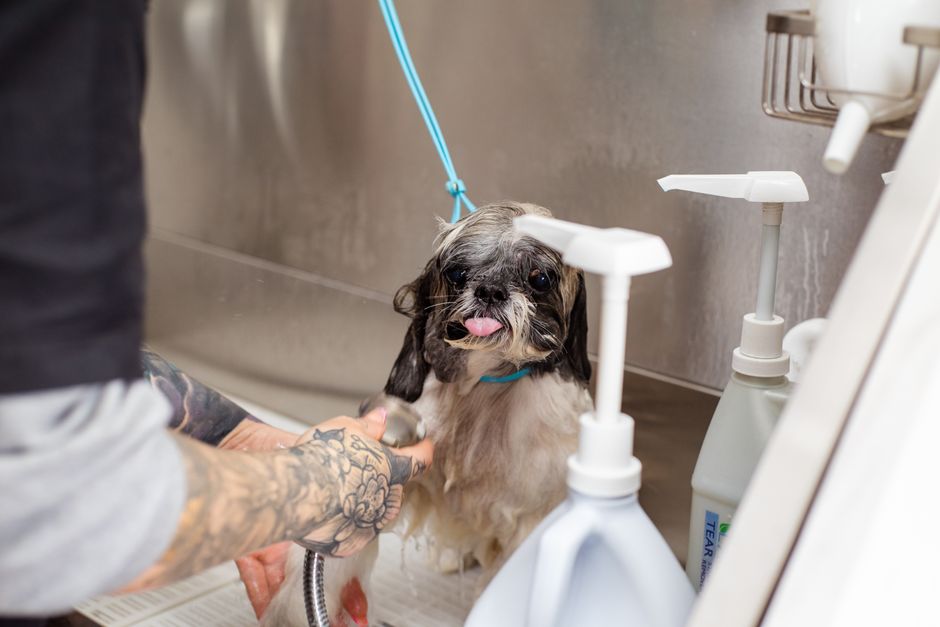
The three-pack map results that appear above the organic list for “dog groomers near me” dominate the page on mobile — which is where the vast majority of this search traffic happens. Getting into the map pack is faster than traditional SEO and has the highest direct conversion rate of any channel because the buyer is already past the decision stage.
Fill every field in your Google Business Profile. Services should list every breed you specialize in and every service type (bath and brush, full groom, breed trim, de-shedding, nail trim, ear cleaning). The photo section matters more for groomers than almost any other business — upload photos of actual dogs you have groomed, before-and-after where clients consent, and photos of your space. Pet owners want to see the physical environment before they bring in an animal they love.
The Q&A section gets overlooked. Google surfaces owner-answered questions in search results; unanswered ones get answered by the public, which can go anywhere. Own that section. Post answers to common questions before they are asked: “Do you use cage dryers?” “How long does a full groom take?” “Do you groom reactive dogs?”
Post weekly. New photos, short availability updates, responses to every review within 48 hours. Freshness signals in GBP are real — profiles that post consistently outrank dormant ones even when the dormant profile has more total reviews. This is 20 minutes a week with a real compounding return on your ranking position.
For a complete walkthrough of the technical setup, see our guide on how to rank in Google Maps — the steps apply directly to pet service businesses.
Service Pages That Rank by Breed and Service Type
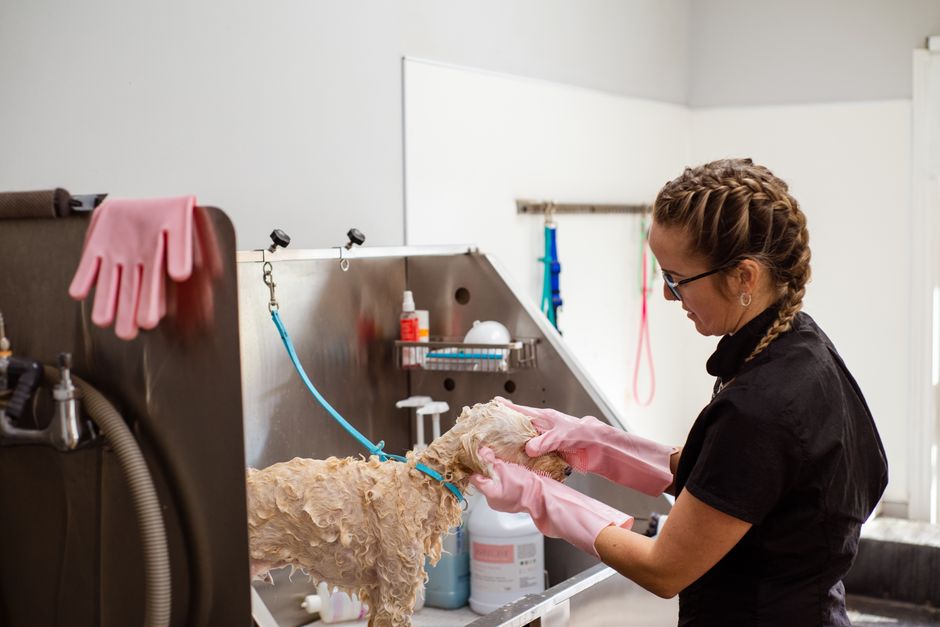
The most common mistake on grooming websites is a single generic “Services” page. A dog owner searching “labradoodle grooming [city]” does not feel spoken to on a page that says “we groom all breeds.” And Google does not rank a catch-all page above a dedicated one when a specific query is available.
Build individual landing pages for your highest-volume breeds: golden retriever grooming, doodle and labradoodle grooming, small dog grooming, large dog grooming, double-coat breeds. Each page answers four questions: what does a grooming session for this breed include, how long does it take, what does it cost, and why trust this specific groomer. These pages do not need to be long — 600–800 words is enough — but they need to be specific.
Service-type pages matter too. “Mobile Dog Grooming in [City]” and “Dog De-Shedding Treatment [City]” both capture high-intent queries that a one-page site will never rank for. Every service-specific page is a separate ranking opportunity targeting a buyer at the moment of decision.
Reviews Are Both a Ranking Signal and a Conversion Engine
Pet owners hand over an animal they love to a stranger. The trust barrier is higher than in almost any other service category, and reviews are the primary tool buyers use to clear it. A profile with 80 reviews converts at roughly double the rate of one with 20, even when the star rating is similar.
According to BrightLocal’s Local Consumer Review Survey, 87% of consumers used Google to evaluate local businesses in 2023. For pet services, that share is higher — owners specifically cite online reviews as the top factor in choosing a groomer when they are new to an area.
The system that works consistently is simple: ask at pickup, every appointment, with a scripted request (“We’d love a Google review — it helps the business and takes 30 seconds”). Send a text two hours later with a direct link. Respond to every review, positive and negative, within 24 hours. Google’s algorithm treats owner responses as engagement signals, and future customers read how you handle complaints before they book.
Content That Captures Searches Between Appointments
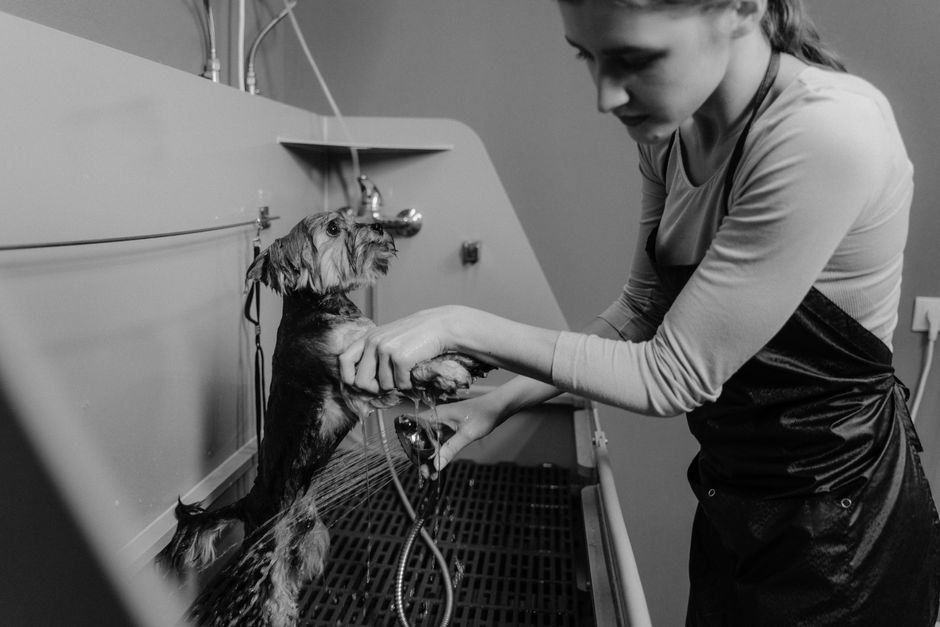
A new doodle owner will search “how often do goldendoodles need grooming” before they search “doodle groomer near me.” Publishing a thorough answer to that question puts your grooming business in front of that buyer weeks before they have an appointment in mind — and a business that has already provided value is easier to book than a stranger in a map pack.
The content that works for grooming businesses targets the decision stage and the early ownership stage: breed-specific grooming frequency guides, pricing transparency posts, grooming for anxious dogs, what to expect during a puppy’s first groom, when to start grooming after adoption. Each post targets a real query a local dog owner actually types.
One post per week targeting a specific long-tail term will compound over six months into dozens of ranking positions. Each ranking is a permanent lead source that does not expire and does not charge per click. For a broader content strategy framework, see how topical authority works for local businesses.
Local Citations: The Infrastructure That Supports Rankings
Beyond your website and GBP, consistency across local directories reinforces your business’s credibility with Google. Your business name, address, and phone number should be identical — character for character — across Yelp, Nextdoor, Facebook, Angi (even if you don’t buy leads from them), and the half-dozen grooming-specific directories like PetGroomer.com.
Nextdoor deserves particular attention for grooming businesses. Neighborhood-level referrals are how most grooming relationships actually start offline. Being present on Nextdoor with a complete profile and positive neighbors’ recommendations creates a trust signal that reinforces your Google rankings and drives direct bookings independently.
For the technical side of making Google understand your business properly, add LocalBusiness schema markup to your website. It takes an hour to implement and tells Google exactly what your business is, where it operates, and what it offers — in structured data Google can parse directly.
Mobile Grooming — An SEO Niche Inside the Niche
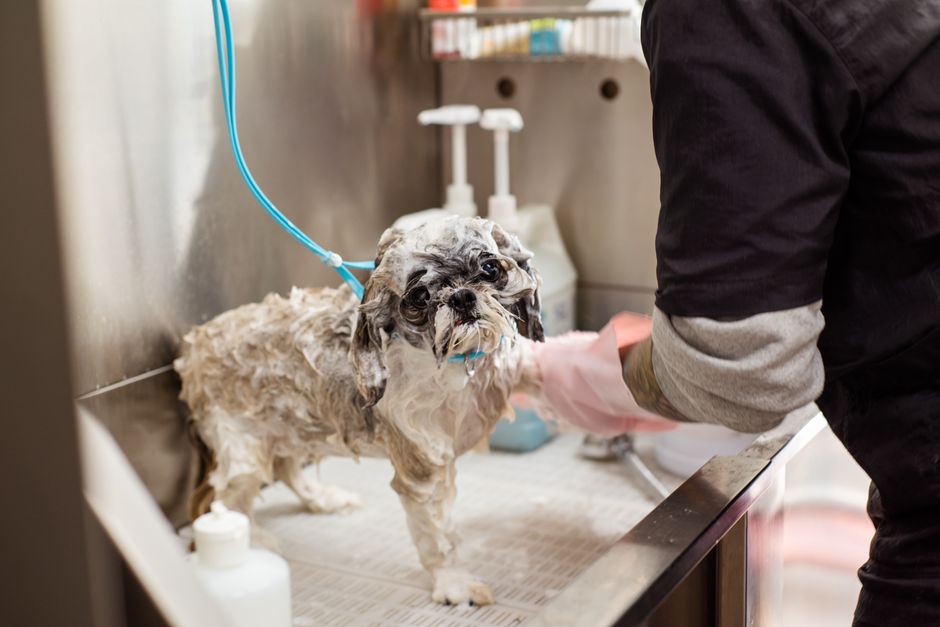
Mobile grooming is growing faster than the traditional grooming market, and most cities are underserved from an SEO standpoint. The competition for “mobile dog grooming [city]” is thin enough that a complete GBP entry under the mobile grooming category and one well-written service page can reach the map pack within 90 days in most mid-size markets.
If you offer mobile grooming, treat it as a separate business line for SEO purposes — its own GBP service category, its own landing page with specific benefits (no cage drying, one-on-one attention, door-to-door convenience), its own review ask that mentions the mobile aspect. Buyers searching for mobile grooming have a specific unmet need — usually convenience or an anxious dog — and they need to see it addressed directly.
Grooming businesses with both salon and mobile services should build separate ranking pathways for each. The buyers are slightly different, the keywords are different, and the trust factors buyers look for are different. Treating them as one marketing target is why most multi-service groomers underperform on both.
The grooming businesses with full books six months out are not paying more for leads. They have 80-plus reviews, an active GBP, breed-specific service pages, and a blog that answers the questions their next client is typing right now. That system is always on. The setup takes a few months; the return runs indefinitely.
References
- American Pet Products Association — Industry Statistics — Annual pet industry spending data including 2023 figures.
- BrightLocal — Local Consumer Review Survey 2023 — Consumer behavior data on how people evaluate local businesses using reviews.
- Google — Manage Your Business Profile — Official Google guide to setting up and maintaining a Google Business Profile.