
- Deck builder keywords are low-competition — most deck companies publish almost nothing online, making this one of the easier trades to rank for in local search.
- Local SEO targets homeowners at the exact moment they’re ready to hire — “deck builder near me” means a project is in motion today, not in six months.
- A Google Business Profile alone isn’t enough — without supporting website content, a profile won’t hold a top-3 Maps position against competitors who publish consistently.
- Referral-only pipelines are fragile — SEO creates a lead channel that works on your schedule, not someone else’s word-of-mouth cycle.
- Content compounds — each article is a permanent Google entry point that keeps generating leads without ongoing ad spend.
A typical composite deck project runs between $15,000 and $35,000 according to the North American Deck and Railing Association — and most deck builders are paying $40 to $120 per shared Angi lead to find homeowners who want one built. Those homeowners are already on Google, typing “deck builder near me” before Angi’s email reaches them. Getting in front of them doesn’t require an ad budget. It requires a Google presence that answers their questions before they pick up the phone. Because almost no deck companies do this seriously, the opportunity is still wide open.
Why Deck Builders Still Live on Referrals (And Why That’s Fragile)
Quick answer: Most deck builders get 70–80% of revenue from referrals — high-quality leads that arrive on someone else’s schedule. A slow winter or a key referral source moving away can cut your pipeline overnight. SEO creates demand on your timetable.
The problem with referral dependency isn’t lead quality — it’s control. When the phone stops ringing, there’s nothing to turn a dial on. Running Google Ads costs $12–$40 per click for deck-related terms in competitive cities. Buying Angi leads means calling homeowners who’ve already spoken with three other contractors. The close rate on shared leads is brutal compared to an inbound call from someone who found your website on their own.
SEO builds a lead channel that runs without you. A well-optimized website with consistent blog content can generate 10–20 qualified inquiries per month, organically, after 6–12 months of consistent publishing. For deck builders, the online gap is enormous. Unlike plumbing or HVAC, most deck contractors have a five-page website from 2014 and nothing else. That’s not a complaint about competition — it’s an opening.
What SEO for Deck Builders Actually Means in Practice
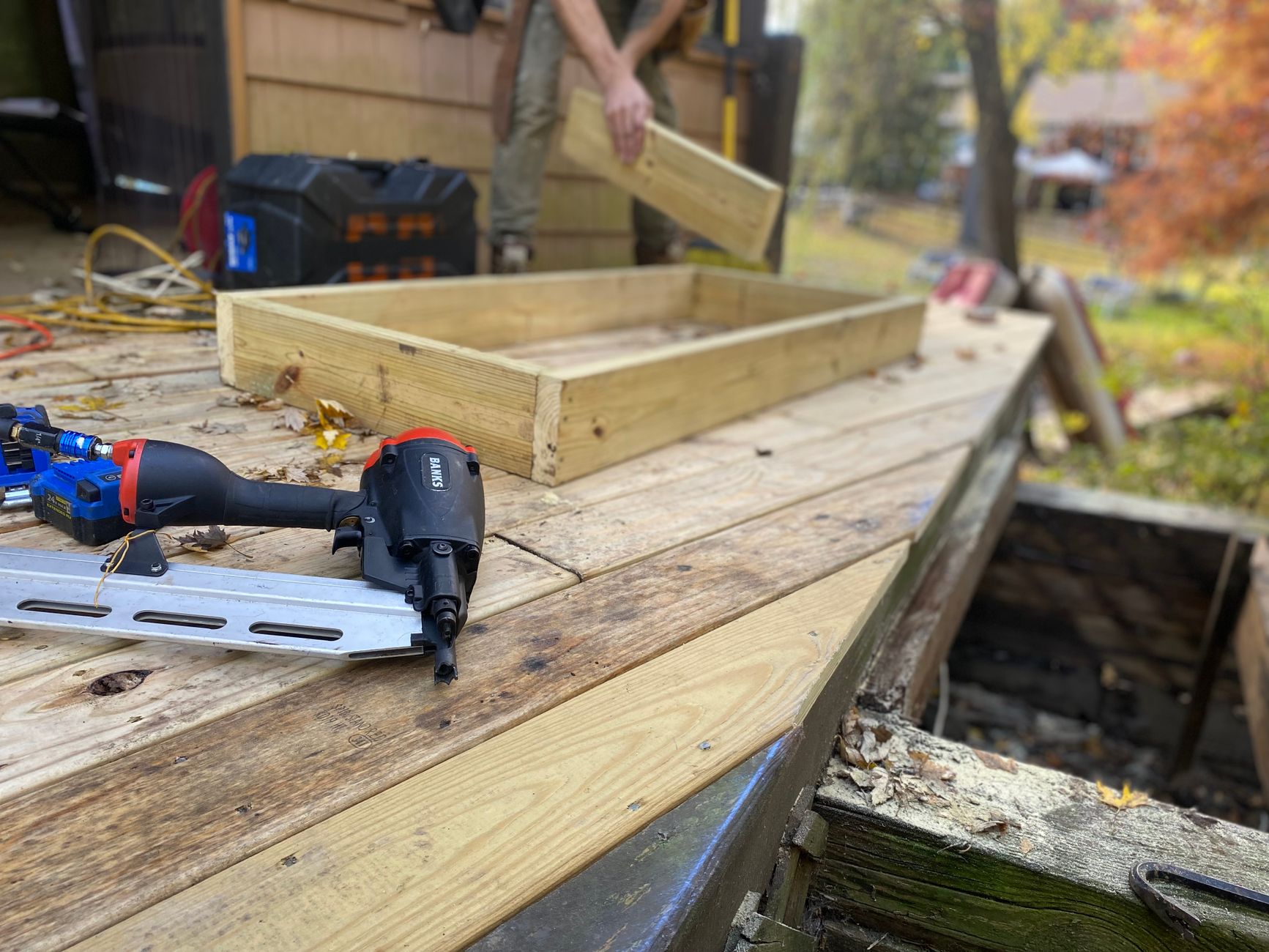
There are three components that move the needle for local deck contractors. The first is your Google Business Profile (GBP) — the listing appearing in Google Maps when someone searches “deck builder near me.” A complete, active profile with project photos and reviews drives a meaningful share of inbound calls. Most deck builders have claimed a profile and stopped. Claiming and optimizing are very different things.
The second is your website’s service and location pages. A page titled “Custom Deck Builder in Austin, TX” — with 400–600 words describing your services, process, and service area — tells Google exactly who to show your site to. If you serve three cities, you need three separate pages, not one mentioning all three in passing. Google reads specificity as authority.
The third is blog content. Articles answering homeowner questions — “How much does a composite deck cost?” or “Trex vs TimberTech: which holds up better in heat?” — capture homeowners in the research phase. Get them on your site during research, and you’re often the first call when they’re ready to commit.
The Keywords Homeowners Type When They’re Ready to Build
According to BrightLocal’s annual consumer survey, 63% of consumers used Google to find a local business in the past week. For deck builders, qualified homeowners are searching right now — the question is whether they find you or your competitor. High-intent searches (“deck builder near me,” “composite deck contractor”) go to your service pages. Cost and comparison queries (“how much does a composite deck cost,” “Trex vs pressure-treated”) go to your blog. Material comparisons and permit questions are searched exhaustively before a $20,000 commitment — and they’re among the easiest terms for deck builders to rank for because almost no one writes about them.
How to Build a Google Presence That Books Deck Jobs

Quick answer: Start with your Google Business Profile — upload 20+ project photos, fill every field, and ask your last 10 satisfied customers for a review this week. Most deck builders see Maps visibility improve within 30 days. Website and blog work compounds on that foundation.
According to BrightLocal research, businesses with more than 100 Google reviews earn measurably more revenue than those with fewer than 50. For deck builders — where projects are high-ticket and homeowners want to see real photos before spending $20,000 — reviews directly influence whether someone calls you or moves on. Build a systematic ask-for-review process after every project. It’s the highest-ROI task a deck builder can do this month.
The fence contractors and bathroom remodelers who consistently rank on page one share the same structure: a complete GBP, dedicated location pages, and consistent content. Once that foundation is set, publish one article per week — 52 Google entry points over a year, each compounding on the last.
What Your Deck Building Blog Should Cover to Rank
Cost guides convert best. “How much does a composite deck cost in your area?” attracts serious buyers. Give real ranges from your actual projects — not a vague “it depends.” Specificity builds trust and ranks better. Project showcases do double duty: a 600-word write-up on a recent deck build, with photos and the neighborhood name in the title, targets geographic terms Google can index while showing prospects real work. Maintenance guides bring in existing deck owners who may need repairs or full replacements — a homeowner with a rotting 12-year-old wood deck is a $15,000+ replacement customer actively searching for answers.
How Long Before SEO Fills Your Calendar?

Most deck builders see meaningful ranking improvements within 60–90 days of optimizing their GBP and website. Blog content generates consistent leads after 4–6 months. Full calendar impact — where SEO replaces Angi as the primary lead source — typically takes 9–12 months of consistent publishing.
Google doesn’t immediately rank new content from unfamiliar websites. It watches: does this site get traffic? Do visitors stay? Is this publisher consistent? After three to six months of consistent behavior, rankings move. As we covered in our breakdown of why contractors are ditching Angi — a flat monthly SEO fee versus $80–$120 per shared lead looks very different at month twelve. A blog post from fourteen months ago is still ranking, still generating calls. That’s the math that converts skeptical contractors.
If publishing SEO content consistently sounds like too much work on top of running a deck building company, RankOnRepeat handles everything — keyword research, writing, and publishing — for a flat monthly fee. See how it works.
SEO vs. Referrals and Lead Platforms: The Long-Game Math
Most deck builders operate on a referral economy — a past client mentions their name, a neighbor calls. It works until it doesn’t: a slow season, a client base that ages out, or a market where competitors are pulling homeowners before the referral chain even starts.
Lead platforms like Angi and HomeAdvisor offer an alternative, but the economics are rough. You’re renting attention, not building an asset. The moment you stop paying, the leads stop flowing. And you’re competing against every other deck builder who bought into the same platform, which drives prices up and close rates down.
SEO inverts that model. A well-optimized service page for “custom deck builder [your city]” that earns a top-three ranking can generate inbound calls every week without an ongoing cost-per-lead. The content you publish this quarter can rank for years. Done right, a deck building blog becomes the highest-ROI marketing channel in your mix — slower to start, but compounding in ways that referrals and lead platforms cannot match.
Frequently Asked Questions

Does a deck builder really need a blog to rank on Google?
Not in every market — but in competitive cities, yes. An optimized GBP and service pages can rank for primary city keywords. Blog content gets you above competitors with the same profile setup and captures homeowners in the research phase who convert 30–90 days later.
How much does SEO cost for a small deck building company?
A basic SEO setup runs $500–$1,500 as a one-time project. Monthly content services range from $150–$600 depending on publishing volume — roughly one or two Angi leads per month in cost, except the traffic SEO builds is permanent, not rented.
What’s the fastest way for a deck builder to get leads from Google?
Optimize your Google Business Profile now. Upload 20+ completed project photos, fill every field, and ask your last 10 satisfied customers for a review this week. Most deck builders see Maps visibility improve within 30 days, with no ad spend required.
Can a deck builder do SEO without hiring anyone?
Optimizing your GBP and building location pages are learnable for a motivated owner. Producing consistent quality content every week is where most owners hit their capacity. That’s when outsourcing the writing makes more economic sense than DIY.
References
- BrightLocal Local Consumer Review Survey — 63% of consumers used Google to find a local business in the past week
- BrightLocal Business Review Data — review volume correlation with local business revenue
- North American Deck and Railing Association — average composite deck project cost ranges
- Google Search Central — how Google ranks local business content
Published by the RankOnRepeat editorial team · Last updated: August 27, 2026 · How RankOnRepeat works