The average HVAC company in a mid-size U.S. city pays between $150 and $200 for a single shared lead from Angi or HomeAdvisor — a lead that’s simultaneously sent to three or four competitors. That same company, if it ranks in the Google map pack for “AC repair [city],” gets exclusive inbound calls at zero marginal cost. The math on that is not subtle. The only question is how long it takes to get there and what the path looks like.
HVAC SEO has some quirks that make it different from general local SEO — the extreme seasonality, the emergency-call dynamic, the fact that homeowners search completely differently in August than they do in January. Getting those nuances right is what separates an HVAC site that treads water from one that fills the dispatch board organically.
Why Seasonality Should Shape Every SEO Decision You Make
Most local service industries have relatively flat demand across the year. HVAC is the opposite. An AC repair company’s phone in Phoenix rings off the hook in June, July, and August and goes quiet by October. A heating company in Minneapolis does the inverse. This matters for SEO because Google rewards fresh, relevant signals — and if you want to capture emergency traffic in July, you need to have built your authority in March.
The practical implication: don’t start your SEO push when demand is already at its peak. Start three to four months before your busy season. If summer is your money season, begin building content and citations in February. By the time residents are frantically searching “AC not cooling” at 9pm on a Tuesday in July, you want your GBP listing and service pages already ranked and indexed.
There’s also a content angle here. “AC maintenance checklist” searches spike in April and May, just before summer heat arrives. “Furnace not starting” spikes in November. Seasonal blog content — written and indexed months ahead — captures searchers at the top of the funnel and builds topical authority before the high-value emergency searches roll in. Think of it as warming up the algorithm alongside your customers’ systems.
Google Business Profile: The Category Decision Most HVAC Companies Get Wrong
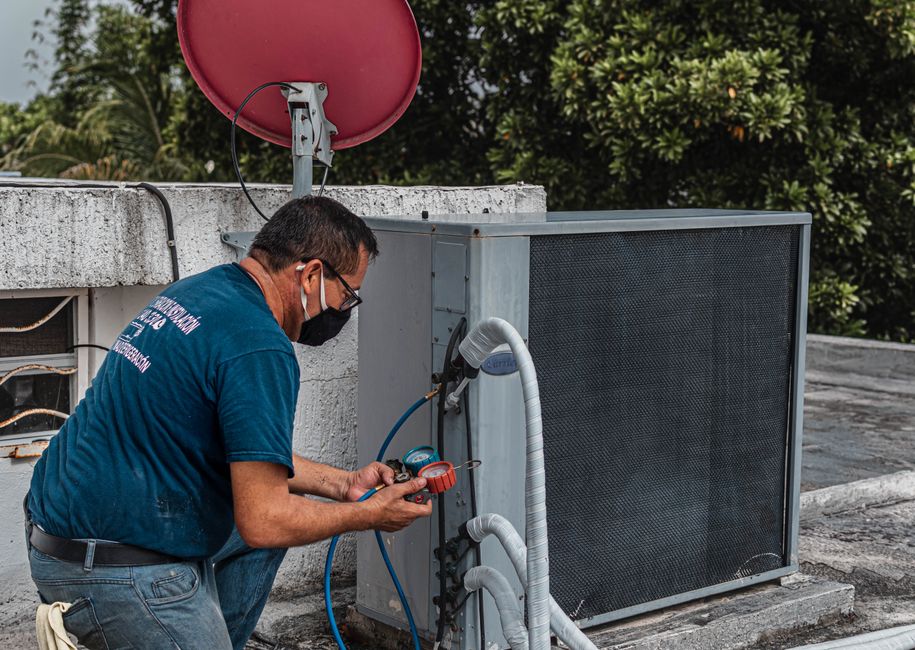
Your Google Business Profile category isn’t just a label — it’s a ranking signal. Google uses your primary category to decide which searches you’re eligible to appear in. HVAC companies typically have three category options: HVAC Contractor, Air Conditioning Contractor, and Heating Contractor. If you service both, “HVAC Contractor” as your primary with the other two as secondary categories is the right move. Choosing only “Air Conditioning Contractor” makes you invisible for heating searches, and vice versa.
Beyond categories, your GBP needs to be fully built out — and that means more than just address and phone number. Add every service you offer in the Services section. Upload photos of your trucks, your team, and completed jobs. Use the Posts feature for seasonal promotions (spring tune-up specials, fall furnace check deals). Keep your hours accurate, especially holiday hours, since Google actively uses that data.
The Q&A section is underused by most HVAC businesses. Seed it yourself with questions homeowners actually ask: “Do you offer emergency HVAC service?” “Are your technicians NATE certified?” “Do you finance HVAC installations?” Answer them honestly. These appear directly on your GBP listing and can push fence-sitters toward calling you.
Build One Page Per Service — Then One Per City
The most expensive structural mistake HVAC companies make is a single “Services” page listing everything they do. Google can’t rank a page for AC repair, furnace installation, heat pump service, duct cleaning, and air quality testing simultaneously — the page doesn’t have enough topical focus on any of them to outrank sites that dedicated an entire page to each.
The fix is straightforward: one page per service. AC repair gets its own URL. Furnace repair gets its own URL. Heat pump installation, duct cleaning, mini-split installation — each deserves its own page with at least 600–800 words of real content describing the service, common causes of problems, what your process looks like, pricing context, and a clear call to action.
If you serve multiple cities or suburbs, you need city-specific versions of your key pages as well. “AC Repair in Austin” and “AC Repair in Round Rock” are different searches. A generic service page won’t rank well for either city specifically. The city pages don’t need to be enormous — 500 words of localized content plus your core service information is enough — but they do need to exist and be meaningfully different from each other. Thin pages with only swapped city names are a spam signal Google has gotten good at detecting.
This architecture mirrors what we outlined for appliance repair companies, which face similar multi-service, multi-city SEO challenges. The same logic applies here: more specific pages win more specific searches.
Reviews: Volume and Velocity Beat a Perfect Rating
A 4.6-star HVAC company with 180 reviews will almost always outrank a 5.0-star company with 22 reviews. This isn’t a judgment call — it’s how Google’s local ranking algorithm weights review signals. Freshness matters too. A business that gets 4–6 new reviews per month signals ongoing activity. One that got 80 reviews two years ago and has been quiet since is a weaker signal than its count suggests.
The practical approach: build a review ask into your post-service workflow. Text or email customers within 24 hours of a completed job. Keep the message short and include a direct link to your Google review page — every extra click you add to the process dramatically reduces completion rates. Train your technicians to verbally mention it when they’re wrapping up: “If everything looks good, we’d love a quick Google review — it means a lot to a small local business.”
Negative reviews happen. Respond to every one of them — professionally, specifically, and without defensiveness. A measured response that acknowledges the customer’s concern and offers to make it right demonstrates to prospective customers (and to Google) that you’re an active, professional business. Ignoring negative reviews is worse than a bad response. Responding poorly is worse still.
Citations, NAP Consistency, and Schema Markup

Citation consistency — your Name, Address, and Phone appearing identically across every directory, your website, and your GBP — is a baseline trust signal for local SEO. BrightLocal’s research has documented the correlation between citation accuracy and local pack rankings for years. For HVAC, the key directories beyond Google are Yelp, Angi (yes, even if you’re trying to escape their leads — a free listing is an SEO asset), HomeAdvisor, Houzz, Thumbtack, and your local chamber of commerce.
If your business address or phone number has changed at any point, clean up the inconsistencies before doing anything else. Tools like BrightLocal or Whitespark can scan and fix these in bulk.
Schema markup is the less glamorous but genuinely useful technical layer. Adding LocalBusiness schema to your site tells Google in machine-readable language exactly who you are, where you’re located, what your hours are, and what service area you cover. For HVAC, use the HVACBusiness schema type if your CMS supports it, or the broader LocalBusiness with service area markup. This won’t make you rank overnight, but it reduces ambiguity in how Google interprets your site — which matters when you’re competing against established local HVAC companies.
Seasonal Content That Drives Organic Traffic Year-Round
Emergency searches are the highest-value HVAC queries — “AC not cooling” in August and “furnace won’t turn on” in January represent homeowners with immediate buying intent who will call the first credible result they see. But informational content builds the topical authority that makes you rank for those queries in the first place.
The content strategy that works: write guides that homeowners search for in the weeks before their HVAC emergencies happen. An “HVAC maintenance checklist for spring” published in February gets indexed by April. An “how often to change furnace filter” guide pulls evergreen search traffic and builds authority in the heating topic cluster. A “heat pump vs gas furnace cost comparison” page captures purchase-stage researchers and positions you as a knowledgeable local resource rather than just a repair shop.
This is the same approach that works well across home service verticals — we’ve documented it in detail for bathroom remodelers and house cleaners. The pattern is consistent: informational content builds topical authority, which lifts your rankings for commercial queries. HVAC’s seasonality just makes the timing of that content more critical than in most niches.
The Real Cost of Angi Dependency — and the Realistic Path Out
Angi leads average $150–200 each, are shared with multiple HVAC companies simultaneously, and are frequently from homeowners who are price shopping rather than ready to book. The economics are painful: if you close 30% of shared leads (generous), you’re paying $500–666 in lead costs for every job you win before you’ve turned a wrench. For an AC tune-up or a duct cleaning, that math doesn’t work. For a full system replacement, it’s survivable but miserable.
The HVAC companies that have escaped Angi dependency didn’t do it overnight. They invested 12–18 months in the SEO foundation — GBP optimization, service pages, reviews, citations — and gradually shifted their inquiry mix toward organic. The realistic timeline: 3–6 months to appear consistently in the local map pack for your primary city and core services. 6–12 months to rank organically (below the map pack) for competitive terms. The companies that try to shortcut this with black-hat tactics — keyword stuffing, fake reviews, purchased backlinks — consistently get penalized and end up worse off than when they started.
Moz’s Local SEO Guide puts it plainly: local SEO is a long game, and the businesses that treat it that way tend to build durable lead pipelines. The ones that want results in 30 days usually end up back on Angi by month three.
Where to Start If You’re an HVAC Company With No SEO Yet
Prioritize in this order. First, claim and fully complete your Google Business Profile — categories, services, photos, Q&A, hours. Second, fix your website structure: create individual service pages for every service you offer. Third, run a citation audit and fix any NAP inconsistencies across directories. Fourth, build a systematic review generation process into your post-service workflow. Fifth, start producing seasonal content two to three months ahead of each busy season.
Don’t try to do everything at once. GBP and reviews move the needle fastest in the short term. Service pages and content compound over time. The combination of both, done consistently, is what fills a dispatch board from Google without handing $200 to a lead aggregator for the privilege.
If your competition in your market is weak — common in mid-size metros and suburban markets — you can reach the map pack in 60–90 days with aggressive GBP optimization and a focused review push. If you’re in a major metro competing against established HVAC companies with years of SEO investment, budget 6–9 months for the map pack and longer for strong organic positions. Either way, the endgame is the same: exclusive, inbound calls from homeowners who found you organically. That’s worth the runway.
References
- BrightLocal — Local Citations for SEO — Research on citation consistency and its effect on local pack rankings.
- Moz — The Local SEO Guide — Comprehensive reference on local ranking factors, including reviews, citations, and on-page signals.
- Google Developers — LocalBusiness Structured Data — Official documentation for implementing local business schema markup.