
Angi and HomeAdvisor charge roofing companies between $200 and $400 per lead — and you’re sharing those leads with two or three competitors who bought the same name. A roofer doing $1.5 million a year in revenue might be writing $60,000–$80,000 in checks to lead platforms annually. That’s a second employee’s salary going straight to a directory that owns the customer relationship, not you.
SEO doesn’t eliminate lead costs overnight. But it builds something lead platforms never will: a pipeline you own. When a homeowner in your city types “roof replacement [city]” into Google at 7 PM after a hailstorm, the companies ranking in positions one through three get the call. This guide walks through exactly how to get there.
Why Roofing SEO Is Different From Other Trades
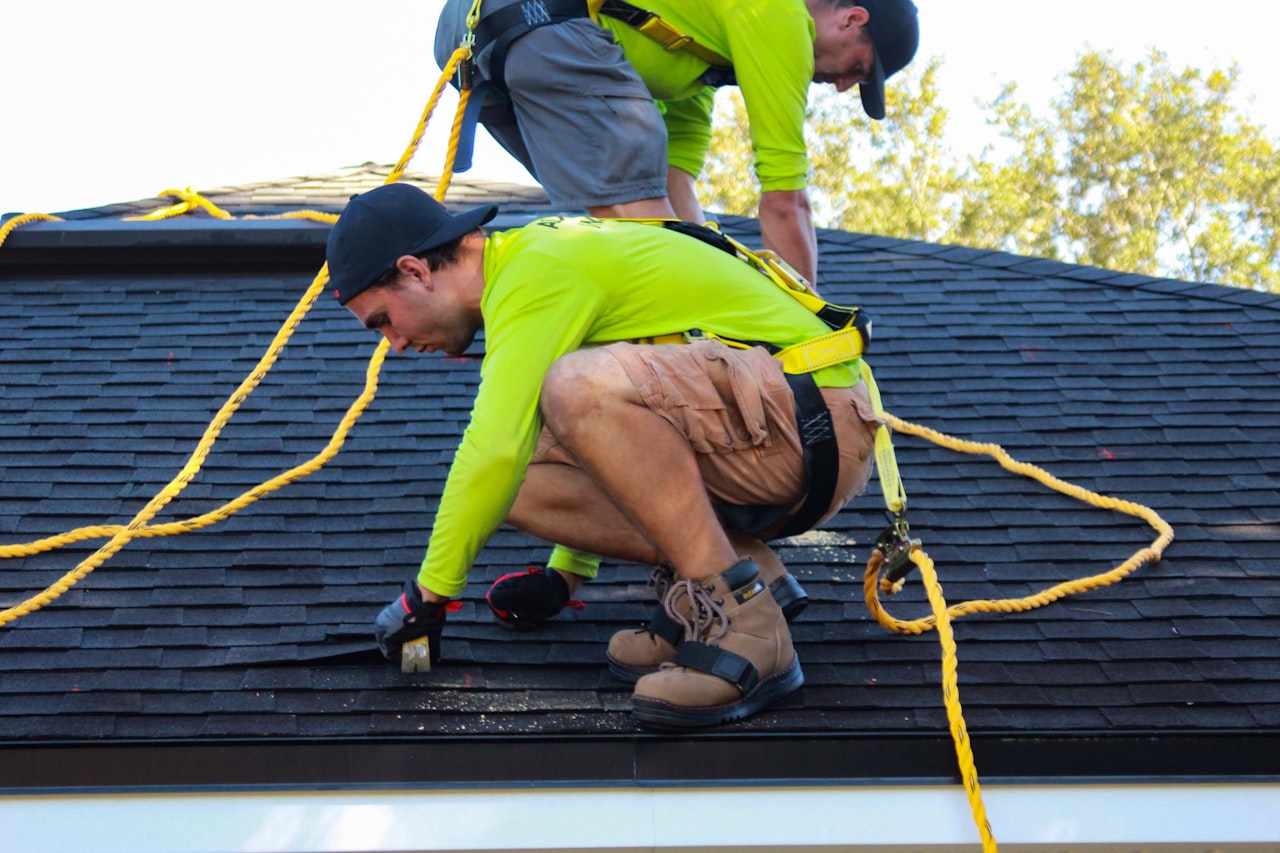
Roofing has a split customer base that most trades don’t: emergency callers and planners. A homeowner with a ceiling drip after a thunderstorm is searching right now, in panic mode, ready to book whoever answers. Another homeowner has been putting off a full replacement for two years and is finally doing research. Both groups use Google, but they use completely different keywords and are in completely different moods.
The emergency caller searches “emergency roof repair near me” or “roof leak [city]” with location turned on. The planner searches “roof replacement cost [city]” or “best roofing companies [city].” A solid roofing SEO strategy captures both — and the seasonal angle matters too. After every major hailstorm, search volume for “hail damage roof” and “roof insurance claim” spikes within hours. Companies that have storm-specific pages ready rank immediately. Companies that don’t miss the entire window.
Google Business Profile: The First Thing to Get Right
Before your website ranks for anything, your Google Business Profile (GBP) determines whether you show up in the local pack — the three map listings that appear above organic results for searches like “roofing company near me.” The local pack gets a disproportionate share of clicks, especially on mobile, where most storm-damage searches happen.
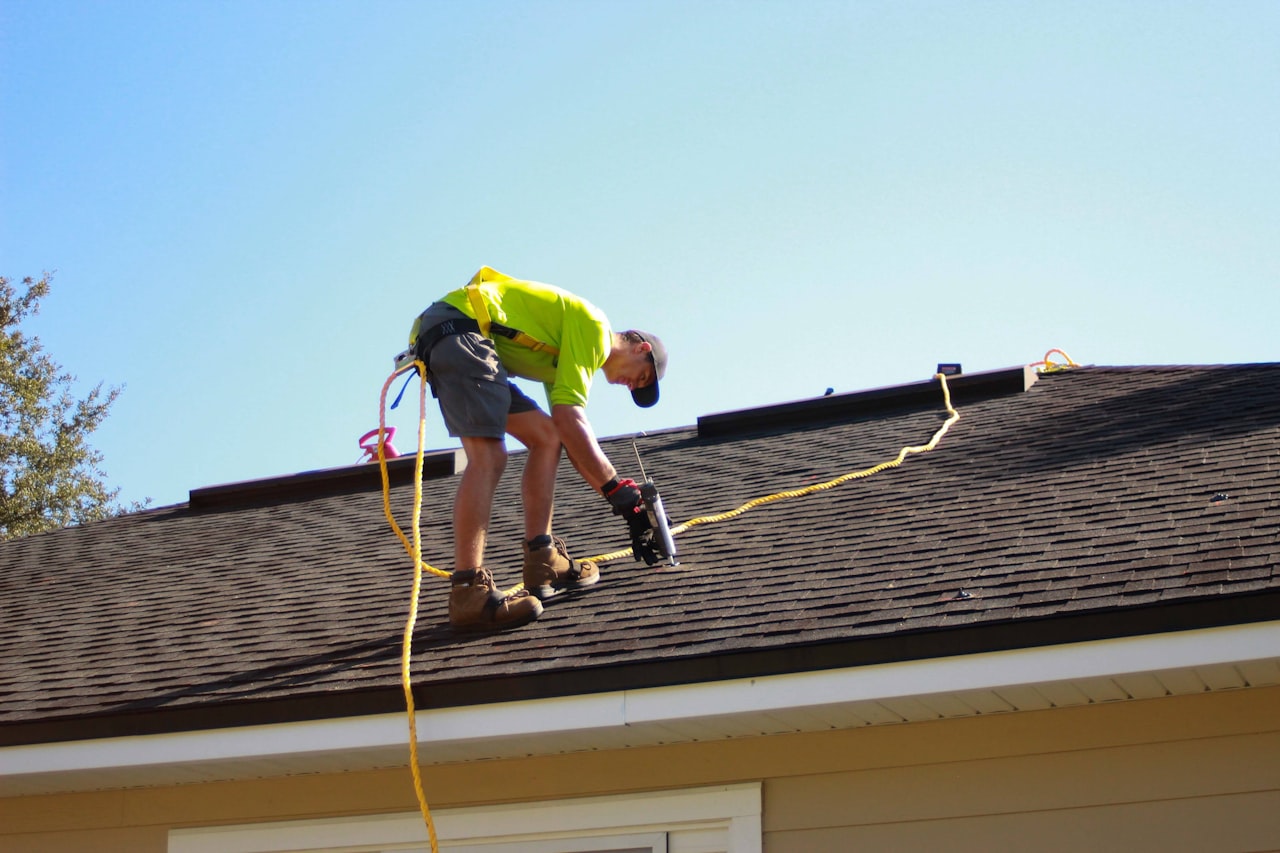
Claim and verify your GBP if you haven’t already. Then fill out every field. Choose “Roofing Contractor” as your primary category. Add your service areas (most roofing companies serve a radius, not a single city). Upload at least 10 real job photos — actual before/after shots from your work, not stock photography. Google rewards active profiles, so post a monthly update: a completed job, a storm season reminder, a tip about what to look for after a hailstorm.
Reviews are the most direct ranking signal in the local pack. A company with 80 reviews at 4.7 stars will almost always outrank a competitor with 15 reviews at 4.9. The volume matters. Build a simple post-job text sequence: send the review link 48 hours after completion while the job is still fresh in the customer’s mind. A single extra review per week compounds into a significant advantage over a year.

The Keywords That Actually Bring in Calls
Not all roofing keywords are equal. “Roofing” alone is too broad — it pulls in DIYers, materials buyers, and industry job seekers. The keywords worth targeting are the ones with commercial intent and a specific location:
- Roof replacement [city] — high value, planned purchase, serious buyer
- Roofing company [city] — broad but local, captures all intent types
- Emergency roof repair [city] — urgent, premium pricing, low patience
- Hail damage roof repair [city] — seasonal spike, insurance job pipeline
- Storm damage roof [city] — post-weather surge, same high urgency
- Roof leak repair [city] — year-round emergency volume
- Metal roofing [city] / TPO roofing [city] — material-specific, high-ticket
- Free roof inspection [city] — entry point for insurance claims
Build a separate service page for each of your primary services, and optimize each one for a specific keyword cluster. Don’t stack “roof replacement + roof repair + emergency roofing” onto one page — that dilutes everything. One page, one primary keyword, supporting content that answers the questions that keyword implies.
On-Page SEO for Roofing Service Pages
Each service page needs to do three things: tell Google what it’s about, tell the visitor why they should call you, and give both of them enough detail to trust the page. A 300-word page with a contact form doesn’t accomplish any of those things.
Start with your title tag. For a roof replacement page in Austin, something like “Roof Replacement in Austin, TX | [Company Name]” is fine. Keep it under 60 characters total. Your H1 (which your theme usually pulls from the page title) should match. The first paragraph should state what you do, where you do it, and what makes you worth calling — no fluff, just useful information.
Include your city and surrounding service areas naturally in the text. Add a section covering the process (what happens from the first inspection to the final cleanup). Add a section on pricing ranges — you don’t need to give exact quotes, but “most residential roof replacements in [city] run between $8,000 and $18,000 depending on square footage and materials” is useful to readers and signals topical authority to Google. Add an FAQ using the questions homeowners actually ask: How long does a replacement take? Does my homeowner’s insurance cover it? What’s the difference between architectural and 3-tab shingles?

Building Citations and Getting Listed Where It Matters
Citations — your business name, address, and phone number (NAP) listed consistently across the web — are a foundational local ranking signal. The data needs to be identical everywhere: same spelling, same abbreviations, same phone number. If your GBP says “123 Main Street” and Yelp says “123 Main St,” that inconsistency chips away at trust.
Start with the top-tier directories: Yelp, Angi, HomeAdvisor, Houzz, Thumbtack, the Better Business Bureau, and your local chamber of commerce. Then add roofing-specific directories: the National Roofing Contractors Association (NRCA) member directory, GAF’s contractor finder, CertainTeed’s contractor locator. These carry extra authority because they’re industry-specific and Google knows it.
Beyond citations, local links matter. Getting a link from your city’s contractor association, a local news feature about a storm-damage response, or a sponsorship mention on a local little league website — these are the kinds of links that move roofing companies in local search in a way that generic link-building campaigns don’t.
Content Strategy: Storm Season and Beyond
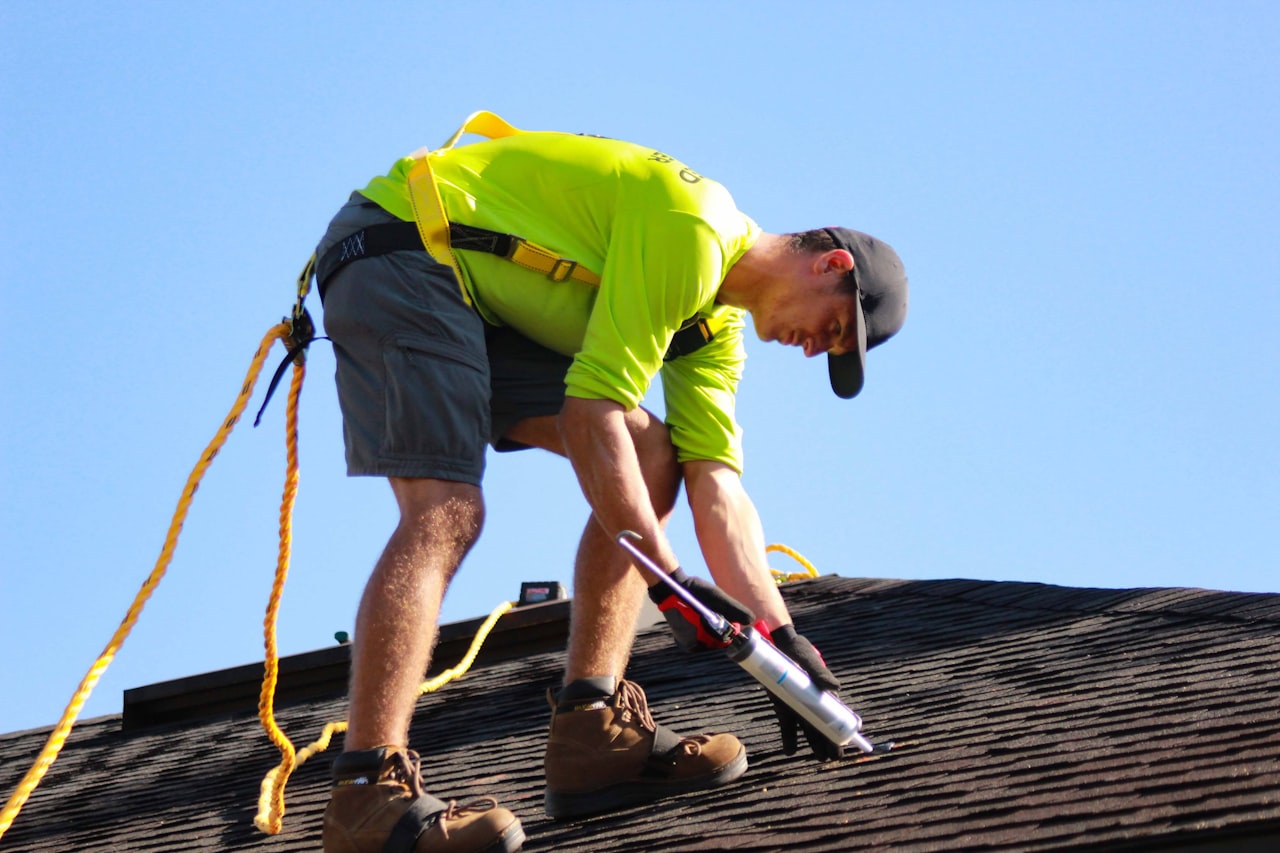
The roofers who win the post-storm search surge are the ones who published those articles before the storm hit. A blog post titled “What to Do After Hail Damages Your Roof in [City]” that’s been sitting on your site for six months will rank within hours of a storm rolling through. One published the day of the storm might not rank for weeks.
A practical roofing content calendar includes storm-season primers (publish in April/May and October before hail season), insurance claims guides, maintenance checklists (“5 Signs Your Roof Needs Replacing Before Winter”), and material comparison posts (“Metal vs. Architectural Shingles: What’s Right for [City] Weather”). These posts don’t replace your service pages — they support them by building topical authority and capturing people earlier in the research process.
City-specific content also compounds. If you serve multiple suburbs, a page for each one — “Roof Replacement in [Suburb]” — lets you rank for hyperlocal searches without cannibalizing your main city page. It takes effort to build, but each page is an additional entry point that a lead platform competitor can’t take away from you.

How Long Does Roofing SEO Take?
Honest answer: three to six months before you see consistent lead flow from organic search, and six to twelve months before it becomes a primary channel. Local SEO for a service business isn’t a switch you flip — it’s more like building a referral network. Each piece of content, each citation, each review adds another signal, and Google adjusts rankings as the signals accumulate.
That said, the GBP improvements move faster than website rankings. Fixing your categories, adding photos, and getting a handful of new reviews can push you up in the local pack within 30 to 60 days. Emergency searches, where intent is clearest and competition is sometimes thinner, often respond before the bigger replacement keywords do.
The comparison to lead platforms is worth doing explicitly. At $300 per lead with a 25% close rate, you’re paying $1,200 in lead costs per booked job. An SEO investment that costs you $1,000–$2,000 per month but generates 15 organic leads per month at a 35% close rate is paying for itself in the first month at scale — and the cost per lead keeps dropping as your rankings hold. That’s the math that makes roofers who commit to SEO eventually stop buying leads entirely.

The roofing companies that will still be buying Angi leads in five years are the ones that didn’t start building their Google presence today. The ones that stop paying per lead are the ones who invested early enough that their rankings were already compounding when the platform prices kept going up. Start with your Google Business Profile this week — it’s free, it ranks faster than your website, and it’s the single highest-leverage action a roofing company can take in local search right now.
For more on local SEO strategy across service trades, see our guides on SEO for HVAC companies, SEO for pressure washing companies, and SEO for pest control companies.
Sources
- Backlinko — SEO For Roofers: 6-Step Guide to Attract More Leads — keyword strategy and ranking framework for roofing contractors
- ServiceTitan — Roofing SEO: Benefits, Strategy, and Tools — overview of roofing-specific SEO tactics and GBP optimization
- GAF — 6 Best Practices for Roofing SEO — industry-specific guidance from a major roofing materials manufacturer
- National Roofing Contractors Association (NRCA) — industry body with contractor directory useful for citation building
- Scorpion — The Complete Guide to SEO for Roofing Companies — local search signals and review strategy for roofers
References
- Moz — The Local SEO Guide — Local ranking factors: proximity, relevance, and prominence for home services
- BrightLocal — Local Consumer Review Survey — Annual data on how homeowners use reviews to select contractors
- Semrush — Local SEO Guide — Seasonal content planning and GBP optimization for roofing companies
- Ahrefs — Local SEO — Competitor analysis and link acquisition for local roofing markets